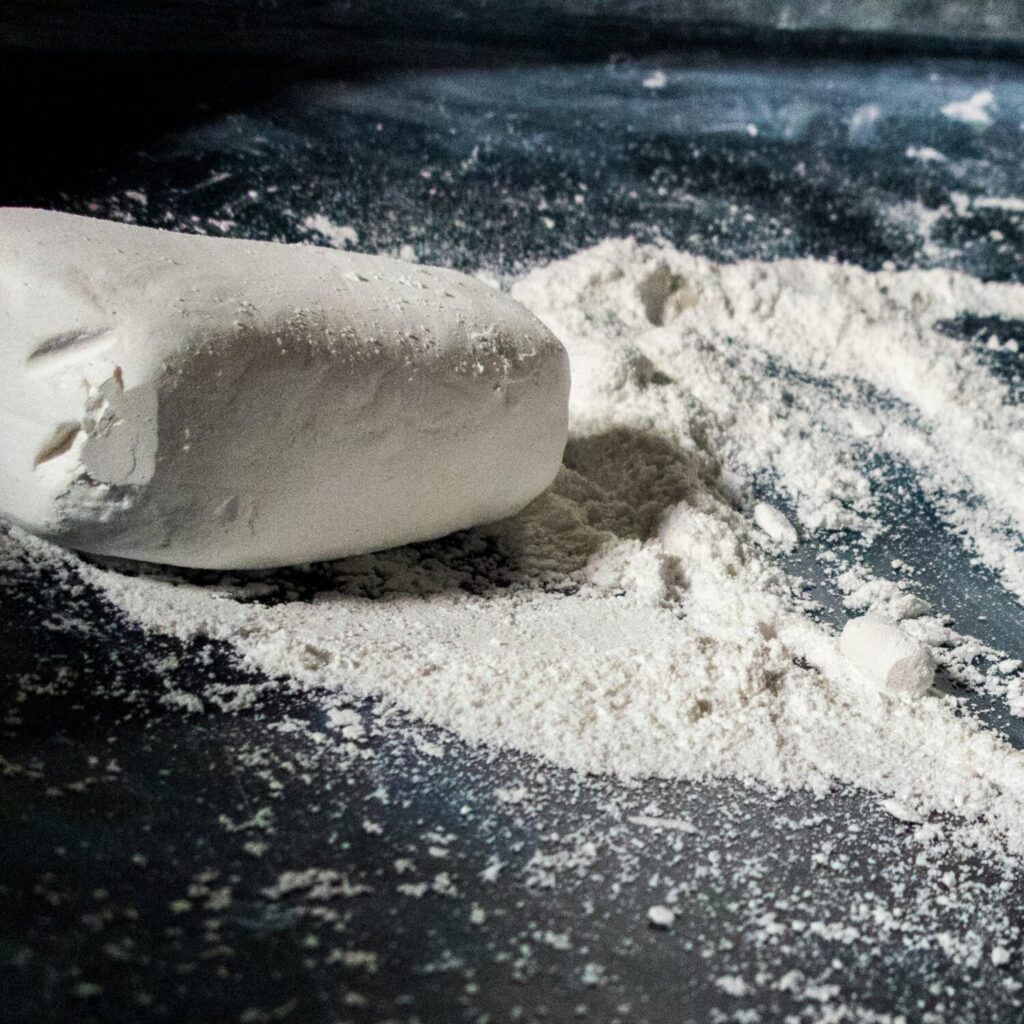
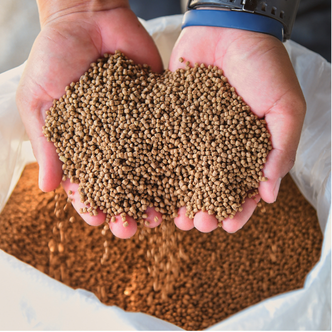
PTFE mixtures typically consist of fine powders combined with additives that must remain homogeneous throughout the process. During handling and storage, however, agglomerates and foreign bodies can form or be introduced, while differences in particle morphology and bulk density may lead to segregation. These factors can negatively affect dosing accuracy, flowability, and the uniformity of the applied coating.
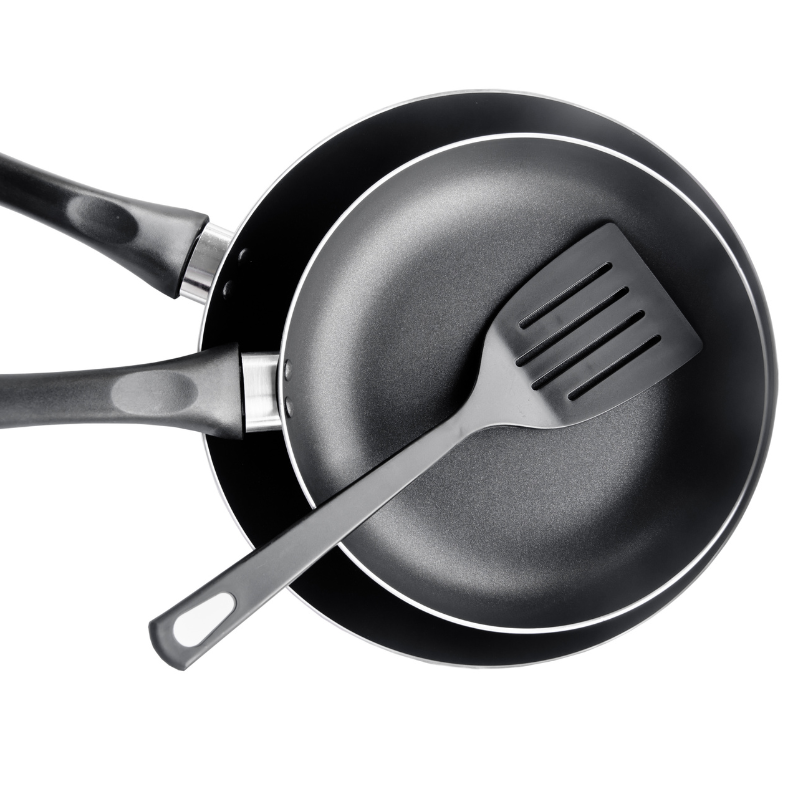
Vibrating sieving enables effective classification of these mixtures by removing oversize fractions and ensuring a consistent particle size distribution. This process step is critical to facilitate smooth and uniform application on surfaces, whether by spraying, dipping, or other coating techniques. Key parameters such as throughput, mesh size, and installation point must be carefully considered to achieve optimal results.
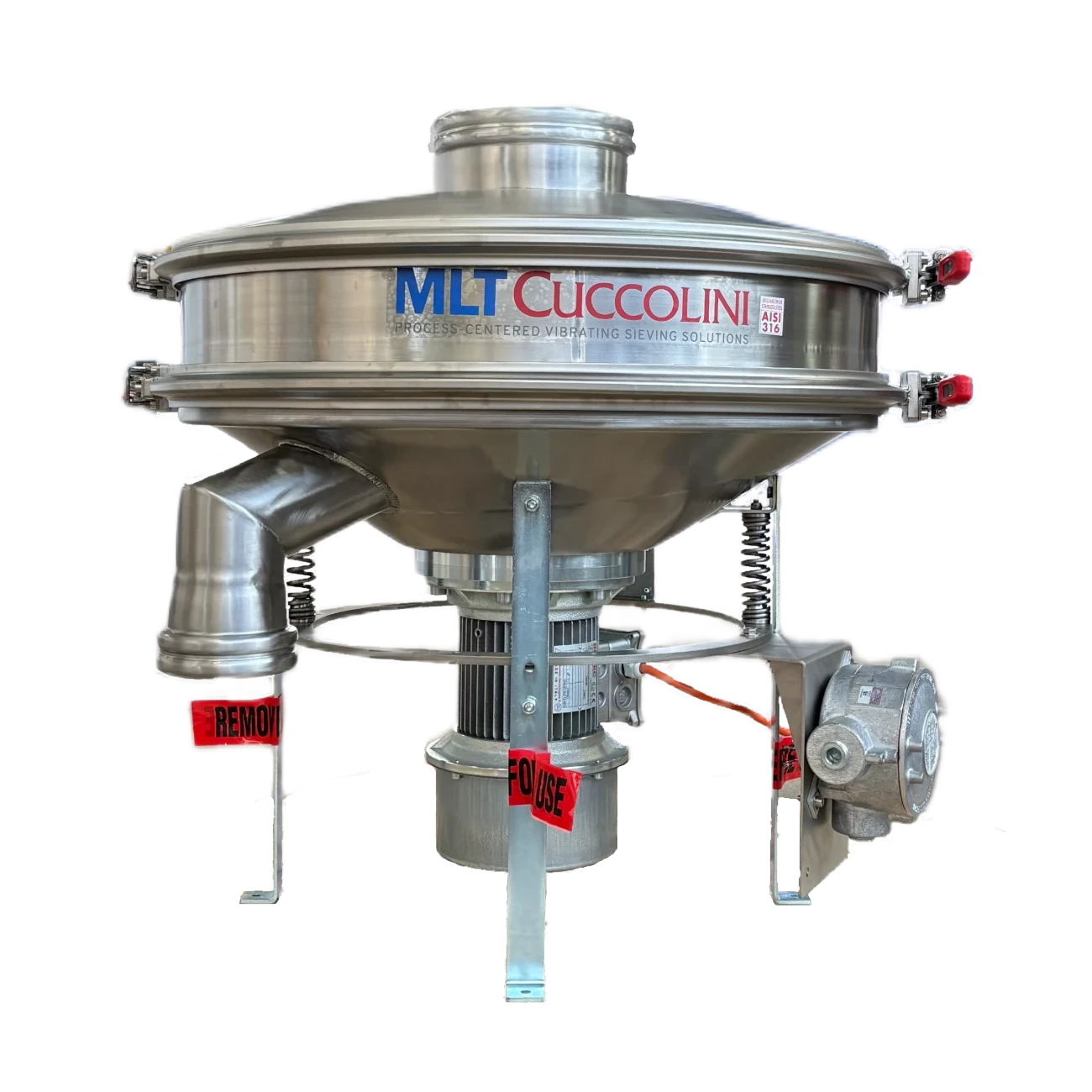
MLT Cuccolini VPB and VPM vibrating sieves are specifically suited for the classification of PTFE-based mixtures. Their controlled and calibrated vibration allows them to process powders with heterogeneous morphology and varying bulk density without causing particle breakage or demixing, preserving the functional properties of the formulation.
The VPB model is well suited for medium throughputs and applications requiring efficient removal of contaminants and oversize particles while maintaining a compact and robust design.
The VPM model is designed for higher throughputs and more demanding process conditions, often installed in-line within conveying systems or before application stages. It ensures consistent screening performance even with variable feed rates, making it ideal for continuous production environments where stability and repeatability are essential.
Both models can be configured with a wide range of mesh sizes depending on the required final particle distribution, and devices to support a correct feeding even if this action is performed manually at the exit of the oven. Their stainless-steel execution, ease of cleaning, and modular design support hygienic operation, quick maintenance, and flexibility in adapting to different plant layouts and production needs.
Using MLT Cuccolini solutions for PTFE mixtures classification ensures a more uniform and controlled product, directly improving coating quality and application efficiency. At the same time, the removal of contaminants and oversize fractions helps protect downstream equipment and reduce the risk of defects and production interruptions.
The combination of gentle handling, reliable performance, and flexible configuration makes VPB and VPM vibrating sieves a dependable choice for a wide range of PTFE coating processes.
Contact MLT Cuccolini to discuss your PTFE mixtures classification process and identify the most suitable vibrating sieving solution for your specific application.