In gas atomisation processes, the resulting metal powder batch contains a wide particle size distribution, including coarse particles above the target range and ultra-fines that can negatively affect flowability and increase dust-related risks. The role of classification is to separate this raw atomised product into well-defined fractions, each corresponding to specific 3D printing or other powder metallurgy applications.
A typical requirement in 3D printing powder production is the removal of coarse particles above about 90 µm and ultra-fine particles below roughly 10–20 µm, while isolating one or more intermediate fractions with narrow particle size distributions. These on‑spec fractions must exhibit stable flow behaviour and reproducible apparent density to support reliable dosing and layer deposition in additive manufacturing systems. Effective classification therefore contributes directly to both product performance and process reliability.
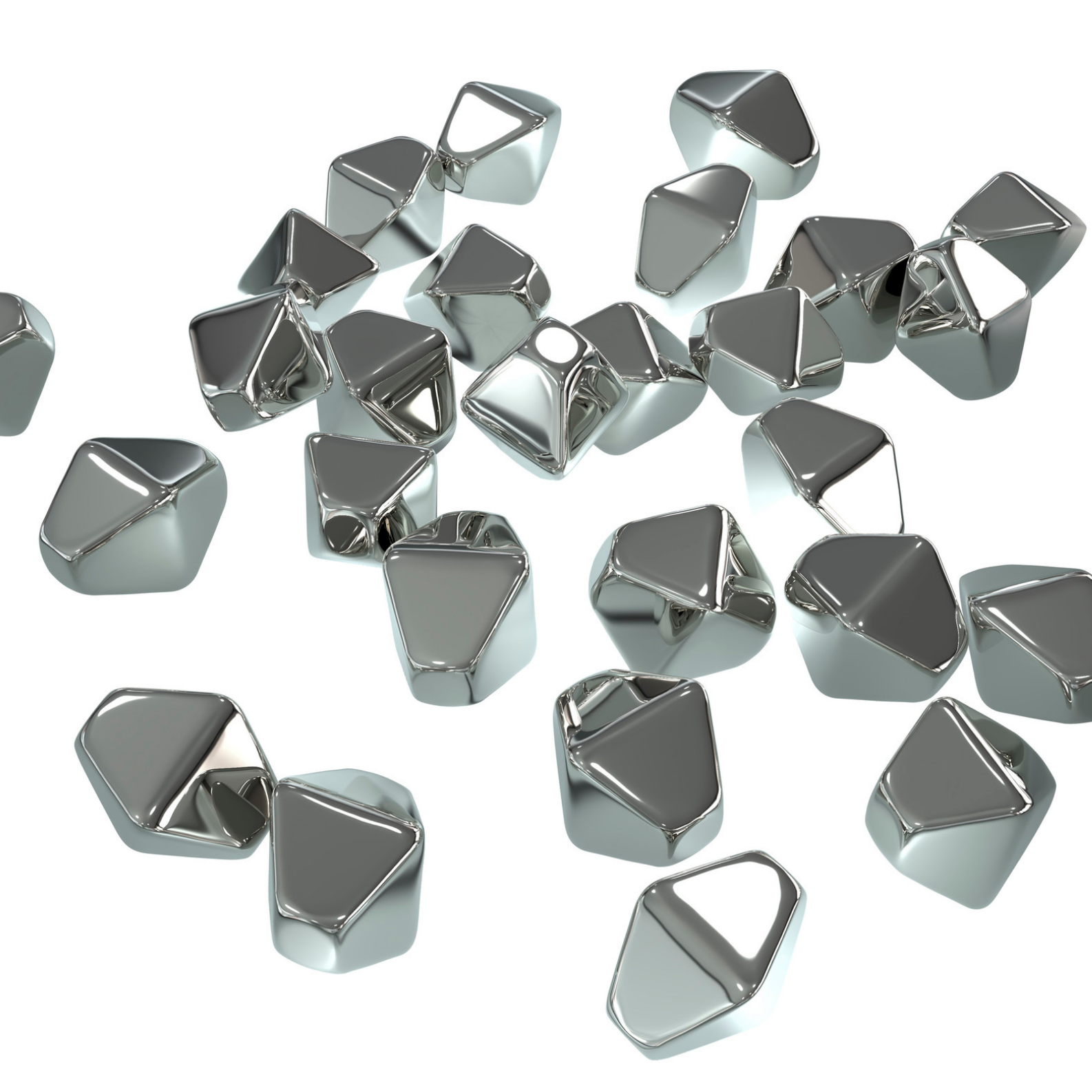
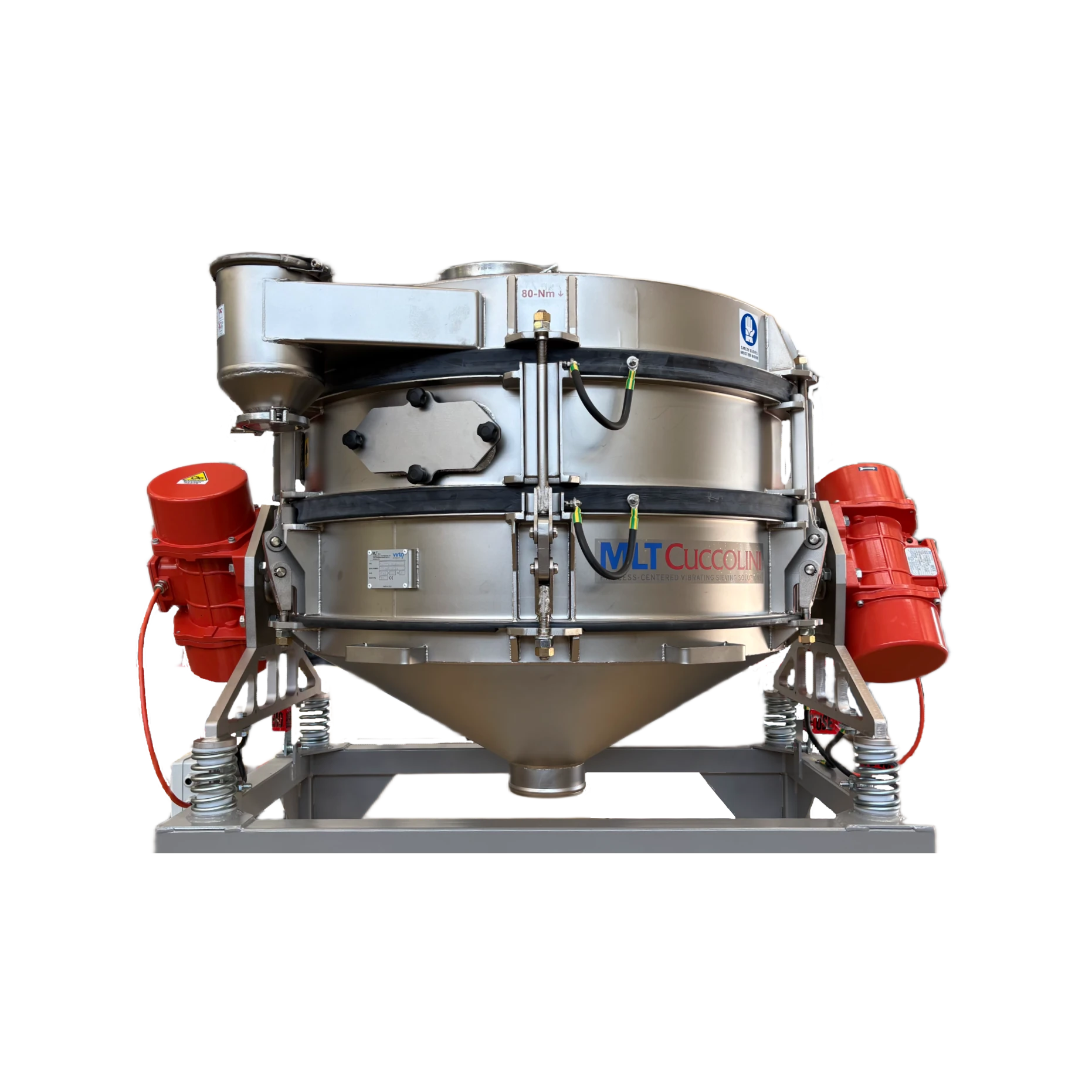
Vibrating sieving with dedicated circular equipment is particularly suitable for this task, as it allows precise control of cut points and the possibility to operate in multi‑deck configurations for several fractions in a single pass. Key parameters include the chosen mesh sizes, the targeted throughput, and the characteristics of the metal powder (shape, density, tendency to form satellites), as well as the required degree of containment and inerting for safe operation.
For this segment, MLT Cuccolini relies on X‑Line circular sieves as the core classification technology. Installed downstream of the atomiser and any intermediate buffering step, these machines separate the atomised powder into oversize, on‑spec, and fine fractions according to the required specification window. Their controlled multifrequency vibration improves separation efficiency, reduces the risk of mesh blinding, and supports stable performance even at fine cut points. Typical metal powders include titanium, stainless-steel, nickel, Inconel, copper, tungsten etc.
Beyond the sieving unit itself, MLT Cuccolini can supply fully integrated systems covering the entire powder handling path. Starting from bin unloading, the system can include feeding devices, multi‑stage classification with X‑Line circular sieves, and final discharge into dedicated collection bins. All of this can be implemented under inert gas, with appropriate sealing, gas management, and monitoring to protect both product integrity and operator safety.
These integrated solutions are managed by a complete control panel with proprietary software, coordinating product flow, vibration parameters, and safety functions. This approach facilitates recipe management for different powder grades, data collection for process monitoring, and smooth integration with the plant's wider automation architecture. Quick‑connect interfaces to and from bins further support efficient logistics and minimise manual handling of metal powders.
Using MLT Cuccolini X‑Line circular sieves and integrated systems for 3D printing metal powder production enables precise, reproducible control over particle size distribution, helping powder producers meet demanding additive manufacturing specifications. Accurate removal of both coarse and ultra‑fine fractions supports better flowability, reduced dust, and more stable behaviour in the printer.
The availability of turnkey, inerted solutions with automated control, bin management, and multi‑stage screening gives producers the flexibility to scale capacity, introduce new powder grades, and maintain high safety and quality standards in a rapidly evolving market.
Contact MLT Cuccolini to discuss your metal powder production process for 3D printing and define the most suitable X‑Line classification system and layout for your specific installation.

See it in action
Discover how MLT technology helps companies
improve product quality, increase efficiency
and simplify their production processes.