During distillation of many different types of essences and maceration of botanicals, fruits and other plant‑based ingredients, alcohol streams carry suspended solids such as fine plant particles, fibres and process residues. If not removed, these solids can complicate storage, cleaning and reuse of the recovered alcohol, or require large decantation tanks and long settling times. Applying vibrating sieves dedicated to fluid liquids filtration allows the alcohol to be cleaned from solids in a controlled, continuous way, preparing it for reuse or further treatment.

Using vibrating sieves in alcohol recovery is particularly attractive because it can significantly reduce or eliminate decantation phases. Instead of holding alcohol in tanks to wait for solid–liquid separation by gravity, producers can filter directly after distillation or maceration, reducing residence times, tank volumes and handling of heavy decantation vessels. This optimises both CAPEX and OPEX, freeing space and reducing the energy and labour associated with agitation, heating or racking operations.
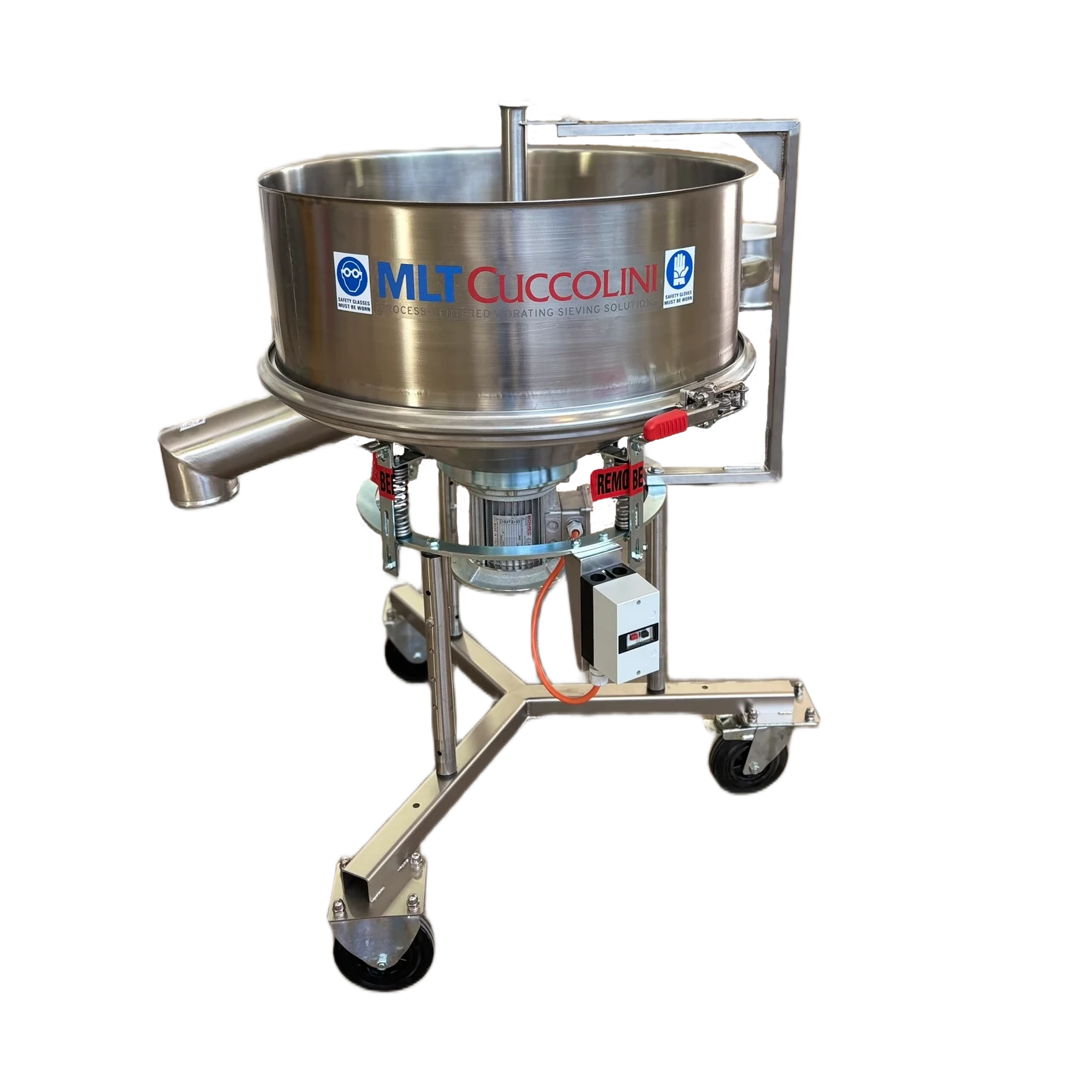
For this application, MLT Cuccolini proposes its fluid liquids filtration solutions, based on circular vibrating sieves designed to handle water‑like liquids such as ethanol‑rich process streams. Calibrated vibration promotes liquid passage through the mesh while moving the solid fraction towards the outlet, so that recovered alcohol is freed from suspended particles without the need for manual intervention. Mesh sizes and flowrates are configured case by case, depending on the degree of clarity required and the volume and nature of the solids.
Because alcohol streams are both chemically aggressive and potentially explosive, all product‑contact parts of the sieve are manufactured in AISI 316 stainless steel, ensuring corrosion resistance and compatibility with cleaning and sanitising routines typical of beverage plants. In addition, the sieves for this application are supplied in ATEX gas execution, allowing safe operation in classified zones where flammable vapours may be present and supporting compliance with applicable safety regulations.
Integration points typically include the discharge of distillation columns, intermediate collection tanks after maceration, or circuits where alcohol is separated from spent botanicals and returned to the process. Compact sieve footprints facilitate installation close to existing tanks and lines, while the circular design and accessible internals support routine inspection and cleaning between production campaigns or recipe changes.
Choosing MLT Cuccolini vibrating sieves for alcohol recovery helps beverage producers combine economic and process advantages: more efficient reuse of valuable alcohol streams, reduced need for decantation tanks and related handling, and lower solid loads in downstream equipment. Corrosion‑resistant AISI 316 construction and ATEX gas execution provide a robust foundation for safe, long‑term operation in demanding alcoholic drinks environments.
By aligning sieve configuration, mesh size and installation layout with each distillery or beverage plant's specific process scheme, MLT Cuccolini supports process engineers and plant designers in achieving reliable alcohol recovery that fits both quality targets and operational constraints.
Are you looking to improve alcohol recovery from distillation or maceration in your beverage plant while reducing decantation time and tank usage? Contact our team to review your process layout and define the MLT Cuccolini vibrating sieve solution best suited to your alcohol streams, safety requirements and capacity goals.
See it in action
Discover how MLT technology helps companies
improve product quality, increase efficiency
and simplify their production processes.