Industrial washing lines for garments, workwear, linens, and industrial wipes generate large volumes of wastewater containing a wide range of solid residues. These include fabric fibres, threads, buttons, zips, labels, and occasional foreign bodies coming from pockets or process incidents. Without adequate separation, these contaminants can clog pipes and filters, foul heat exchangers, and reduce the efficiency of downstream treatment systems.
Primary solid-liquid separation focuses on removing as much of this solid load as possible before the
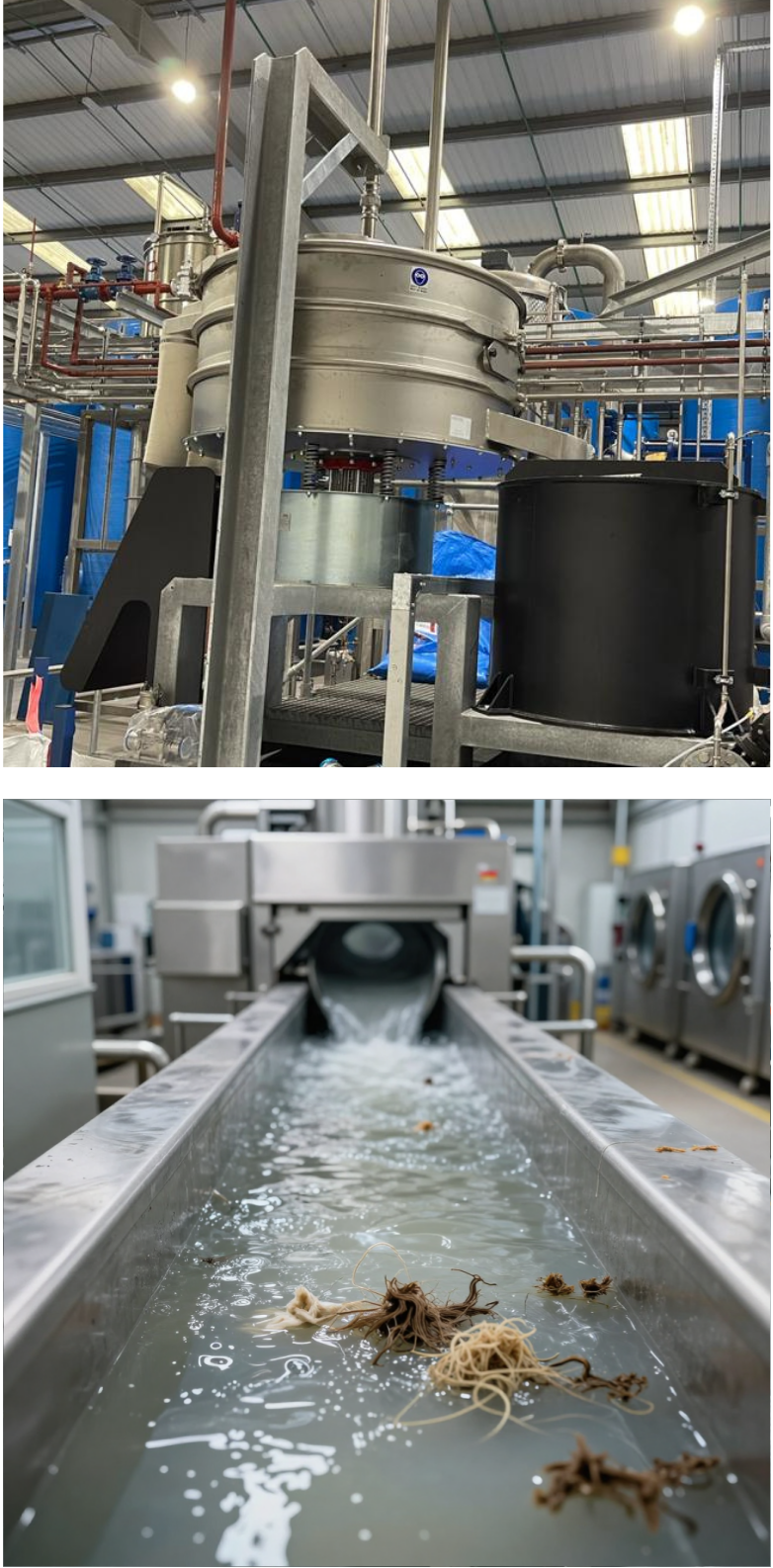
water is directed to finer filtration, chemical treatment, or disinfection steps. By intercepting textile residues and other coarse and fine particles directly after the washing machines or from collection channels, this operation stabilises the characteristics of the wastewater stream and reduces the burden on subsequent equipment.
Vibrating sieving is particularly suitable for industrial laundry water recovery, as it allows continuous removal of solids from high-flow water streams within a compact footprint. With appropriate configuration, vibrating sieves can achieve fine cut points — down to around 40 µm — significantly reducing the concentration of suspended solids. Key parameters such as mesh size, throughput, and installation point must be defined according to the washing line layout, the mix of processed textiles, and the desired balance between separation efficiency and pressure loss.
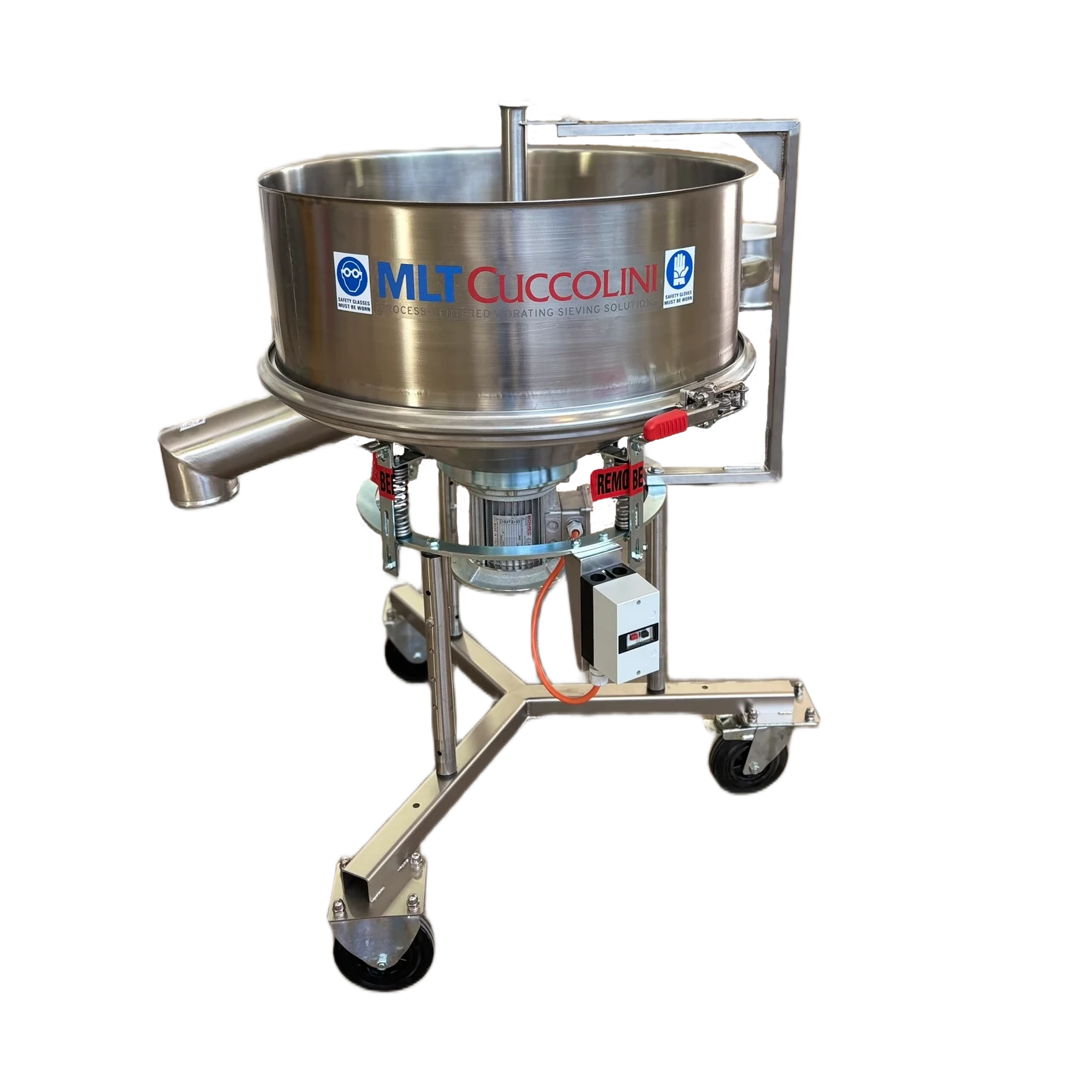
MLT Cuccolini VLM and VLM_S vibrating sieves are used in this segment as efficient primary filtration devices. Installed on recirculation loops or discharge lines, they screen out textile fibres, threads, and other foreign bodies, producing a clarified water stream that is better suited to downstream treatment and reuse. Their design for liquid and semi-liquid products, combined with calibrated vibration, ensures efficient separation while maintaining stable hydraulic conditions.
Thanks to their stainless-steel execution and robust construction, VLM and VLM_S units are well adapted to the demanding conditions of industrial laundries, where continuous operation, detergents, and temperature variations are common. Easy access for inspection and cleaning supports regular maintenance and helps keep the screening surface free from deposits, which is essential for maintaining performance at fine cut points around 40 µm.
Using MLT Cuccolini VLM and VLM_S vibrating sieves for industrial laundries process water recovery helps improve overall plant hygiene, protect downstream equipment, and support water reuse strategies. Effective removal of textile residues and foreign bodies reduces the load on subsequent filtration and treatment stages, leading to more consistent water quality and lower operating costs.
The combination of fine separation capability, robust design, and flexible installation options makes VLM and VLM_S solutions a valuable tool for industrial laundries aiming to enhance both sustainability and process reliability in their water management systems.
Contact MLT Cuccolini to discuss your industrial laundry process water recovery needs and define the most suitable VLM and VLM_S vibrating sieving configuration for your specific installation.