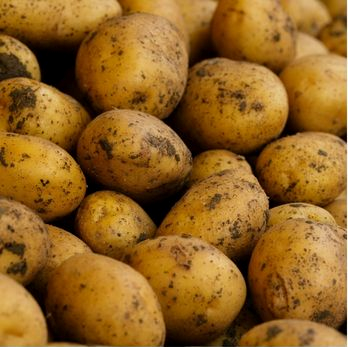
During typical industrial processing, potatoes are transported, peeled, and cut using water channels that carry both product and process residues. As potatoes are abraded and sliced, a considerable amount of starch is released into the water stream. If not removed, this starch accumulates in the circuit, contributing to foam formation, deposits, and higher cleaning requirements along the line.
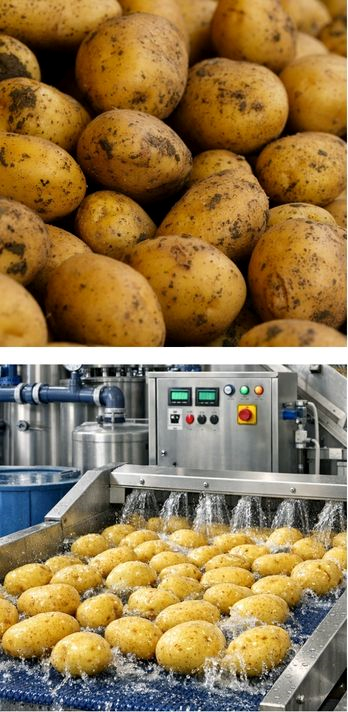
The presence of starch in circulating water often forces processors to dose anti-foaming chemicals on a continuous basis to keep foam under control. This adds direct purchasing costs and can complicate process management, especially when multiple production lines or long operating shifts are involved. In addition, high foam levels may reduce the effective throughput of water channels, causing delays in product transport and impacting overall line efficiency.
By introducing a dedicated filtration step on the process water, it is possible to intercept the starch fraction before it spreads throughout the system. Vibrating sieving represents an effective and more ecological solution, as it allows continuous separation of suspended solids at fine cut points while maintaining a stable flow of water. Parameters such as mesh size, throughput, and installation point must be carefully selected to match the characteristics of the line and the desired level of starch removal.
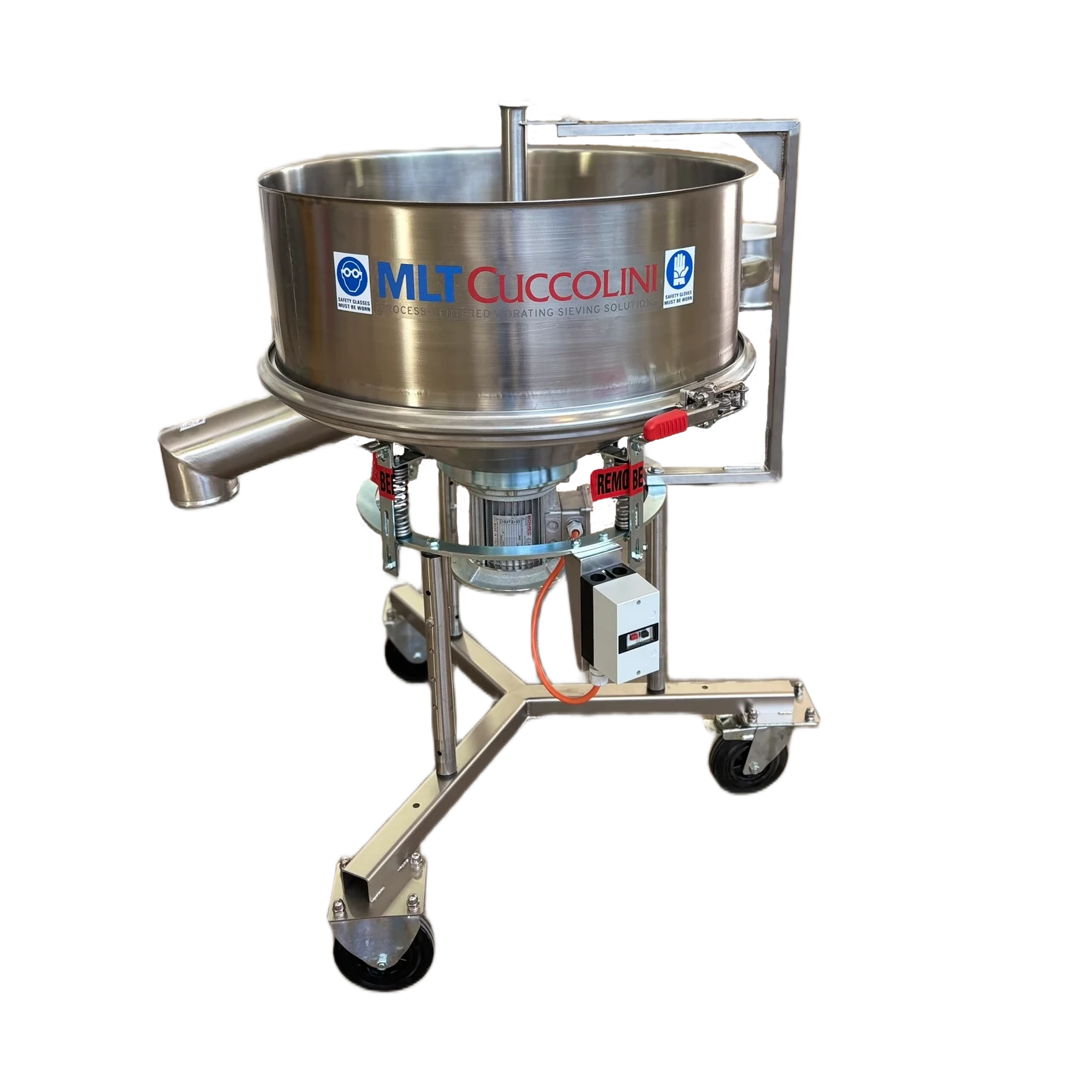
MLT Cuccolini VLB vibrating sieves are particularly suited for this application. Installed on the recirculation or discharge lines of potato processing water, they filter starch typically below 100 µm, removing it from the flow and reducing the solid load in the circuit. The controlled vibration and specific design for liquid and semi-liquid products ensure efficient separation without excessive turbulence, helping to maintain stable hydraulic conditions along the channel network.
Thanks to their construction in stainless steel and hygienic design, VLB units can be easily integrated into food processing environments. Access for inspection and cleaning supports regular sanitation procedures, while the compact footprint facilitates installation even in existing plants. The reduction of starch in the circulating water translates into lower foam generation, improved flow, and reduced reliance on chemical anti-foaming agents.
Using MLT Cuccolini VLB vibrating sieves for the filtration of potato starch in potato processing helps improve process stability and hygiene by removing fine starch particles from the water stream. This supports more efficient product transport, reduces foam-related issues, and allows a significant reduction in the use of anti-foaming chemicals.
The combination of fine separation capability, hygienic design, and flexibility of installation makes this solution an effective tool for processors looking to enhance both operational efficiency and sustainability in their potato processing lines.
Contact MLT Cuccolini to discuss your potato processing water management and define the most suitable VLB vibrating sieving configuration for intercepting potato starch in your specific installation.
See it in action
Discover how MLT technology helps companies
improve product quality, increase efficiency
and simplify their production processes.