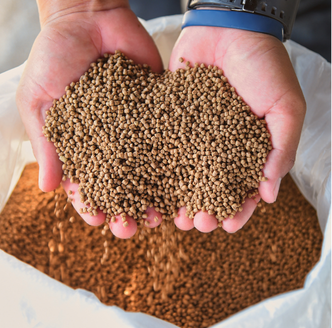
Grass fertilizers are typically produced as fine granules or prills designed to be applied with mechanical spreaders. If the product contains too many oversize particles, dust, or agglomerates, the spread pattern can become uneven, leading to stripes, local overdosing, or under-fertilized areas on the turf. Consistent particle size distribution is therefore a key factor for both product quality and customer satisfaction.
The classification process focuses on separating the fertilizer into well-defined particle size fractions, removing the oversize fraction and any undesired fines. This operation helps stabilize downstream processes such as coating, packaging, and palletizing, while supporting the declared product specifications printed on the bag. At the same time, it contributes to reduced waste and more efficient use of raw materials.
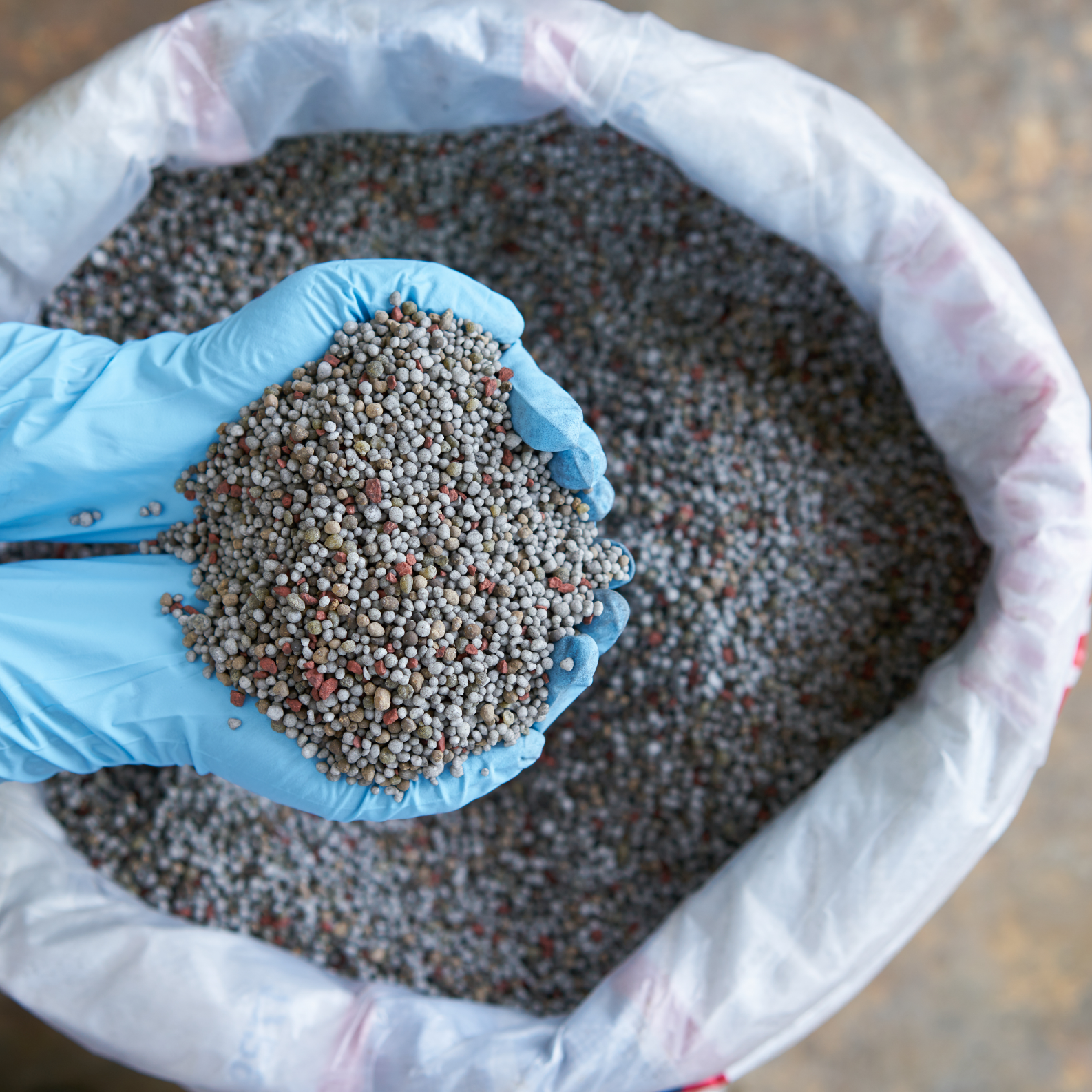
Vibrating sieving is particularly suitable for fine granular fertilizers, as it combines high separation efficiency with the ability to handle abrasive products and significant throughputs. Parameters such as mesh size, throughput, and installation point must be defined according to the required cut point—usually within the fine granulometric range for grass fertilizers—and the characteristics of the upstream granulation or compaction process.
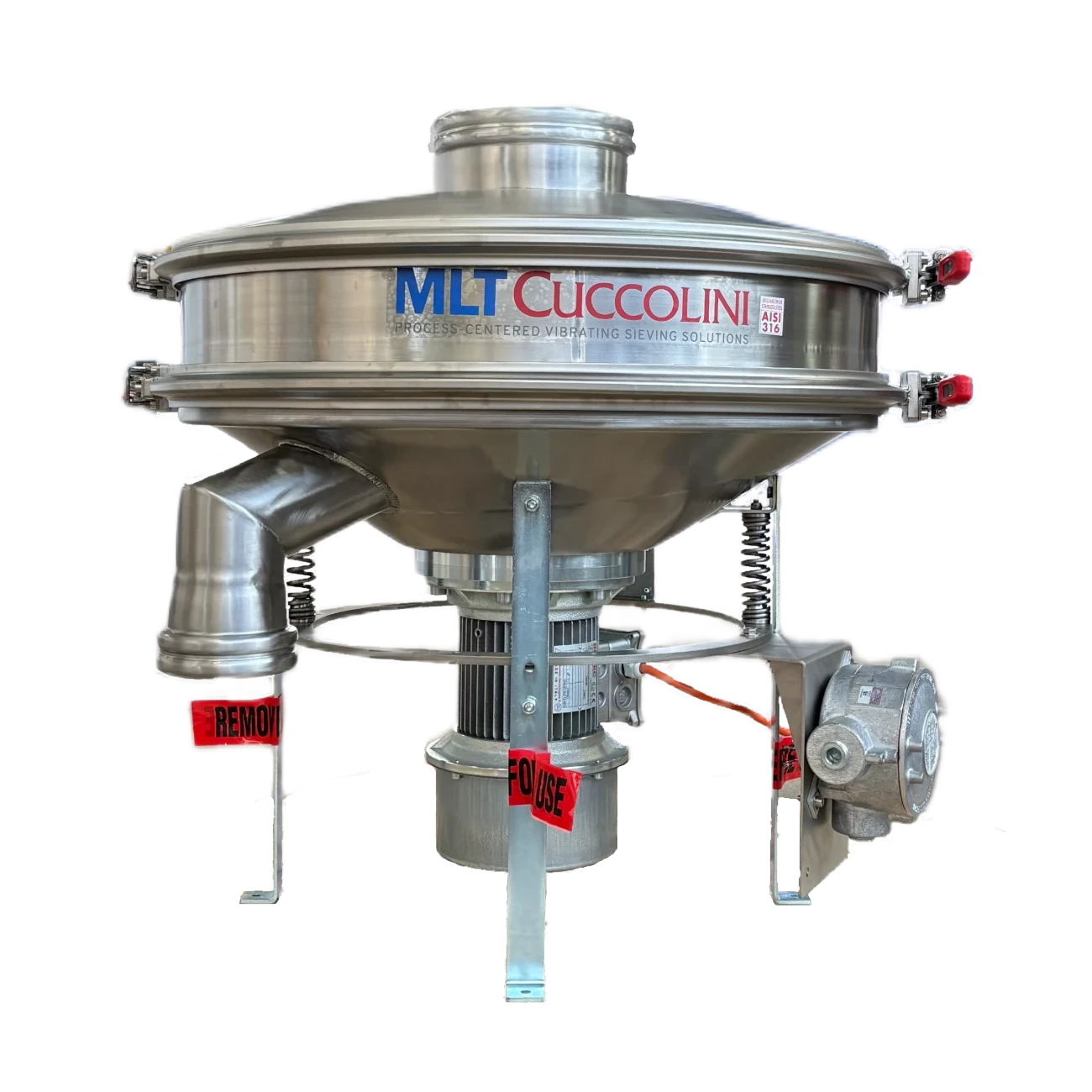
MLT Cuccolini VPM vibrating sieves are especially well suited for grass fertilizer classification. Typically installed after granulation, drying, or cooling stages, they separate the product into on-spec granules and oversize fractions, with the possibility of reintroducing coarse material into the production process where required. Their controlled vibration and optimized screening surface ensure precise cut points and stable operation over time.
The VPM design supports continuous operation at industrial capacities while minimizing product contact to withstand the abrasive nature of mineral-based fertilizers. Flexible mesh configurations allow adaptation to different product formulations and target particle size ranges, making it possible to process multiple recipes using the same screening line when required.
In addition to classification efficiency, ease of cleaning and machine accessibility are important considerations in fertilizer plants, where product changes and maintenance operations must be managed safely and quickly. VPM vibrating sieves are designed to facilitate inspection and mesh replacement, supporting preventive maintenance and minimizing downtime.
Using MLT Cuccolini VPM vibrating sieves for grass fertilizer classification ensures a consistent, on-spec granular product, improving spreading performance and final turf quality in lawn, park, and golf course applications. Effective removal of oversize particles and fines also helps protect downstream equipment and stabilize the overall production process.
Thanks to their dedicated design, flexible configuration, and reliable performance, VPM vibrating sieves support fertilizer producers in meeting market expectations for product quality while maintaining high levels of operational efficiency and productivity.
Contact MLT Cuccolini to discuss your grass fertilizer classification process and identify the most suitable vibrating sieving solution for your specific application.