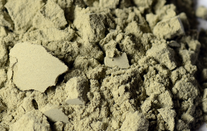
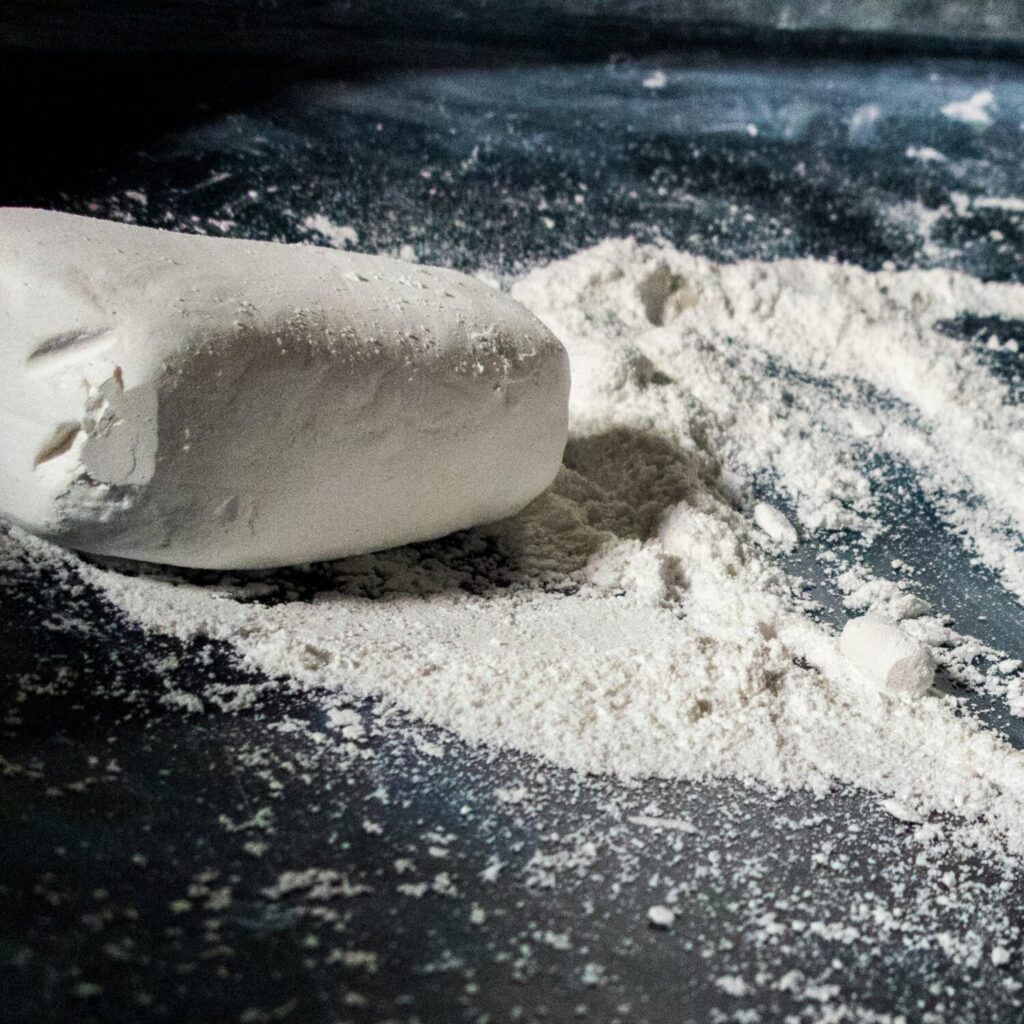
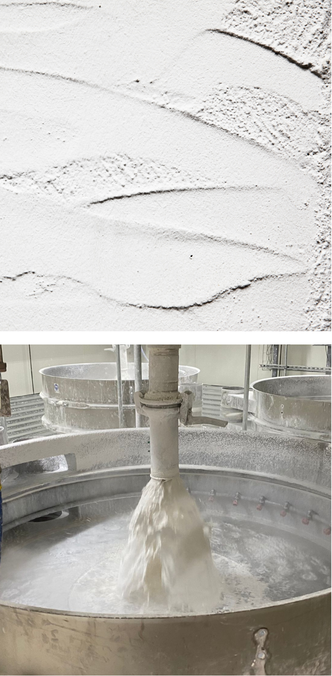
Copper pentahydrate powders present unique classification challenges due to their heterogeneous particle morphology. Coarser fractions typically consist of granular particles, while finer fractions exhibit a characteristic flake or snowflake-like structure. This variability can lead to inconsistent flow behavior, segregation, and difficulties in achieving a precise and stable particle size distribution.

The classification process is essential to remove oversize fractions, eliminate foreign bodies, and ensure a controlled granulometric curve. This directly impacts downstream operations such as dosing, mixing, and application, particularly in agricultural formulations where uniformity is key to effectiveness and compliance with quality standards.
Vibrating sieving is particularly suitable for this application, provided that the machine is capable of handling delicate and irregular particle shapes without altering their structure. Parameters such as mesh size, throughput, and installation point must be carefully defined to balance separation efficiency with gentle handling of the material.
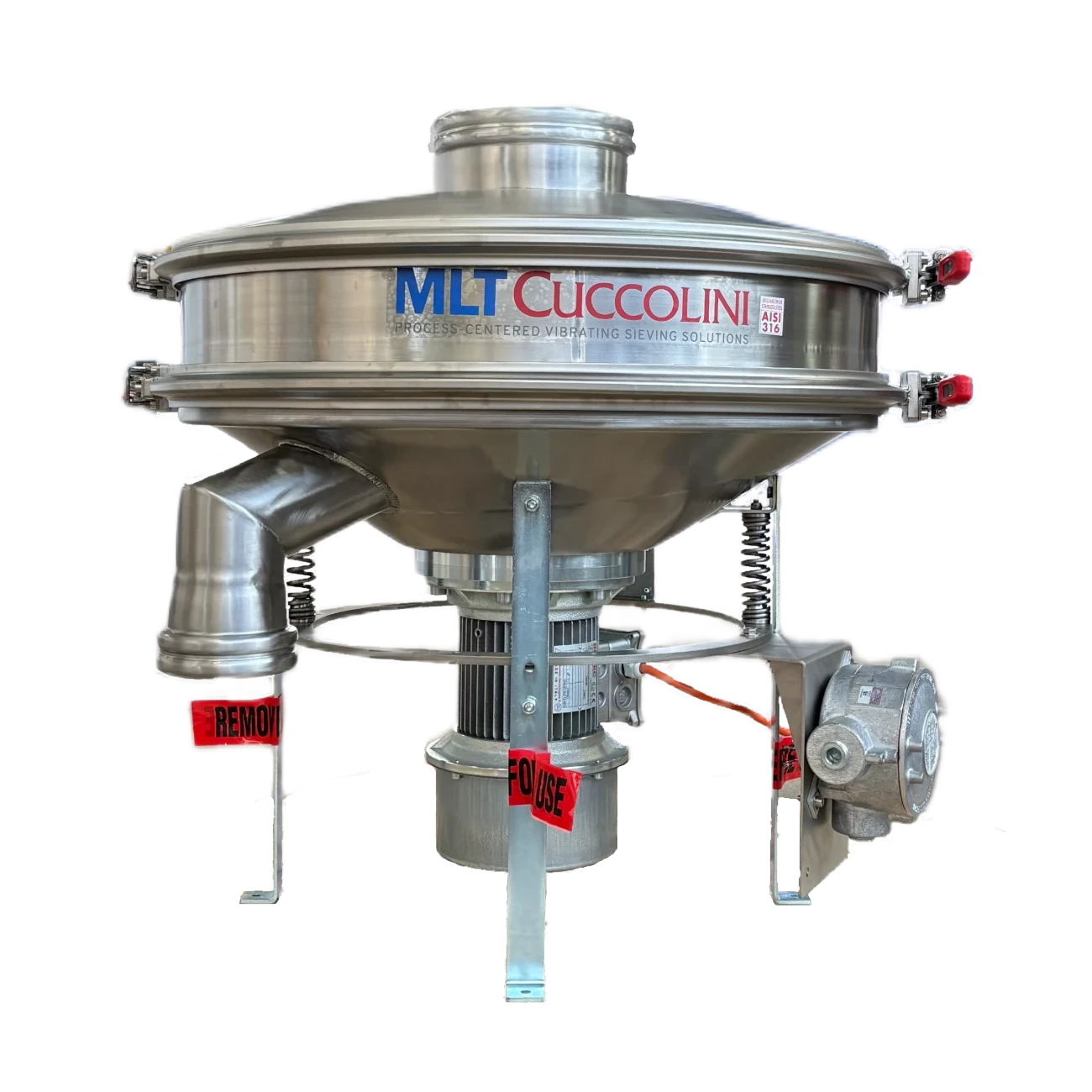
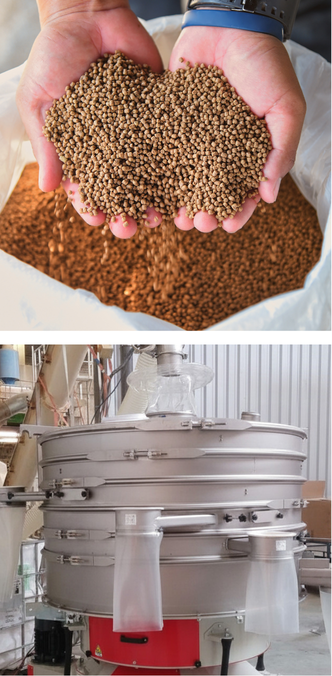
MLT Cuccolini VPM vibrating sieves are especially effective for copper pentahydrate classification. Their design and calibrated vibration, as well as the specific sieve configuration, allow precise separation even in the presence of complex particle morphologies, ensuring that both granular and flake-like fractions are processed without breakage or unintended modification.
Typically installed under silos, sack tip stations, or along conveying lines, VPM sieves can operate across a wide range of throughputs depending on the process requirements. Their flexibility in mesh size selection allows accurate control of the final particle size distribution, supporting both coarse and fine classification stages within the same process.
Specific design features and process adjustments enable the VPM to maintain high screening efficiency despite the challenging nature of the material. The combination of controlled vibration, robust construction, and optimized screening surface ensures reliable operation while minimizing the risk of clogging or performance loss.
Using MLT Cuccolini VPM vibrating sieves for copper pentahydrate classification ensures a precise and consistent particle size distribution, improving product quality and process stability. Effective removal of contaminants and oversize particles also protects downstream equipment and reduces the likelihood of unplanned downtime.
The ability to handle complex particle morphologies without degradation makes this solution particularly suitable for demanding chemical and agricultural applications, ensuring long-term reliability and performance.
Contact MLT Cuccolini to discuss your copper pentahydrate classification process and identify the most suitable vibrating sieving solution for your specific application.