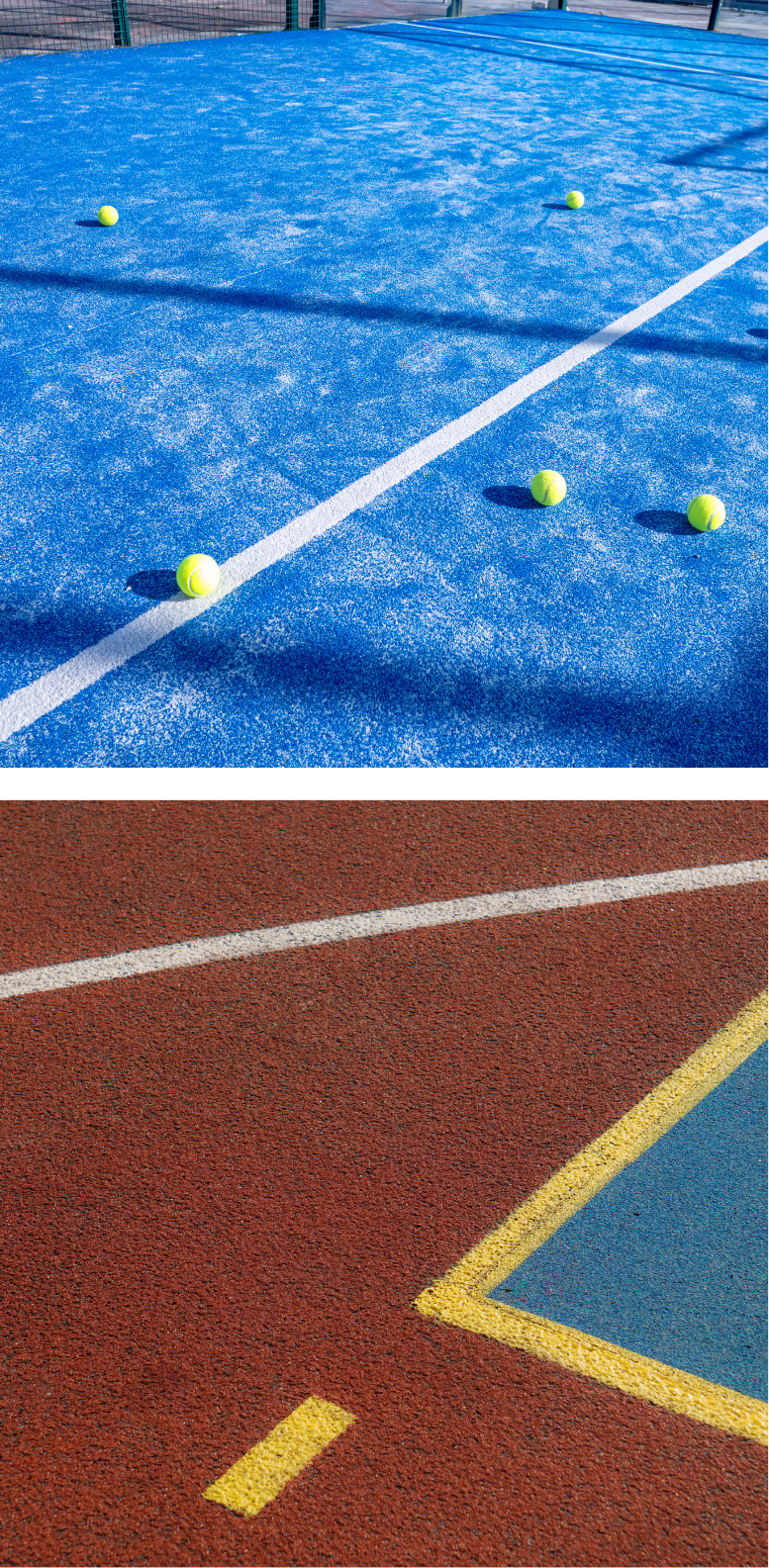
are typically composed of several layers, including synthetic turf fibres, rubber or organic infill, and sand. During end-of-life processing, these materials are shredded or ground together, generating a heterogeneous mix with different particle sizes and densities. Without proper classification, these fractions remain mixed, limiting the potential for recycling and increasing disposal costs.
The classification process takes advantage of the natural granulometry resulting from grinding and materials' characteristics, separating the bulk product into well-defined fractions such as sand, rubber granules, and lighter turf-related materials. By identifying suitable mesh openings for the main fractions and accepting a controlled tolerance around the target ranges, it is possible to obtain streams that can be reused, further processed, or disposed of more efficiently and responsibly.
Vibrating sieving is particularly suitable for this application because it combines robust handling of abrasive, dense materials like sand with the ability to separate lighter and more elastic components such as rubber granules and fibre fragments. Key parameters include mesh size, throughput, and installation point, as well as the number of fractions required and the characteristics of the upstream shredding line.
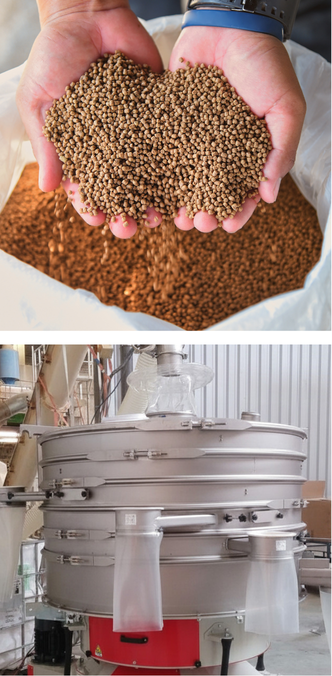
MLT Cuccolini VPM vibrating sieves are used when continuous, high-capacity classification is needed. Typically installed downstream of shredders or granulators, they separate the ground mixture into several particle size bands using multiple decks. Their calibrated vibration supports stable operation even with variable feed conditions, and their robust construction is designed to withstand the mechanical stress associated with mineral and rubber components.
When a higher number of fractions or a high flowrate is required, VTU nutation sieves provide an alternative solution. Installed in similar positions after grinding stages, VTU machines can generate up to five distinct granulometric fractions in a single pass. Their specific tumbling motion enhances separation accuracy while maintaining gentle handling of rubber granules and fibre fragments, which helps preserve the quality of the recovered materials.
Both VPM and VTU solutions can be configured to match different plant layouts and capacity requirements, allowing recyclers to optimise the balance between separation performance and investment. Ease of cleaning, modular design, and accessible components support regular maintenance and screen changes, which are important in recycling environments where input materials and specifications may change over time.
Using MLT Cuccolini VPM and VTU vibrating sieves for sand and rubber recovery from synthetic playgrounds enables recyclers to obtain cleaner, more homogeneous fractions, improving the potential for reuse and reducing disposal volumes. Controlled classification enhances overall process efficiency, protects downstream equipment, and supports more sustainable management of end-of-life synthetic sports surfaces.
The flexibility to adapt mesh configurations, capacities, and machine types allows these solutions to be tailored to a wide range of recycling schemes, from dedicated field-recycling plants to more general-purpose materials recovery facilities.
Contact MLT Cuccolini to discuss your synthetic playground recycling process and identify the most suitable vibrating sieving configuration for sand and rubber recovery in your specific installation.
See it in action
Discover how MLT technology helps companies
improve product quality, increase efficiency
and simplify their production processes.