Saltwater cultivation systems are increasingly used for spirulina production in coastal or arid regions where freshwater availability is limited. However, the harvested biomass retains salt residues from the culture medium, which must be removed before drying and final processing. Inadequate rinsing leads to excessive sodium content, reduced shelf life, and potential contamination of drying or milling equipment.
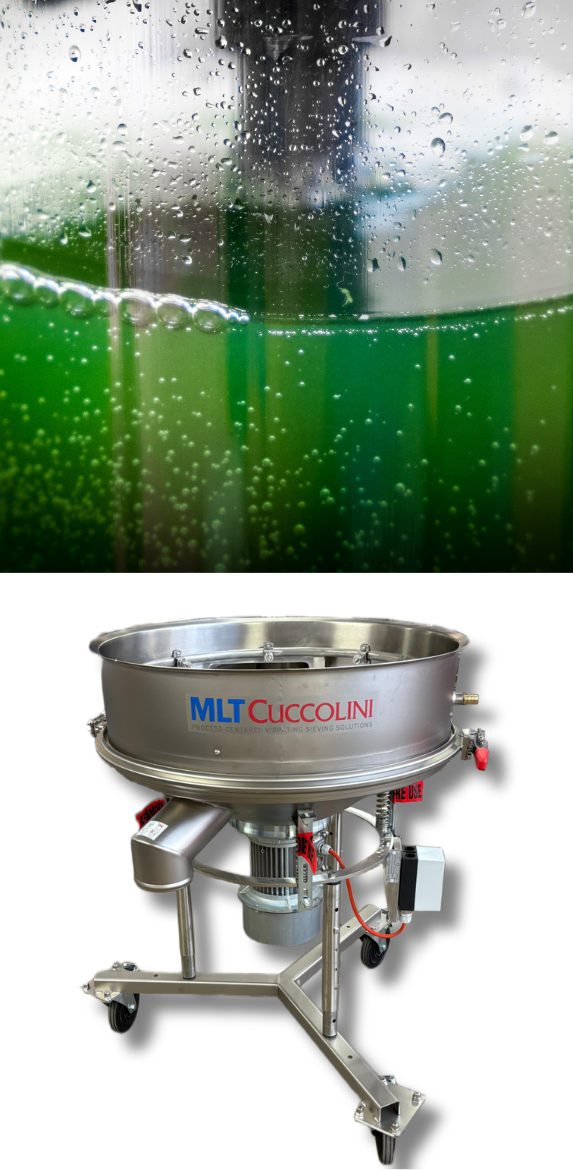
Vibrating sieving with integrated freshwater rinsing offers a controlled and efficient solution for this specific challenge. The process allows gentle washing of freshly harvested spirulina while maintaining the algae on the sieve mesh, ensuring continuous salt removal without product loss. This method avoids the complexity and cost of multi-stage centrifugation or membrane washing systems.
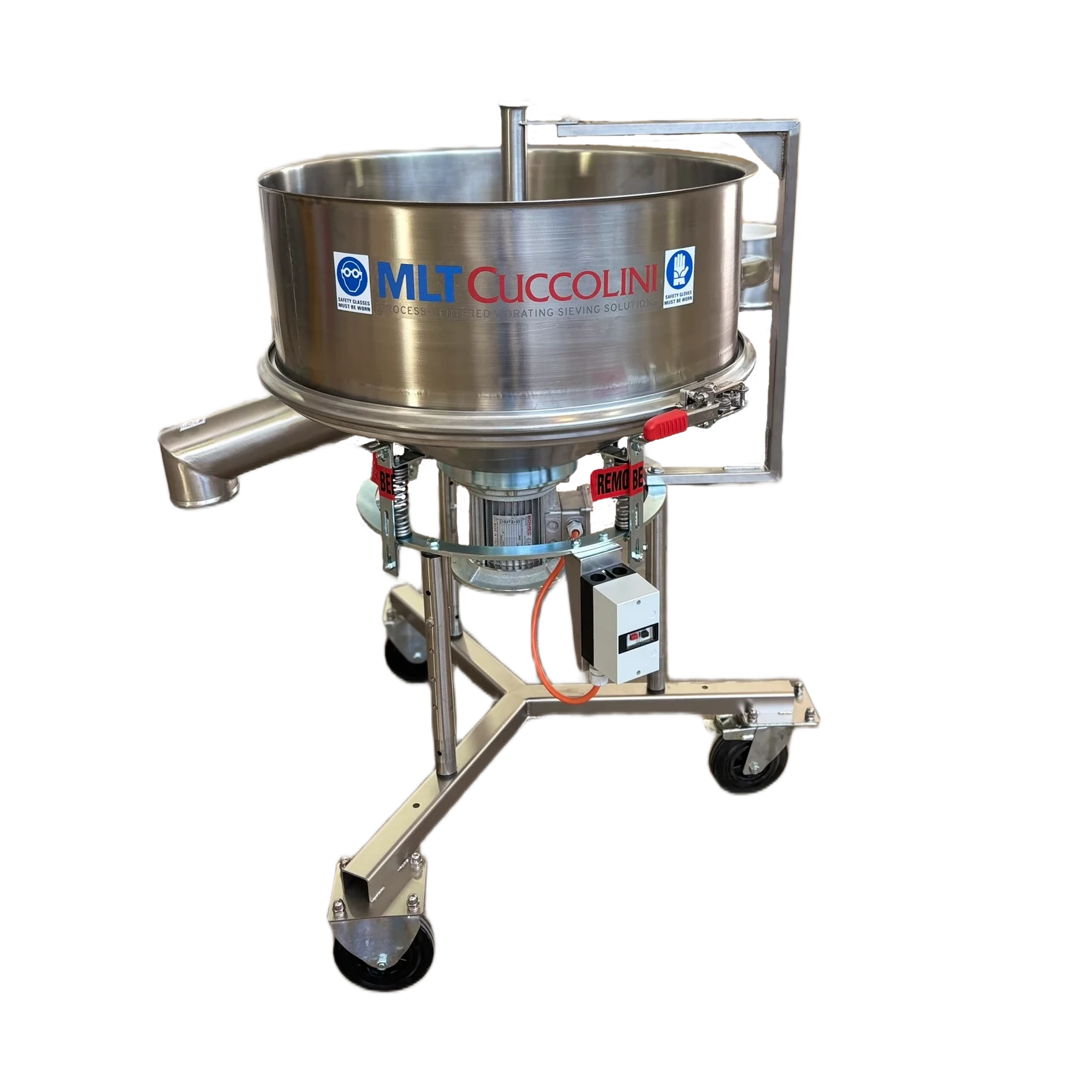
The SHT-R (Spirulina Harvesting Technology – Rinsing configuration) is a dedicated variant of the standard SHT line, featuring an integrated freshwater spray system positioned above the vibrating screen. The freshwater is distributed evenly across the product layer, dissolving and flushing away salt residues while the vibrating motion promotes even coverage and prevents channelling. Discharge gates allow adjustable retention time on the screen, optimising the balance between rinsing efficiency and throughput.
Typical mesh sizes for this application range from 10 to 25 µm, depending on spirulina strain and harvesting density. The vibrating motion is calibrated to maintain gentle product movement, avoiding cell rupture while ensuring effective contact between freshwater and spirulina filaments. AISI 316 stainless steel construction is standard for all wetted parts, ensuring corrosion resistance in both saltwater and freshwater environments.
Optional water recirculation systems can be integrated to reduce freshwater consumption, using a cascade rinsing approach where partially cleaned water is reused for pre-rinsing stages, and only final rinse water is freshwater. This configuration is particularly valuable in regions with limited freshwater resources or high water costs.
The SHT-R can be installed inline immediately after the primary harvesting sieve or as a standalone unit, depending on plant layout and throughput requirements. Mobile skid versions simplify installation and relocation for seasonal or multi-site operations.
Choosing MLT Cuccolini SHT-R technology for spirulina rinsing ensures effective salt removal, reduced freshwater consumption, and consistent product purity. The system protects downstream equipment from corrosion and contamination while maintaining high throughput and gentle product handling. Our expertise in food-grade liquid and powder screening, combined with tailored engineering support, ensures optimal integration into your existing harvesting line.
Contact MLT Cuccolini to discuss your saltwater cultivation process, desired purity levels, and freshwater availability. Our technical team will design the right SHT-R configuration and washing system for your specific rinsing requirements.
See it in action
Discover how MLT technology helps companies
improve product quality, increase efficiency
and simplify their production processes.