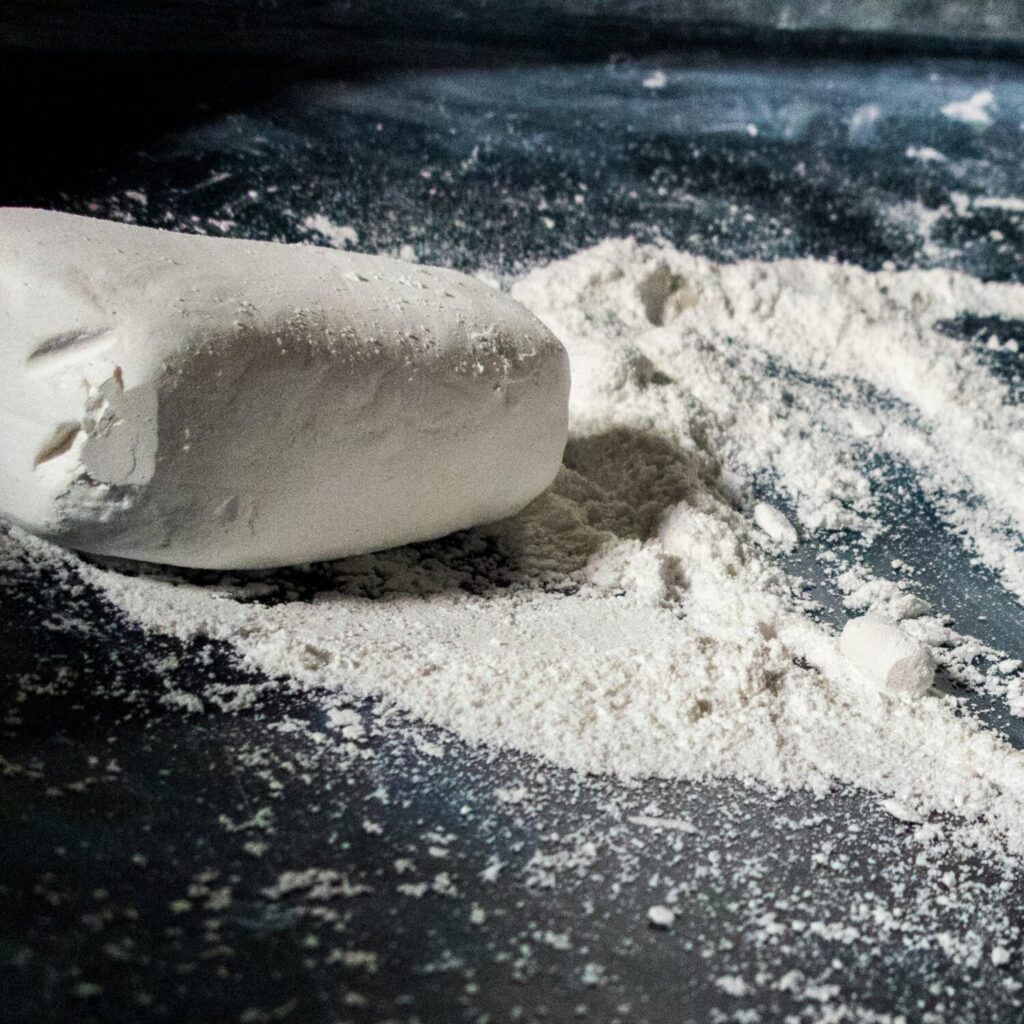
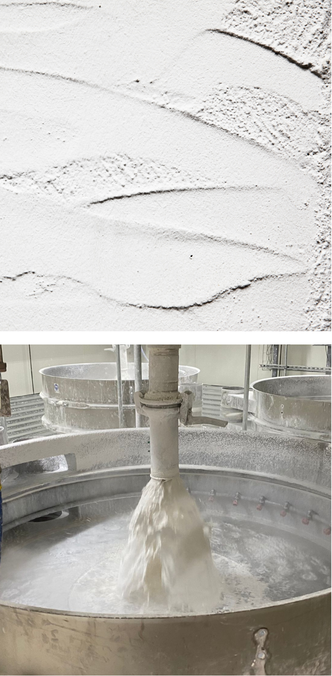
During flour and water mixing, incomplete dispersion and local overloading can generate lumps and agglomerates of starch and gluten, even when mixing parameters are well controlled. If these residues are not removed, they can lead to irregular flow behaviour, blockages in narrow sections, and defects in subsequent operations such as separation, concentration, or shaping. Primary filtration of the starch slurry is thus a key step to stabilise the process.
The filtration process focuses on eliminating undissolved or partially hydrated agglomerates while allowing the on-spec starch suspension to pass through. By doing so, it ensures that the liquid product has a consistent texture and solid content, facilitating downstream steps such as decanting, centrifugation, drying, or integration into other food formulations. At the same time, foreign bodies accidentally introduced during handling can be intercepted and removed.
Vibrating sieving is particularly suitable for wheat starch filtration because it combines controlled shear with efficient separation on fine meshes. Parameters such as mesh size, throughput, slurry viscosity, and installation point must be defined according to the characteristics of the mixing line and the desired filtration fineness. Proper configuration allows the removal of residual lumps and coarse particles while preserving the functional properties of the starch suspension.
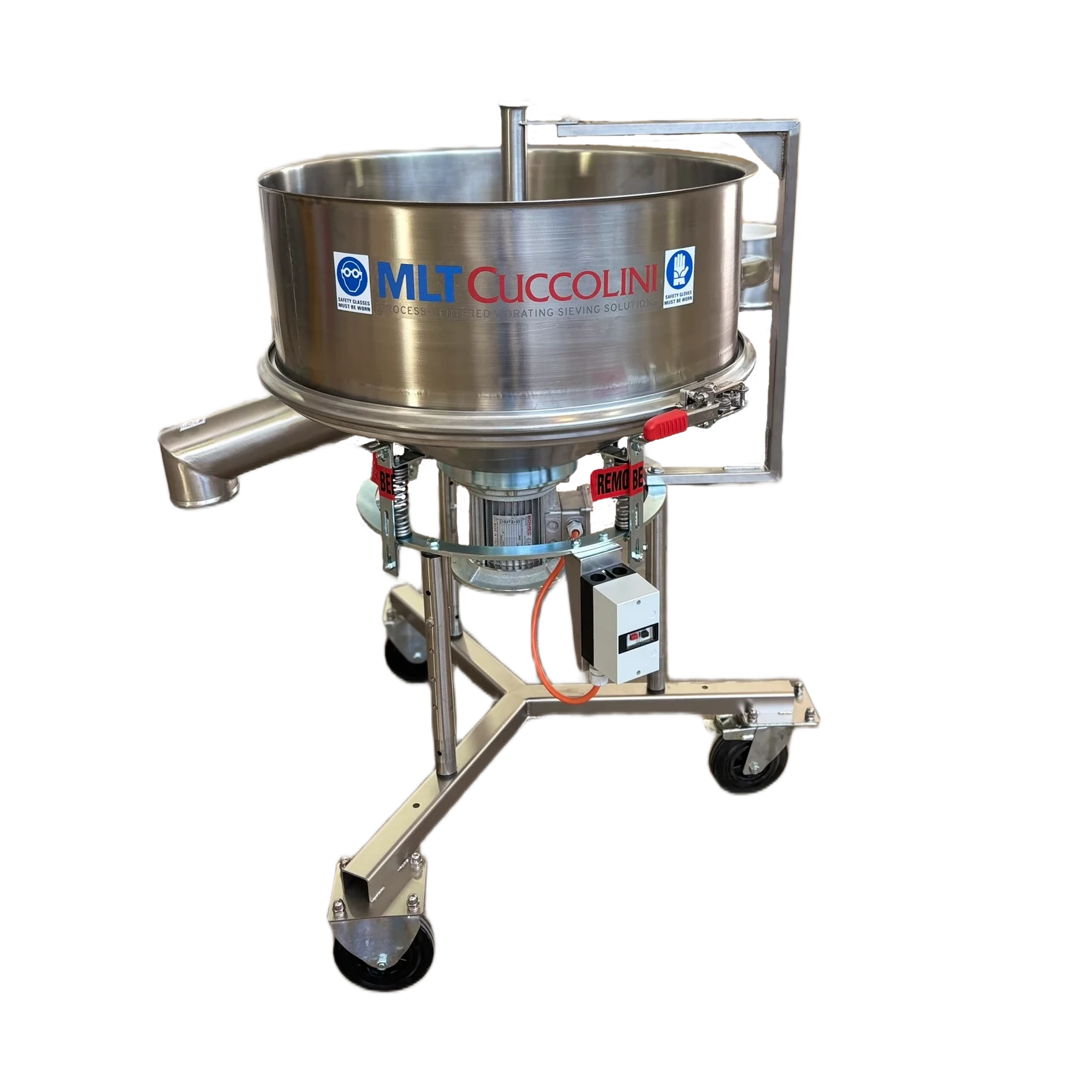
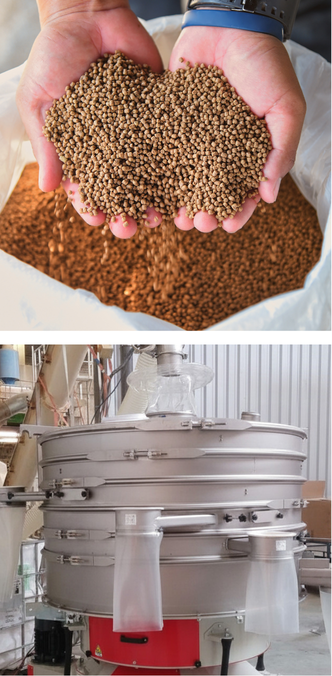
MLT Cuccolini VLM vibrating sieves provide an effective solution for this segment. Designed for liquid and semi-liquid products, VLM units are typically installed immediately downstream of the mixing stage or on recirculation lines, where they filter the starch slurry before it moves to further processing. Their calibrated vibration ensures efficient screening of agglomerates and undispersed particles, producing a smooth, pumpable liquid ready for the next steps.
Thanks to their stainless-steel execution and hygienic design, VLM machines support high sanitation standards required in food applications. Easy access for inspection and cleaning facilitates regular maintenance and quick product changeovers, while robust construction ensures reliable operation under continuous or semi-continuous conditions. This combination of features helps processors maintain stable throughput and consistent filtration efficiency over time.
Using MLT Cuccolini VLM vibrating sieves for wheat starch filtration ensures a homogeneous, lump-free slurry that supports higher and more consistent product quality in downstream processes. Effective removal of agglomerates and foreign bodies also protects equipment, reduces unplanned downtime, and simplifies cleaning operations.
The flexibility to adapt mesh sizes and installation configurations makes VLM solutions suitable for a wide range of wheat starch processes and plant layouts, backed by long-term experience in liquid and semi-liquid food applications.
Contact MLT Cuccolini to discuss your wheat starch filtration process and identify the most suitable VLM vibrating sieving configuration for your specific food production line.
See it in action
Discover how MLT technology helps companies
improve product quality, increase efficiency
and simplify their production processes.