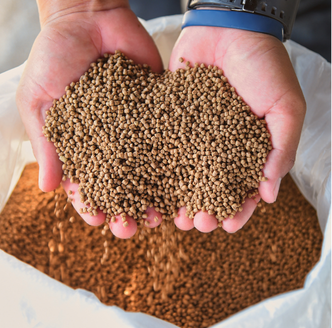
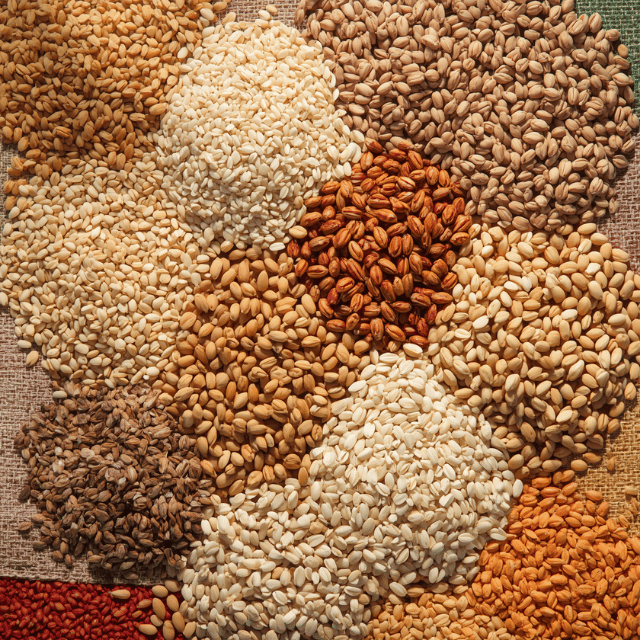
Fish feed is typically produced as granules or pellets through extrusion or other forming processes, followed by drying and cooling. The resulting product contains a natural spread of particle sizes, from fines to oversize pellets, which needs to be brought under control. Without effective classification, feed batches may contain particles that are too large or too small for the intended fish species, leading to feed rejection, sedimentation, and uneven growth.
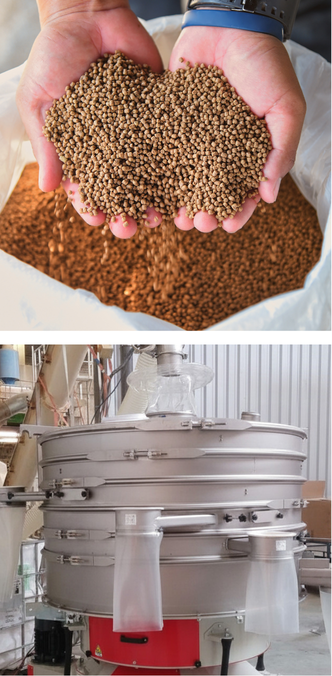
The classification process focuses on separating the bulk feed into distinct granulometric fractions, so that each fraction can be assigned to a specific product line or packaging format. A typical configuration may involve up to five fractions, from coarse pellets down to smaller granules suitable for juvenile fish. By defining appropriate mesh sizes and accepting a controlled tolerance around the target ranges, producers can achieve stable and repeatable particle size distributions aligned with market requirements.
Vibrating sieving is particularly suitable for fish feed classification because it combines gentle handling of relatively fragile pellets with precise separation. Key design parameters include mesh size, throughput, product temperature, and the number of fractions required. Properly configured vibrating sieves minimise pellet breakage and fines generation while maintaining the desired capacity and separation efficiency.
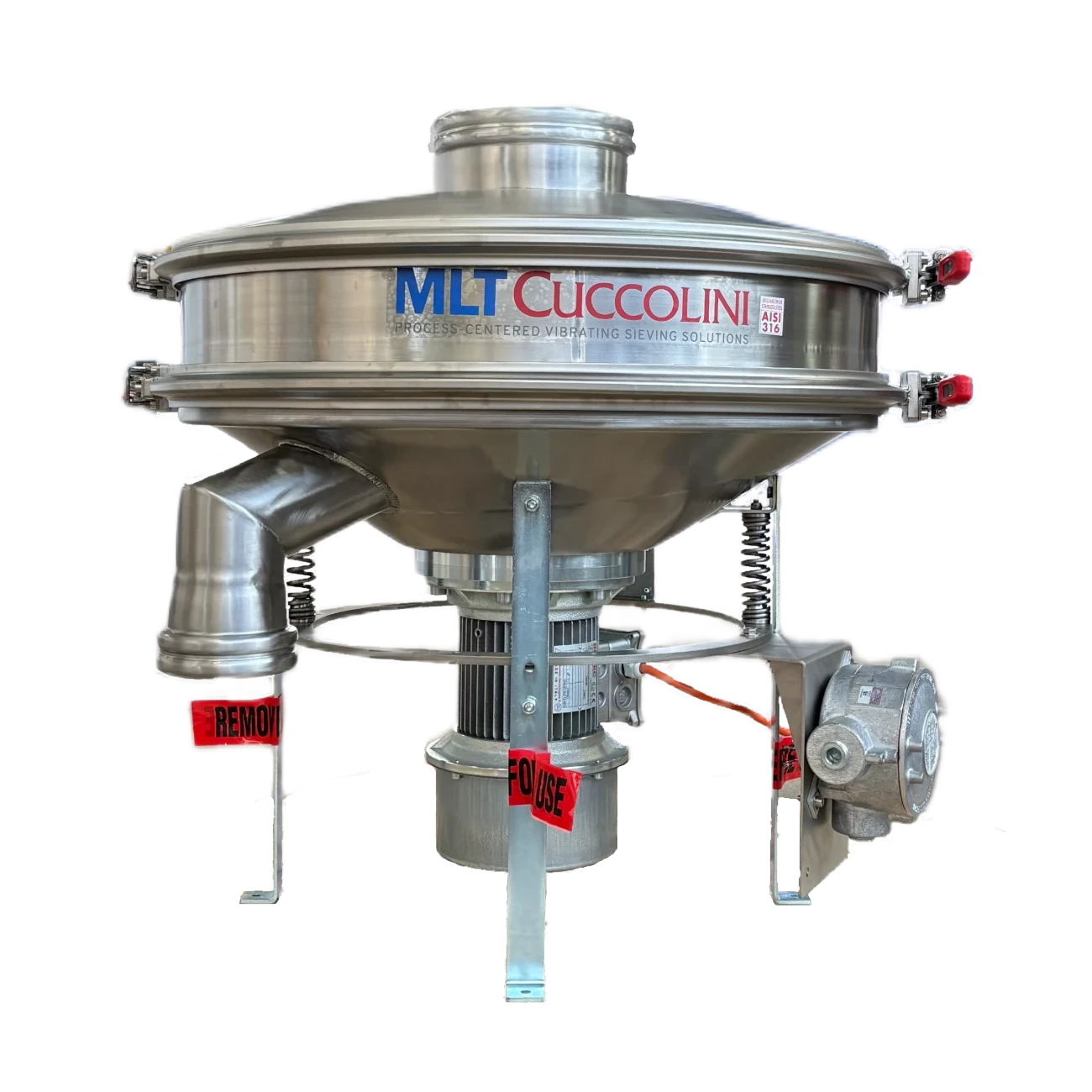
MLT Cuccolini VPB and VPM circular vibrating sieves are used when flexibility and compact installation are priorities. Typically positioned after the cooler or dryer, they can be equipped with multiple decks to produce several granulometric fractions in one pass. Their calibrated vibration supports a stable cut point and helps maintain product integrity, making them suitable for both medium and higher-capacity lines.
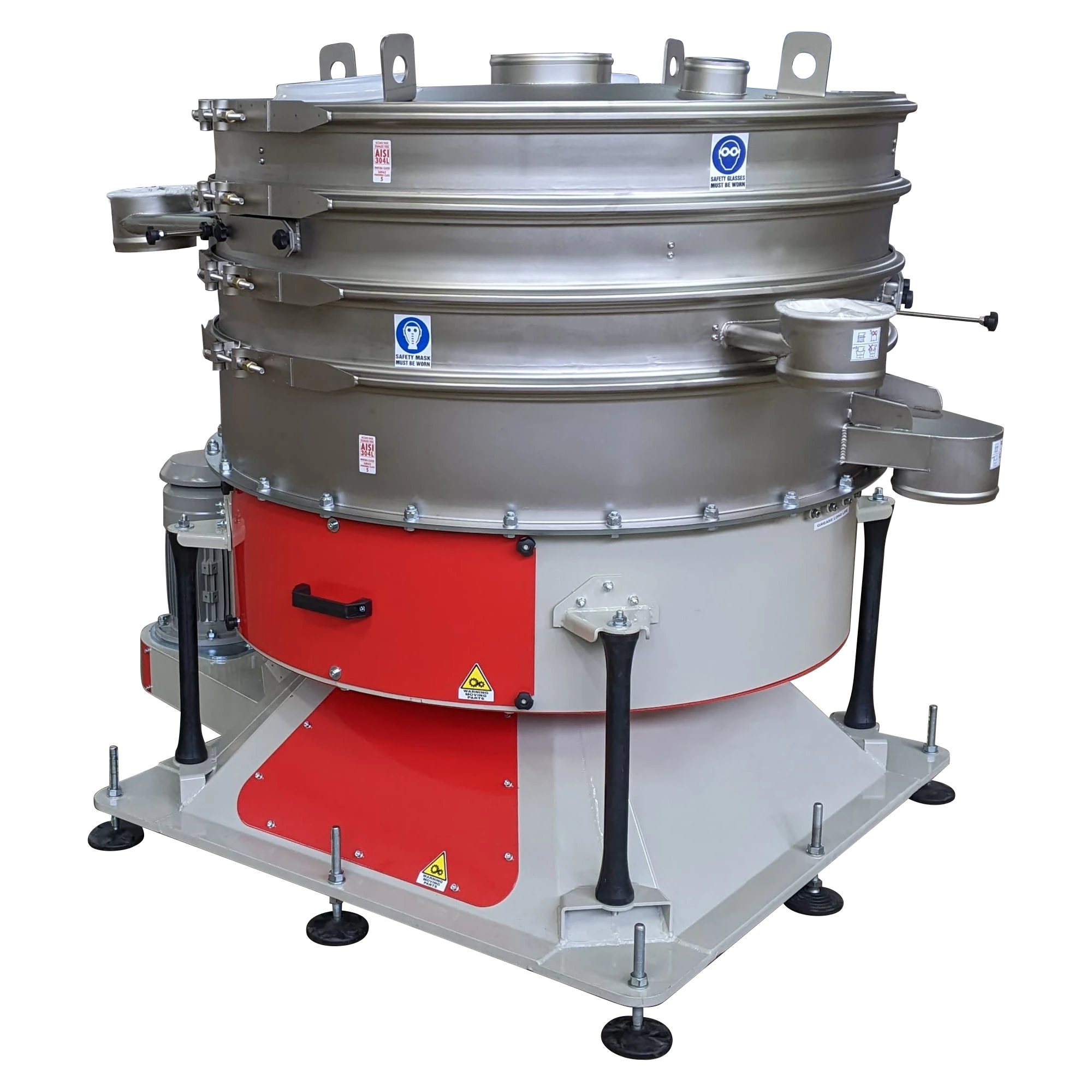
When relatively high flowrates are required, VTU nutation sieves offer an alternative. Installed in similar positions downstream of production, VTU machines can generate up to five distinct size classes in a single operation. Their tumbling motion enhances separation accuracy while providing gentle handling of pellets and granules, which is especially important for products with high fat content or sensitive coatings.
All these machines can be supplied in food-grade execution, with stainless steel contact parts and hygienic design features that facilitate cleaning and support high standards of hygiene. Easy access for inspection and screen changes allows producers to switch between different product formats and granulometric recipes with minimal downtime, which is particularly valuable in plants serving multiple species or markets.
Using MLT Cuccolini VPB/VPM and VTU vibrating sieves for fish feed classification enables producers to obtain well-defined granulometric fractions tailored to different fish species and growth stages. Consistent particle size distribution improves feeding efficiency, reduces fines and waste, and helps protect downstream equipment by stabilising product flow.
The combination of gentle handling, multi-fraction capability, and flexible configuration makes these solutions a robust choice for animal feed manufacturers looking to optimise both product quality and process performance.
Contact MLT Cuccolini to discuss your fish feed classification process and identify the most suitable vibrating sieving configuration—VPB/VPM or VTU—for your specific feed plant and product range.
See it in action
Discover how MLT technology helps companies
improve product quality, increase efficiency
and simplify their production processes.