Every industrial vibrating sieve has a history that began thousands of years ago.
A few millennia ago, as humankind was learning the first rudimentary processes to build, farm and cook, we invented one of our oldest separation tools: the sieve.
A circular tool—sometimes little more than a woven basket made of plant fibres, animal bristles or silk threads—was shaken by human hands to separate materials: cleaning flour and grains, classifying sand, filtering water and perhaps even recovering tiny particles of precious metals.
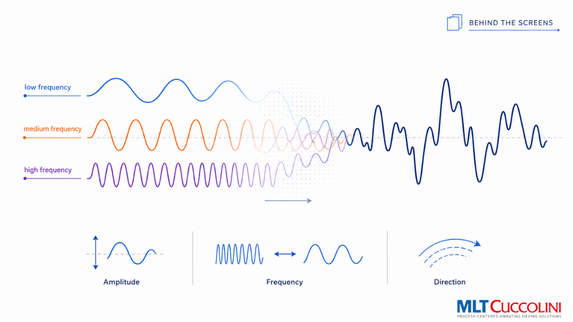
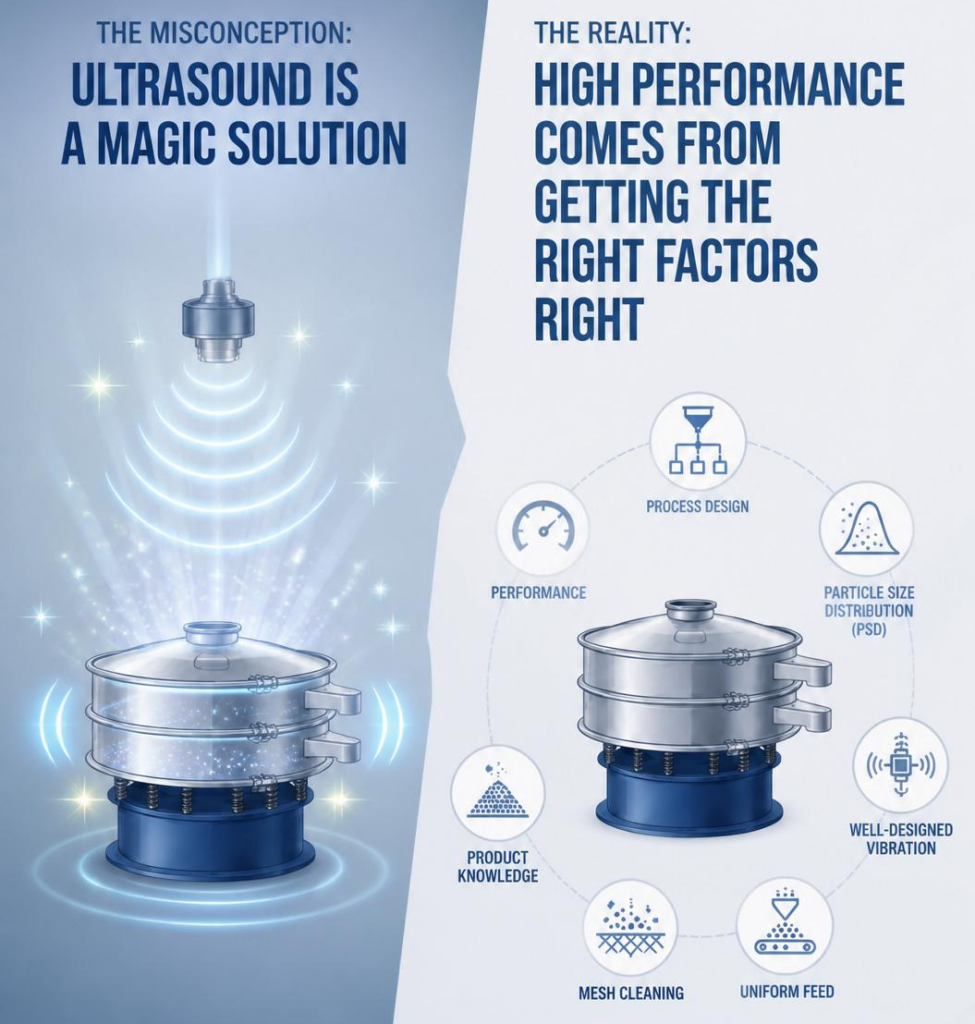
From that simple principle, and through centuries of evolution from wood to steel, the industrial vibrating sieve was born: a precision-engineered screening machine whose performance ultimately depends on one essential factor—how efficiently vibration is transmitted to the mesh.
At the heart of every vibrating sieve lies one fundamental question: which vibration characteristics generate the most effective response for the material being screened?
Behind that question lies another, equally important one: how efficiently is vibration transmitted to the mesh, and from the mesh to the product?
These are the questions that drive our work every day as vibrating sieve manufacturers. Understanding vibration dynamics and transforming them into reliable screening solutions means designing machines that combine energy efficiency, ease of maintenance and process reliability. Every application presents a different challenge, whether the objective is removing foreign particles, eliminating oversized material, refining powders or clarifying liquids.
If there is one concept from physics that almost everyone encountered at school, it is vibration. Yet inside an industrial screening machine, vibration is far more complex than it first appears.
Like every wave, vibration propagates through matter, interacts with surrounding structures and gradually dissipates its energy. Along its path, it can be amplified, dampened or altered by countless variables, many of which are difficult to observe directly. Even small variations in these dynamics can influence screening efficiency, product quality, machine reliability and component wear.
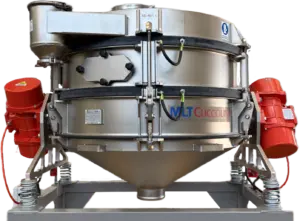
It is the allure of vibration—as subtle as the wire mesh at the heart of every vibrating sieve—that continues to fascinate those who design, study and refine screening solutions every day. Each machine must be carefully configured to solve a specific separation challenge, whether handling granules, fine powders, low-viscosity liquids or dense suspensions.
This is the fascination we want to share through Behind The Screens.
Rather than focusing only on machines, this series explores the engineering principles behind industrial screening. It is a world that gradually reveals itself between the wires of a mesh, among the particles of a powder that refuse to pass through when they should, and in the countless design choices required to find the best balance between separation accuracy and throughput.
Along the way, we’ll challenge common misconceptions, discuss controversial topics, and share insights gathered from years spent working in industrial plants around the world, studying raw materials and ingredients that range from the most familiar to the truly unusual.
In the coming Behind The Screens articles, we’ll take you where vibration meets matter—among the wires of a mesh, within the movement of a single particle and inside the engineering decisions that define every screening process. Because understanding what happens behind the screen is often the key to improving what happens on the production line.