Every day we receive dozens and dozens of inquiries for vibrating sieves from all over the world and for the most diverse applications.
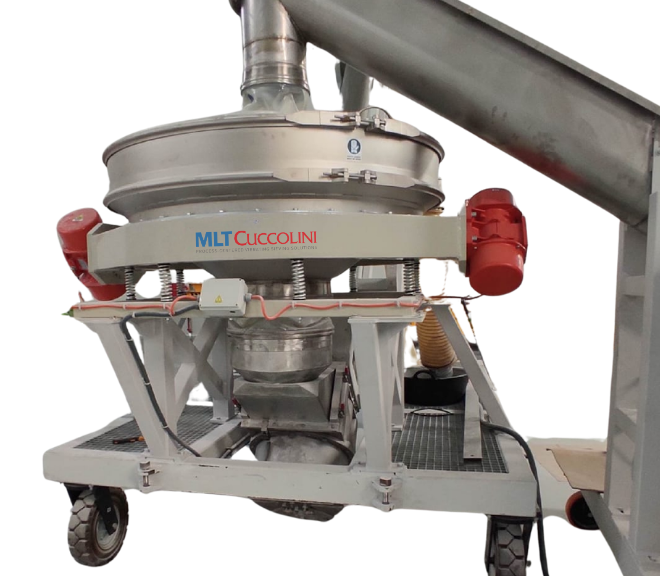
This proves the success that vibrating sieves are currently enjoying worldwide at industrial level, thanks to their versatility – and perhaps also thanks to their apparent construction simplicity.
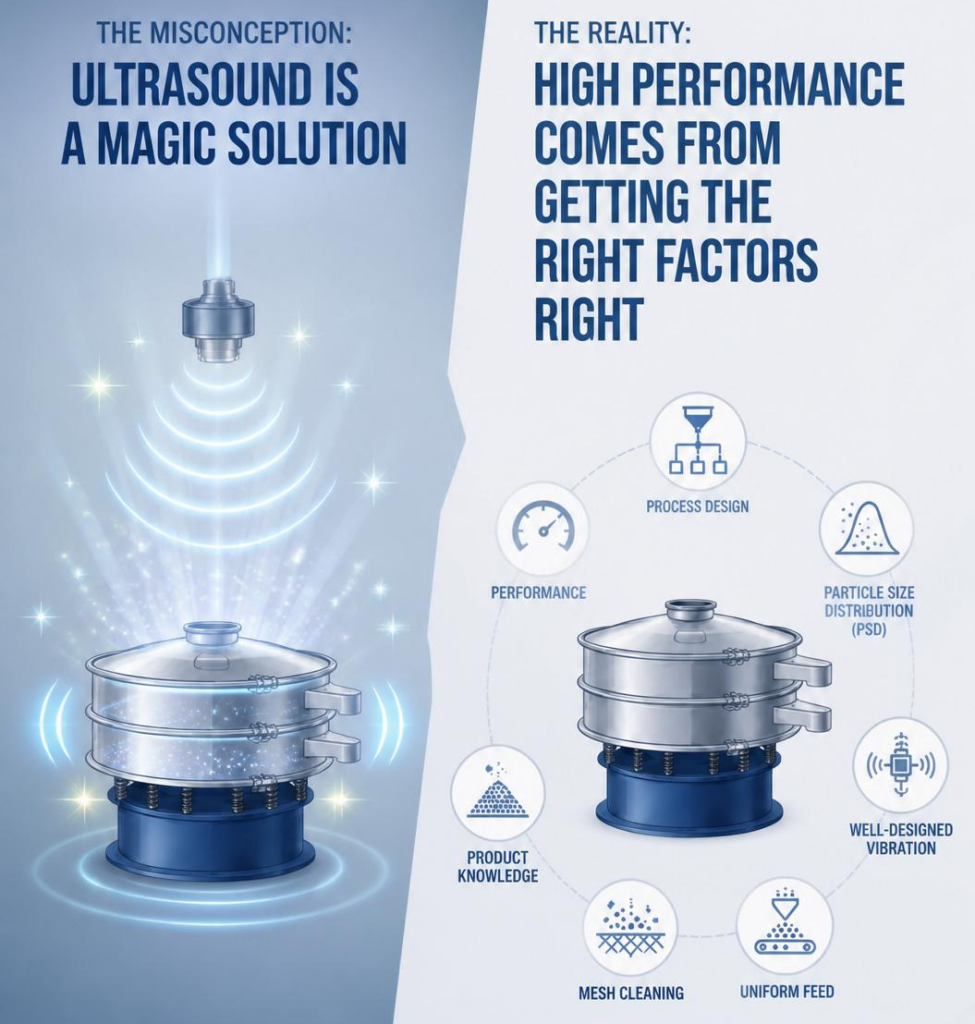
However, using a tool such as a vibrating sieve to obtain a simple particle size separation of a product, regardless of the time required and the detailed result, is one thing; achieving a truly efficient result is quite another. The latter must be based on the best possible technical solution and on an accurate measurement of the separation accuracy – in other words, efficiency.
Separation efficiency corresponds to the actual capability of the vibrating sieve – ultimately also depending on the configuration precautions adopted or on its maintenance level – to accurately separate particles into the required fractions. This result is achieved by combining several aspects, some of which relate to the vibrating sieve itself and others to the upstream and downstream scenario, that is, to the operating context of the machine.
To summarise broadly, the following are the main areas that deserve attention and possible improvement:
The way in which the vibrating sieve is integrated into the system or plant it belongs to
The way in which the vibrating sieve itself is operated
The selection of a suitable model (type, size, overall configuration) for the required screening duty, which can possibly deliver an efficient separation result
Periodic maintenance of the vibrating sieve
Not all these factors depend directly on the Manufacturer; yet precisely for this reason, it is advisable to assess each individual aspect together with the Manufacturer, both before and after supply and commissioning of the vibrating sieve, in order to achieve a suitable and efficient solution. It is also a good preliminary exercise to evaluate how solid the Manufacturer’s competence actually is.
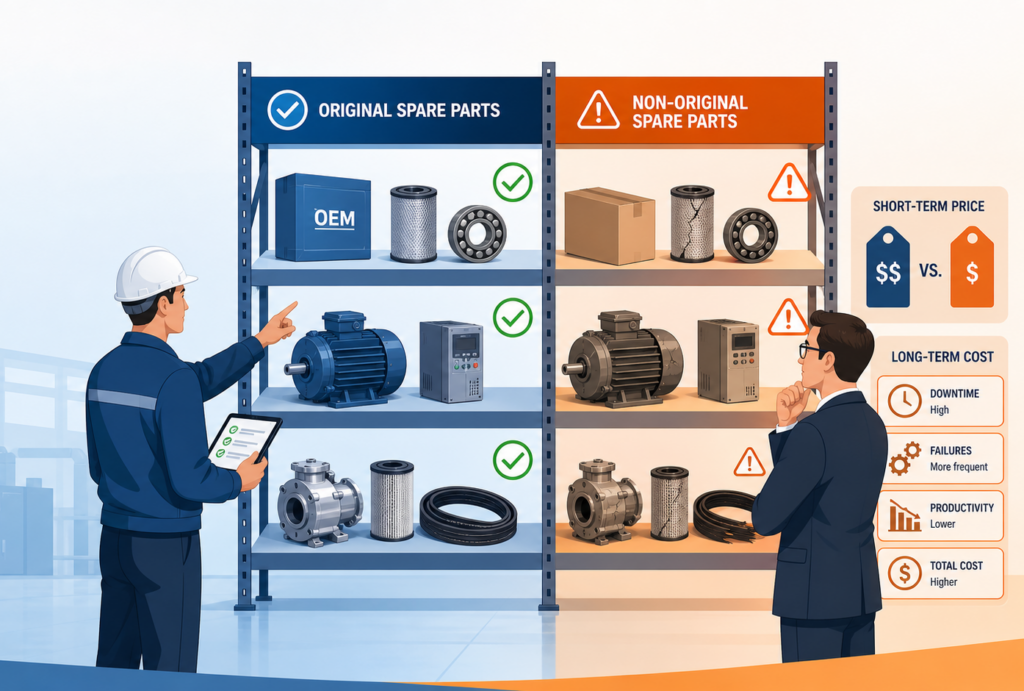
Unfortunately, a poorly accurate selection of the Manufacturer, based only on price level or on how fast a quotation is provided, will have a high cost later on. It leads to a series of issues that arise afterwards and may even impact the company’s economics, with frequent machine downtime, bottlenecks generated by the chosen vibrating sieve model, and the need to run the product through the line several times in an attempt to bring the separation result to the desired quality level.
It will unfortunately become evident only once the machine has been purchased and perhaps already paid for that spare parts and field service are not available, that the application has not been properly analysed and, in some cases, that the plant components interacting with the vibrating sieve have not been designed taking into account a few simple precautions which are difficult to correct once the plant is completed. Another sign confirming the limited competence offered by the Manufacturer may be the delivery of warranty spare parts without truly investigating the cause‑effect relationship and without working with the customer to identify the appropriate corrective actions.
In an economic environment already overloaded with costs, unforeseen events and geopolitical choices that rapidly affect market trends, it is wise not to underestimate the aspects involved in selecting the vibrating sieve to be installed in one’s production plants.
MLT Cuccolini pays attention to all the factors that influence the success of a screening process and can support you in making the right operational choices from the very first moment your requirements are collected. For this reason, some patience is required, especially in the preliminary phases of fine-tuning the proposal. All this is valuable work that helps optimise the final solution and save precious time in the field – the time that truly makes the difference.