Emptying the Bag Does Not Mean Finishing Sooner
In screening applications with powders manually fed from bags, it is natural to think that the fastest way to work is to empty each bag in one go onto the bag-dump station and let the sieve do the rest.
This image, which seems to suggest an easy-to-execute work method, does not always correspond to the most efficient way of working in production.
When we look at the process from the perspective of the entire line – cycle times, product quality, equipment wear – a simple fact emerges: the way we feed the sieve matters just as much as the model of sieve we choose.
For this reason, we have been recommending to our customers for years a feeding method different from the “empty everything and go” approach.
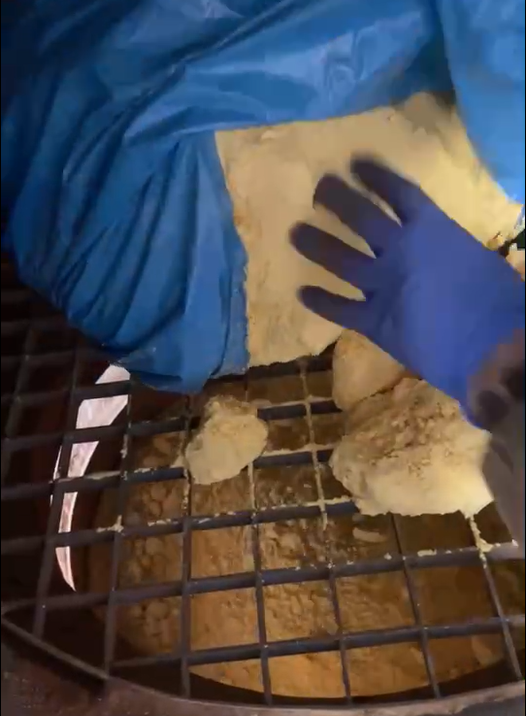
What Happens When You Empty the Bag in One Go
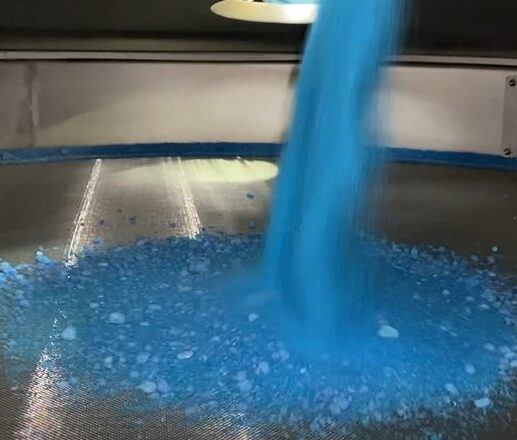
Pouring the entire contents of the bag at once creates a load peak on the sieve mesh. At that moment, a layer of product forms on the screening surface that is too high and heavy for the sieve to work under ideal conditions.
This has several practical consequences with a significant impact on productivity:
In other words, psychologically the operator has the impression of having “finished their bag” very quickly, but the sieve takes much longer to recover from that material peak. And the time saved by the operator does not necessarily coincide with the time saved by the production department.
The Role of the Mesh: Tension and Supports
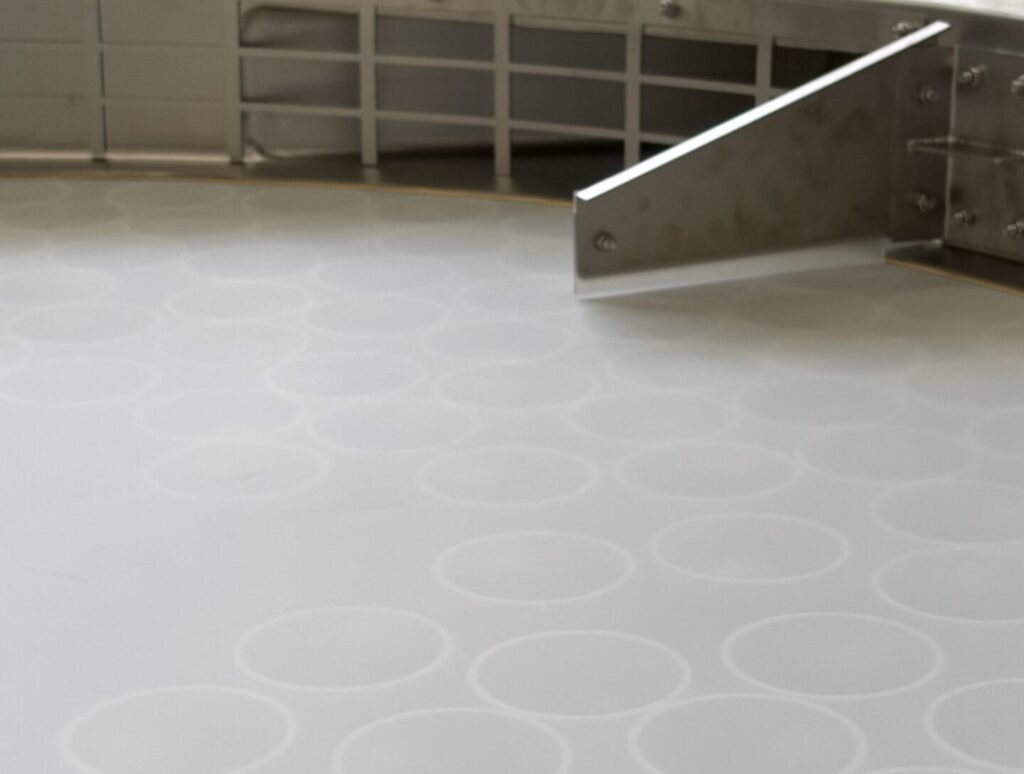
Some solutions on the market use, under the mesh, a support grid on which the mesh is simply laid. This arrangement can simplify assembly but prevents the mesh from working in true tension across the entire diameter.
When the mesh is not perfectly tensioned:
The result, especially in the presence of sudden loads (emptying the bag in a single motion), is a less controlled process: more sensitive to product variations, more difficult to predict in terms of hourly throughput and, in the long run, more demanding in terms of maintenance.
Why We Recommend Progressive Feeding
In our internal tests and customer experiences, one practical rule clearly emerges: the vibro-sieve performs better when the product arrives regularly, in a thin and uniform layer on the mesh.
This is why we advise the operator to pour the product gradually as the sieve separates the powder, instead of emptying the entire bag in one go.
Operationally, this means:
From the point of view of quality and process control, this translates into:
Benefits and Perceptions for Different Company Roles
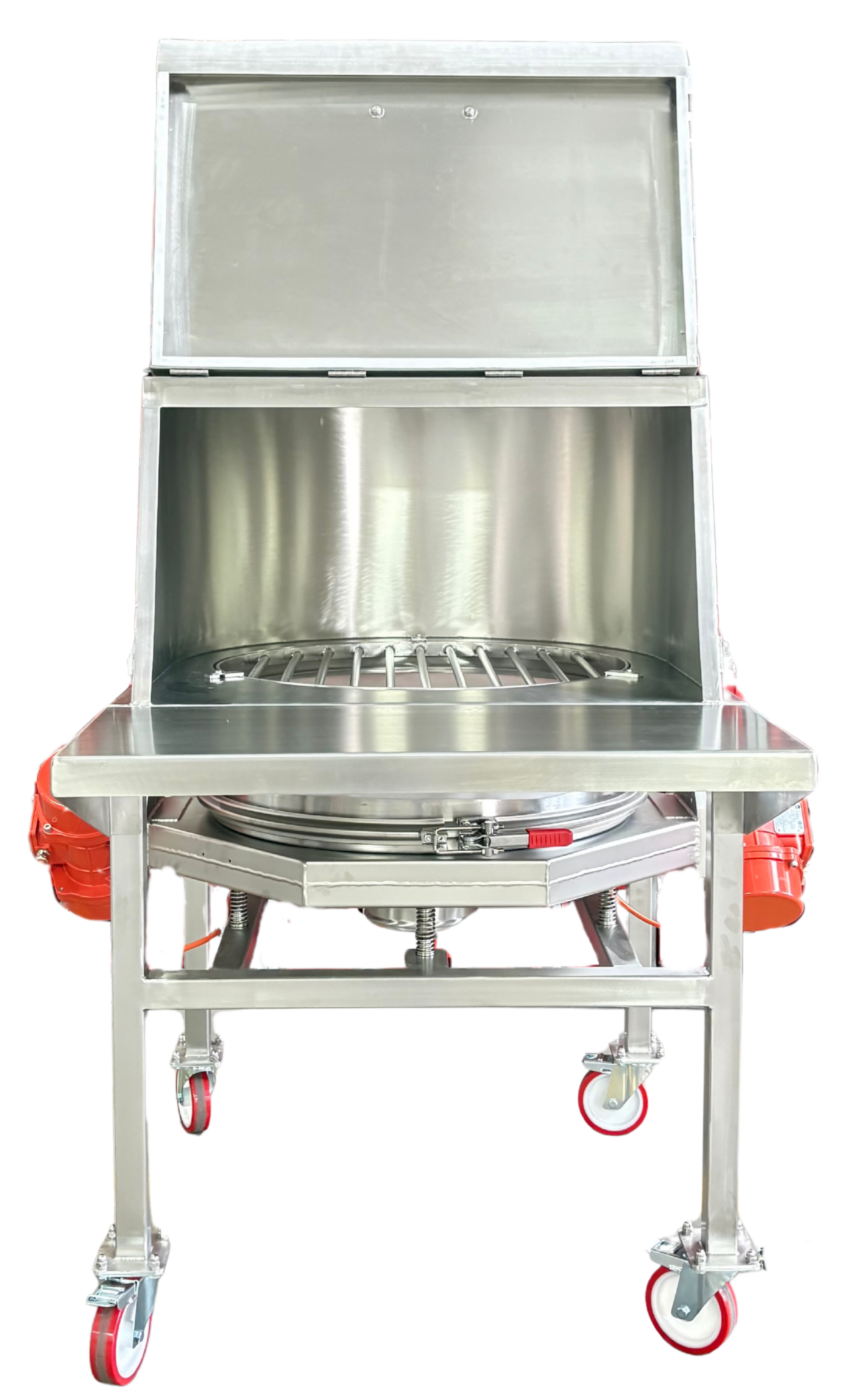
The same operating gesture – pouring everything at once or dosing progressively – may be perceived differently by those working in production, by those in charge of quality/HSE and by those handling maintenance.
Below are some reflections on the process that we wish to share with anyone who, for various reasons, has to validate the implementation of a bag-dump station:
For production managers
The goal is not to “empty as many bags per hour as possible,” but to obtain more kilograms of conforming product per unit of time. A sieve fed in a regular way works in its “maximum efficiency zone,” reducing stops for cleaning, adjustments or rework. Total batch time can decrease even if the individual gesture of the operator seems “slower.”
For quality and safety/HSE
A uniform load on the mesh means better control of contaminant and oversize separation. Fewer powder peaks, fewer opening/closing of covers and fewer extraordinary interventions also mean safer and cleaner working conditions. Standard operating procedures (SOPs) can be easier to follow and validate, because process behaviour is more predictable.
For maintenance and reliability
Gentler, more constant loads reduce mechanical fatigue on meshes, gaskets and vibrating components. The mesh works under correct tension, with fewer local deformations and longer life. Planned maintenance activities are easier to schedule, because machine behaviour is less “stressed” by peaks.
And the Operator? Ergonomics and Daily Practice
A well-designed bag-dump station must remain comfortable, safe and intuitive for the operator. On this, we fully agree with those who focus on workstation ergonomics.
The difference lies in the operating guidance that accompanies the machine:
With targeted training support, the operator can understand that their goal is not to “get rid of the bag as quickly as possible,” but to help the line maintain a regular flow. In many cases, after a short adjustment period, the new method becomes natural and is perceived as part of the machine’s “correct driving style.”
Conclusion: Comfort Yes, with Some Patience and a Lot of Efficiency
Solutions that promise to empty a bag “in an instant” are very attractive at first glance. However, when we look at the complete process – from bags in the warehouse to conforming product ready for the next step – the way we feed the sieve makes a big difference.
Our experience leads us to prefer a different approach: ergonomic, safe and easy-to-use workstations, combined with a progressive feeding methodology that puts the sieve in ideal working conditions.
In our view, production, quality, HSE and maintenance find a common point of balance: operator comfort is maintained, but it is placed at the service of true process efficiency.