Construction sand is typically sourced from quarries or natural deposits and may undergo crushing or milling before classification. The objective of the screening process is to separate the material into well-defined fractions, each intended for specific uses such as concrete production, mortars, plasters, or specialized building materials.

Effective classification is essential to remove oversize fractions and foreign bodies while producing consistent and repeatable granulometric curves. The ability to generate multiple fractions from a single feed stream allows producers to maximize the value of the raw material and respond flexibly to market demand
Vibrating sieving is particularly suitable for this application due to its efficiency in handling high throughputs and abrasive materials. Key parameters such as mesh size, throughput, moisture content, and installation point must be carefully evaluated to ensure optimal screening performance and long-term equipment reliability.
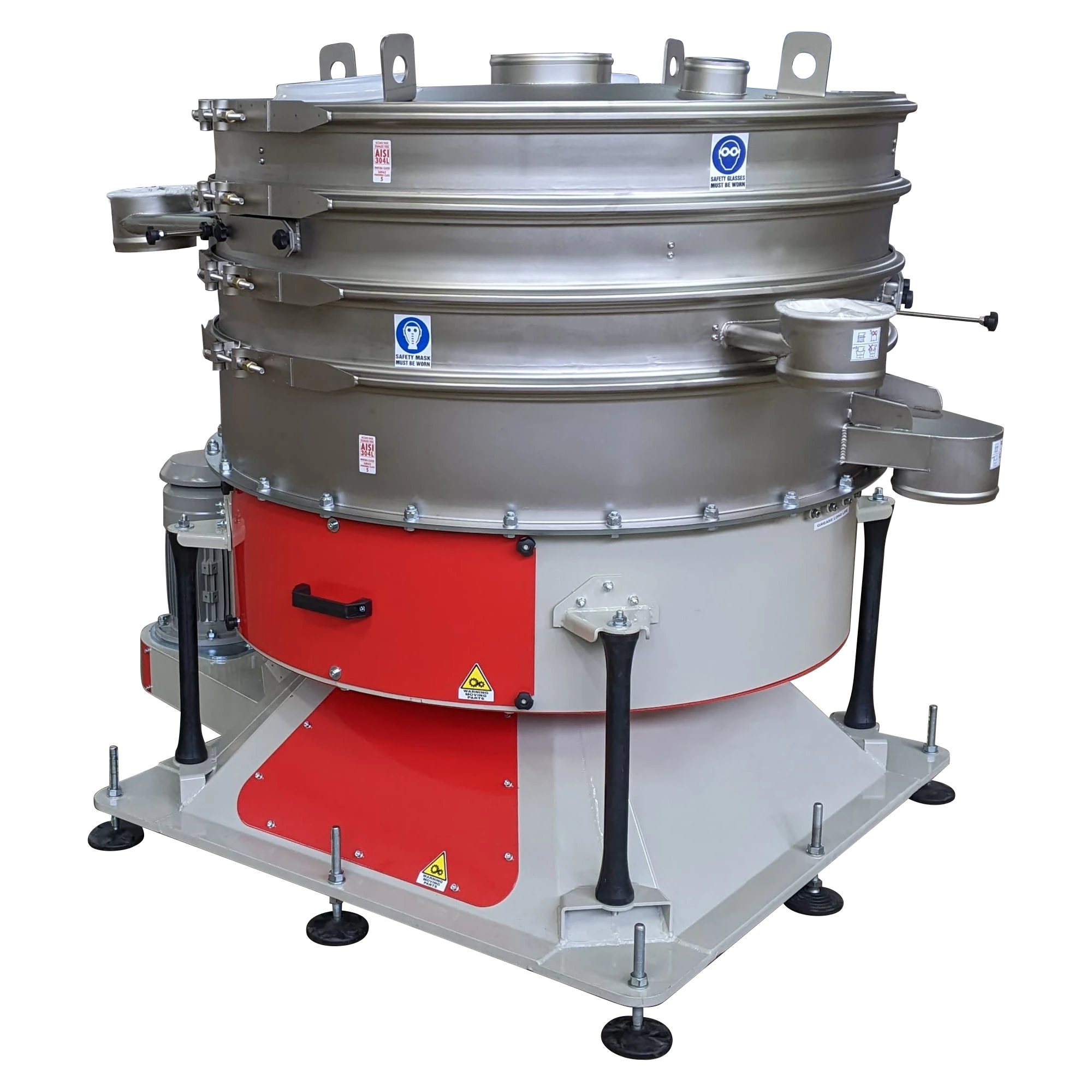
MLT Cuccolini VTU nutation sieves are an effective solution for multi-fraction classification of construction sand. Typically installed after crushing or milling stages, the VTU can separate the material into up to five different particle size fractions in a single operation. Its nutation motion ensures precise separation and high product quality, even when tight granulometric tolerances are required.
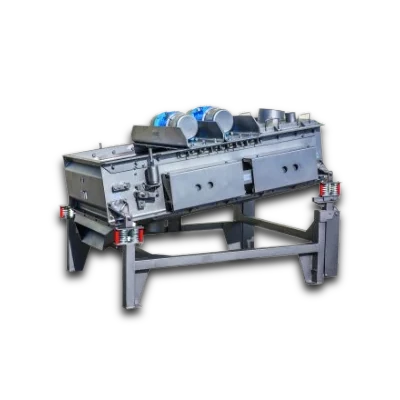
For applications requiring higher throughputs, the X-Line rectangular multifrequency sieve type RD provides a robust and efficient alternative. Designed for large-scale operations, it is typically installed in primary classification lines where high capacity and continuous operation are essential. Its multifrequency vibration enhances screening efficiency and reduces the risk of clogging, even with demanding materials.
Both solutions are designed to operate in heavy-duty environments, offering reliable performance with abrasive materials such as sand. Their robust construction and optimized screening surfaces support long service life and reduced maintenance requirements, while ensuring consistent separation efficiency.
Using MLT Cuccolini solutions for construction sand classification allows producers to achieve precise and consistent particle size distributions, improving the quality and market value of the final products. Effective removal of contaminants and oversize fractions also protects downstream equipment and reduces operational risks.
The availability of both multi-fraction and high-capacity screening technologies ensures flexibility in plant design and the ability to adapt to different production requirements and throughput levels.
Contact MLT Cuccolini to discuss your construction sand classification process and identify the most suitable vibrating sieving solution for your specific application.
See it in action
Discover how MLT technology helps companies
improve product quality, increase efficiency
and simplify their production processes.