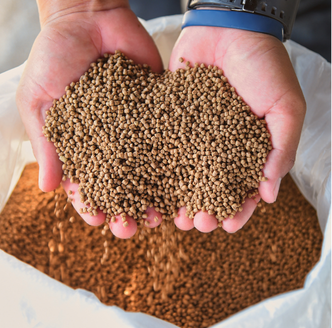
Finely ground recycled glass is obtained after collection and preliminary treatments such as washing, metal removal, and coarse crushing. The subsequent grinding process generates a broad particle size distribution (PSD), ranging from coarse particles to fine powder, and may introduce agglomerates or residual contaminants. Without proper glass classification, the recycled material may not meet the specifications required for applications such as glass batch, foam glass, abrasives, or industrial fillers.
The classification process separates finely ground glass into well-defined granulometric fractions, while removing oversize particles, off-spec fines, and possible foreign bodies. Accurate control of the particle size distribution (PSD) improves downstream process stability, enhances product consistency, increases the commercial value of recycled glass, and helps protect downstream equipment from excessive wear and unnecessary mechanical loads.
Vibrating sieving is particularly suitable for finely ground glass recycling, combining robust handling of highly abrasive materials with precise and repeatable separation. Key process parameters include mesh size, throughput, installation point, the required number of fractions, and the moisture content of the material. Proper machine configuration ensures that each granulometric fraction maintains a stable PSD over time, meeting the specifications of its intended application.

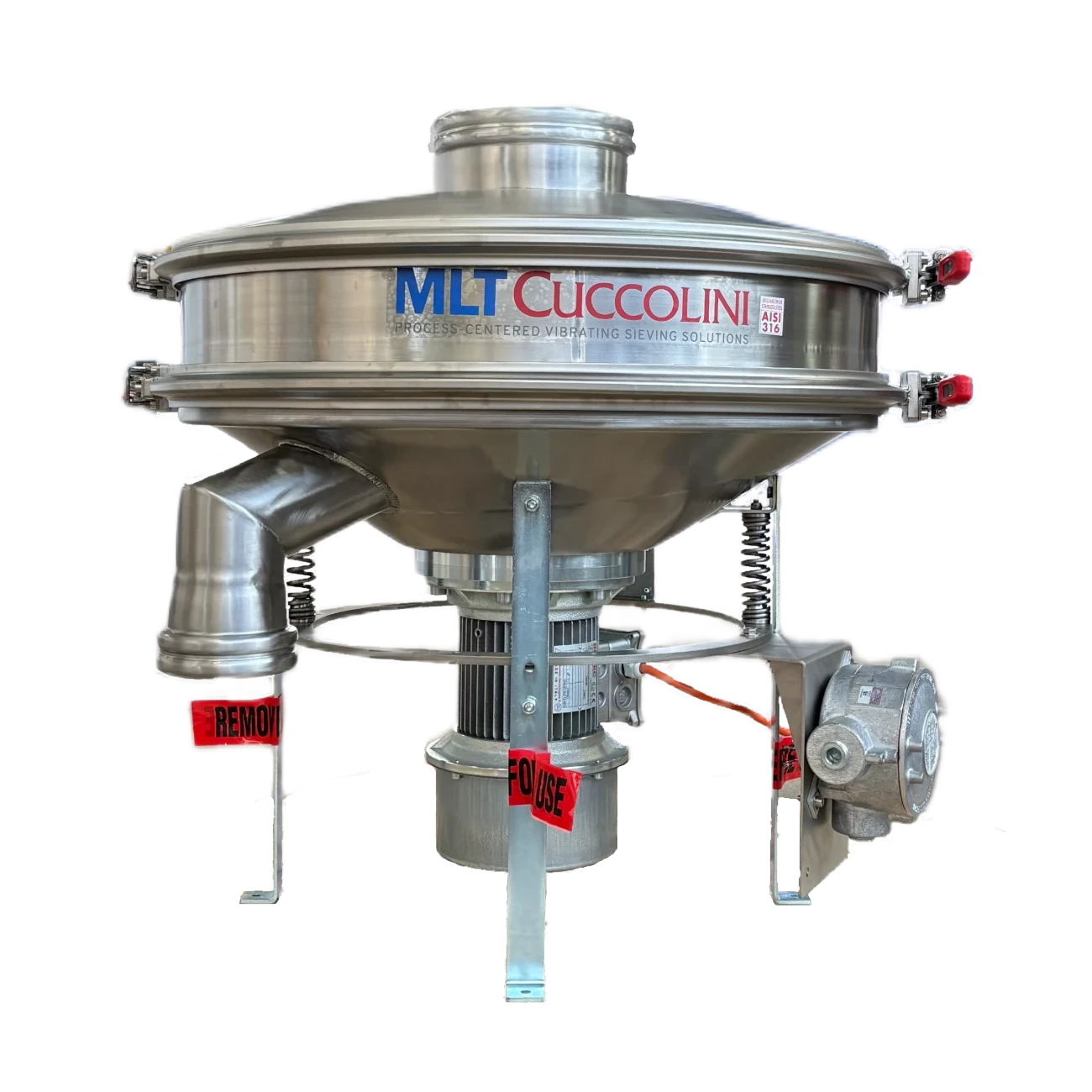
MLT Cuccolini VPB and VPM circular vibrating sieves are ideal when flexibility and compact installation are key requirements. Typically positioned downstream of grinding mills or within intermediate storage and dosing lines, these machines can be equipped with multiple screening decks to separate oversize, on-spec, and fine fractions in a single pass. Their calibrated vibration guarantees stable operation even with abrasive materials such as glass while maintaining a compact footprint, making them particularly suitable for retrofit installations and plants with limited available space.
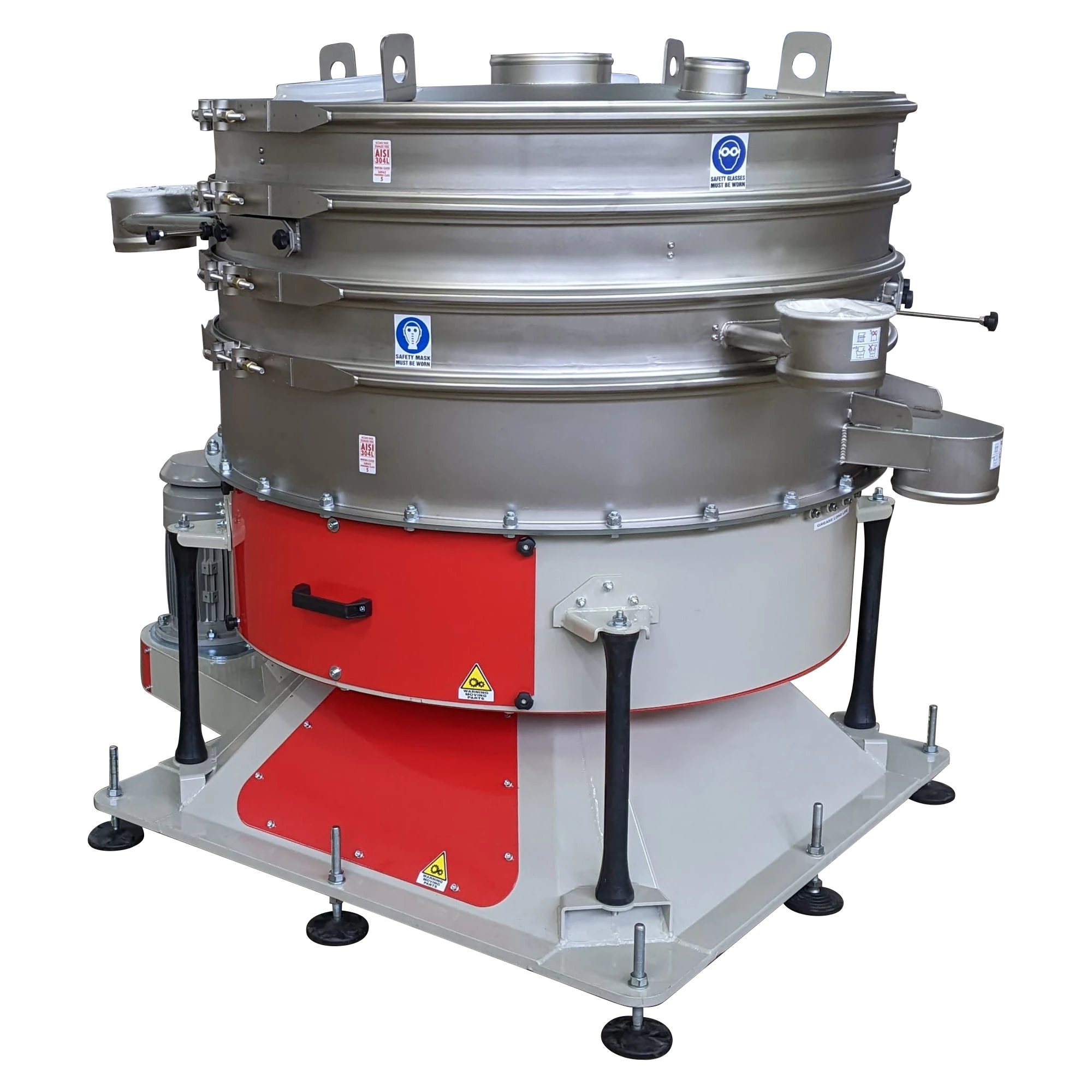
For applications requiring a higher number of granulometric fractions or particularly gentle product handling, the MLT Cuccolini VTU nutation sieve provides an effective alternative. Installed after the grinding stage, the VTU can generate up to five granulometric fractions in a single operation using a nutation (tumbling) motion, which improves separation accuracy while minimizing particle degradation. This solution is especially suitable when multiple glass grades or precise PSDs are required for different downstream applications and performs best with particle sizes up to 0.3 mm.
When high production capacities and continuous, stable particle size distribution are essential, MLT Cuccolini RS rectangular multifrequency sieves provide an additional solution. Designed for continuous operation, these machines feature large screening surfaces and multifrequency vibration technology, improving separation efficiency while reducing the risk of mesh blinding. RS sieves are particularly suitable for recycling lines where finely ground glass must be classified with high repeatability before further processing or packaging.
All these screening solutions are engineered to withstand the highly abrasive nature of recycled glass, with wear-resistant materials and dedicated options available where required. Their modular construction, easy access for inspection and cleaning, and flexible mesh configurations simplify routine maintenance and facilitate rapid adaptation to new product specifications or process changes.
Using MLT Cuccolini VPB, VPM, VTU, and RS vibrating sieves for finely ground glass recycling enables recyclers to obtain accurate granulometric fractions with stable PSD, improving product quality and expanding the range of potential end-use applications. Efficient removal of oversize particles, off-spec fines, and foreign contaminants also protects downstream equipment while improving the overall efficiency of the recycling process.
The availability of different machine technologies and configurations allows tailor-made screening solutions for a wide variety of plant capacities, layouts, and product specifications, helping glass recyclers maximize the value of recovered material while supporting more sustainable resource management.
Contact MLT Cuccolini to discuss your finely ground glass recycling process and identify the most suitable combination of VPB, VPM, VTU, or RS vibrating sieves for your production requirements.
See it in action
Discover how MLT technology helps companies
improve product quality, increase efficiency
and simplify their production processes.