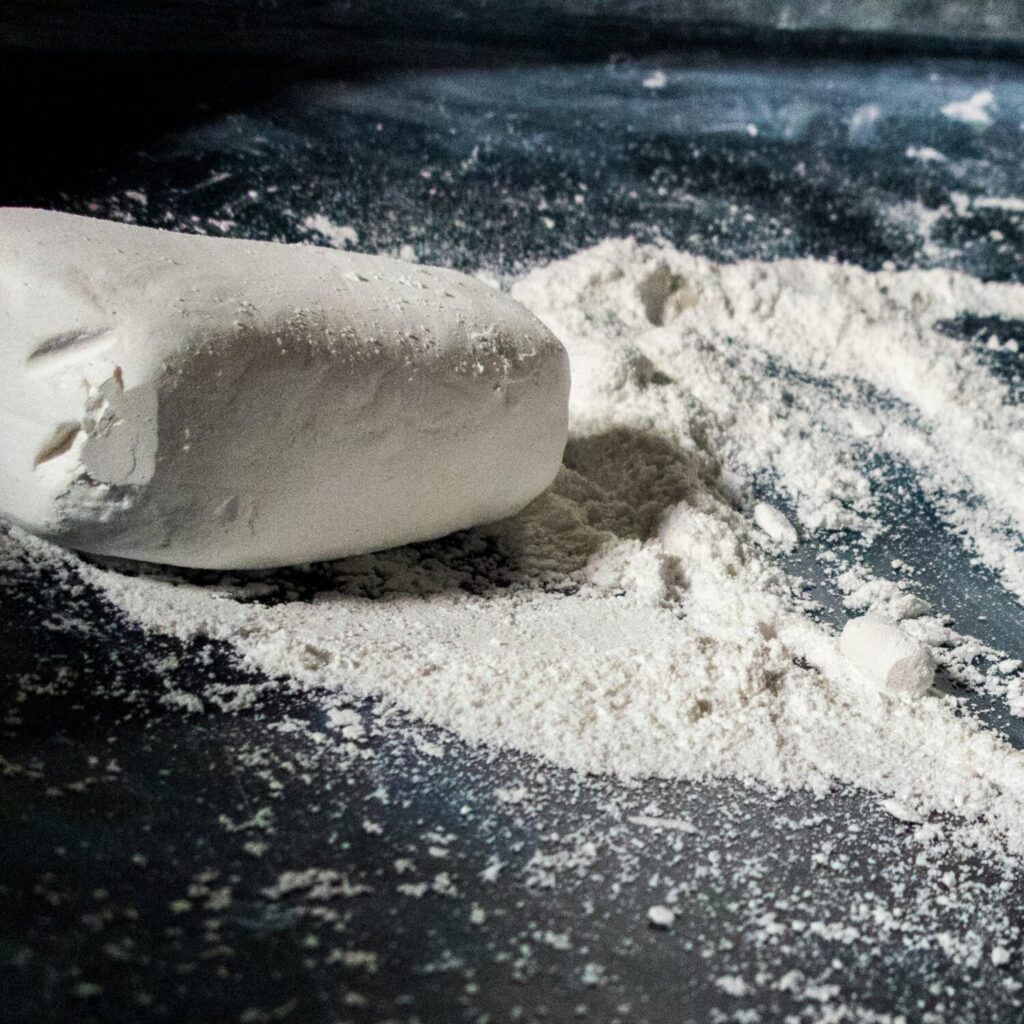
Tartaric acid is typically obtained as crystalline material that may be crushed or milled to reach the desired particle size range. After these operations, the product exhibits a broad particle size distribution, including fines, on-spec crystals, and oversize particles. Without proper classification, this variability can affect dissolution rates, mixing behaviour, handling properties, and ultimately the performance of the finished product in its target application.
The classification process focuses on separating the bulk product into distinct granulometric fractions, each aligned with specific market or process requirements. By defining suitable mesh sizes and accepting a controlled tolerance around the target ranges, producers can create stable particle size distributions for different grades of tartaric acid. At the same time, foreign bodies and agglomerates are removed, contributing to product quality and protection of downstream equipment.
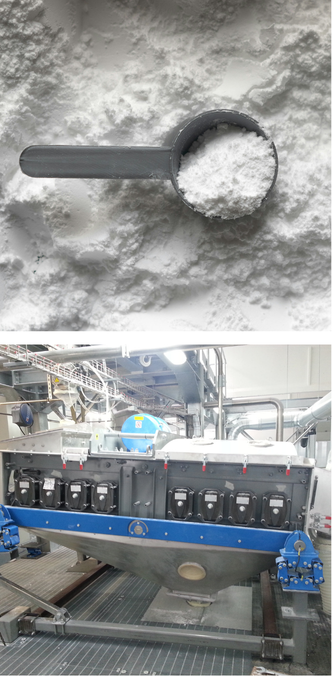
Vibrating sieving is particularly suitable for tartaric acid classification because it combines precise separation with robust handling of crystalline, sometimes abrasive materials. Key parameters include mesh size, throughput, moisture content, and the number of fractions required. Correct configuration ensures that each fraction meets its specification while maintaining efficient operation and minimising product breakage.
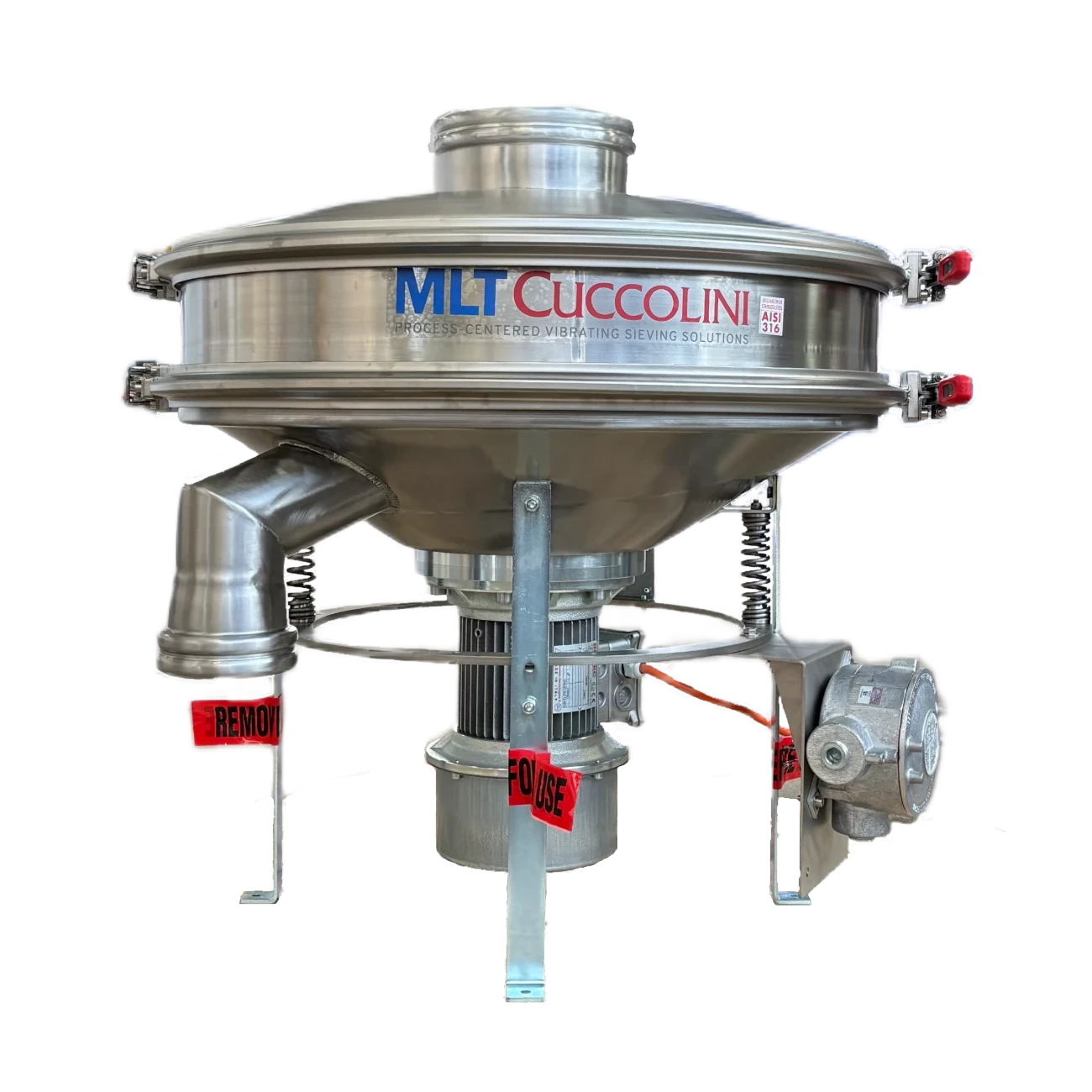
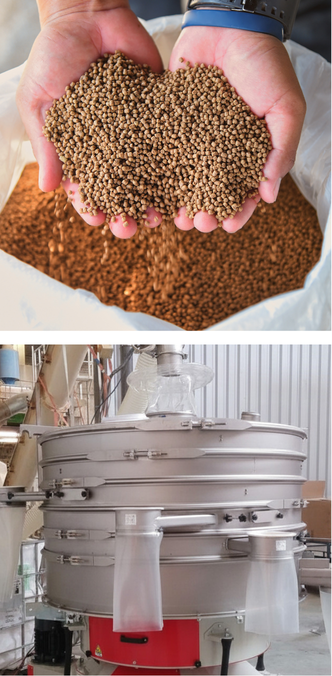
MLT Cuccolini VPB and VPM circular vibrating sieves are employed when flexibility and compact installation are priorities. Typically installed downstream of crushers, mills, or crystallisation stages, these machines can be equipped with multiple decks to separate oversize fractions, on-spec crystals, and fines in a single pass. Their calibrated vibration supports stable cut points and consistent performance over time, even under continuous operation.
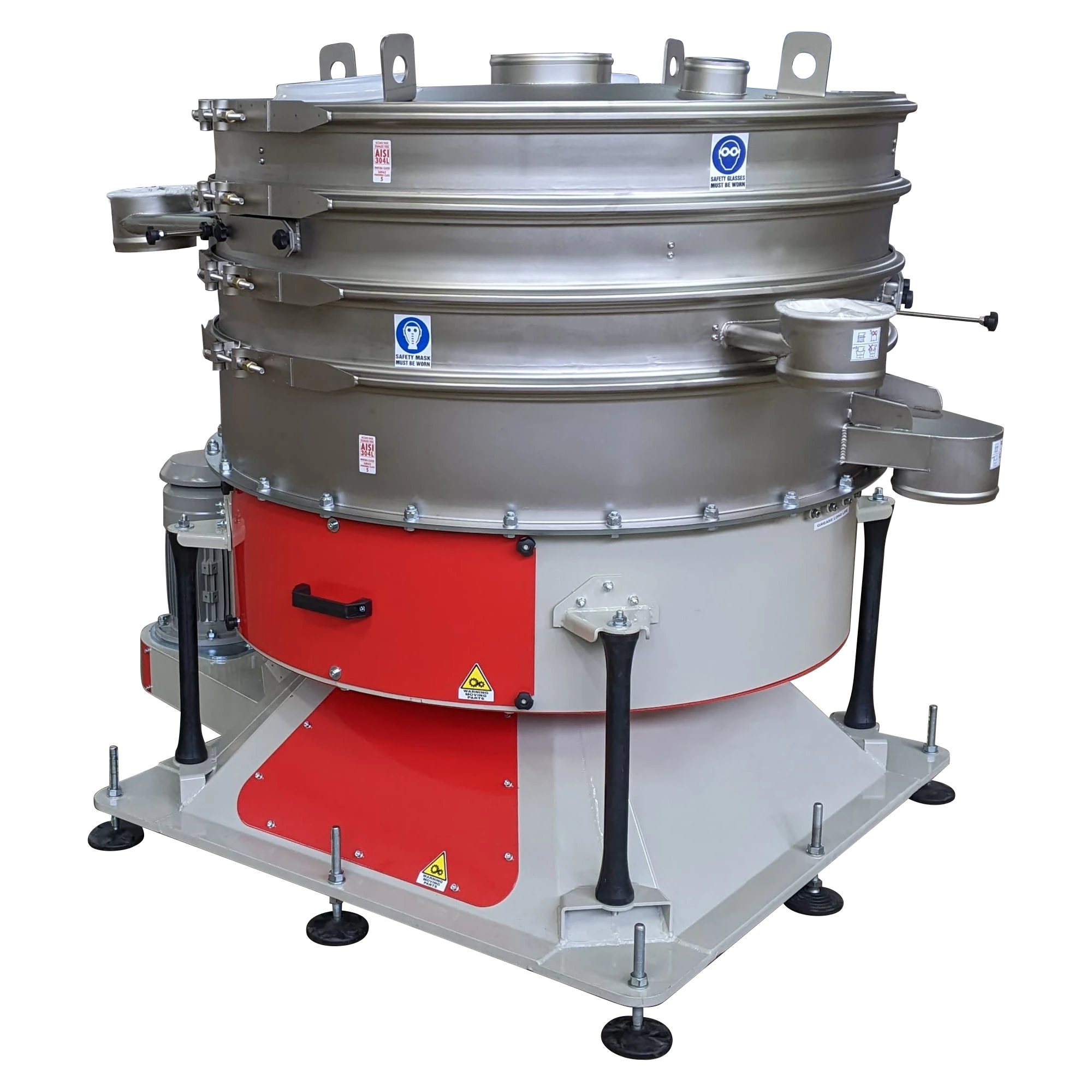
When a relatively high flowrate is required, VTU nutation sieves provide an effective alternative. Installed in similar positions, VTU units can generate up to five distinct size classes with a gentle tumbling motion that promotes accurate separation while limiting crystal degradation. This is especially useful when different tartaric acid grades must be produced from the same line for various end uses.
For higher capacities or where a rectangular footprint and large screening surfaces are advantageous, X-Line rectangular multifrequency sieves can be integrated into the classification process. These machines are particularly suited to continuous operations requiring stable particle size distribution and high throughput, offering robust construction and efficient separation even with demanding product and process conditions.
All these solutions can be supplied with stainless steel contact parts, hygienic design features, and easy access for cleaning, supporting high standards of cleanliness and maintenance. Modular construction and flexible mesh configurations allow rapid adaptation to new specifications or market demands, helping producers keep their tartaric acid classifications aligned with customer expectations.
Using MLT Cuccolini VPB/VPM, VTU, or X-Line vibrating sieves for tartaric acid classification enables producers to deliver well-defined granulometric grades with consistent PSD, improving product quality and process performance in downstream applications. Effective removal of oversize particles, fines outside the target range, and foreign bodies also helps protect equipment and reduce waste and rework.
The availability of multiple machine types and configurations allows tailored solutions for different capacities, layouts, and specification requirements, supporting long-term efficiency and flexibility in tartaric acid production plants.
Contact MLT Cuccolini to discuss your tartaric acid classification process and identify the most suitable combination of vibrating sieving solutions—VPB/VPM, VTU, or X-Line—for your specific installation and product portfolio.