
COPPER-BASED FUNGICIDES FILTRATION

Liquid fungicide formulations based on copper compounds often include dispersed solids and functional additives that must remain within a defined particle size range. During production and mixing, process residues, agglomerates, or foreign bodies can be introduced, leading to potential issues such as nozzle clogging, sediment build-up, or non-uniform active ingredient distribution. Filtration is therefore a […]
SUGAR SAFETY SIEVING AND CLASSIFICATION
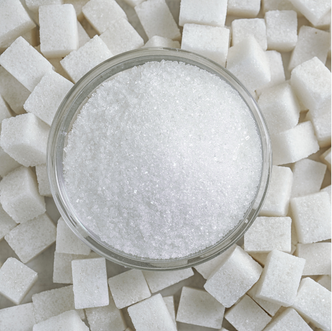
Sugar handling processes involve both safety sieving and particle size classification, each with specific objectives. Safety sieving focuses on removing foreign bodies, lumps and coarse agglomerates that may originate from storage, conveying or packaging, while classification creates defined fractions, from coarse crystals to very fine powders, tailored to the requirements of different end products. In […]
FILTRATION OF CATTLE MANURE
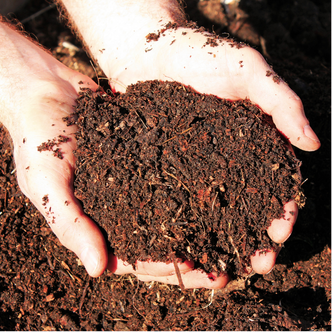
In modern livestock farms, manure is often collected in channels or storage pits as a slurry containing a wide range of particle sizes, bedding residues, and other foreign materials. Without adequate separation, this mixture can be difficult to pump, causes sediment build-up in tanks, and may lead to uneven distribution when applied to the fields. […]
PLASTIC RECYCLING SOLIDS & WATER RECOVERY
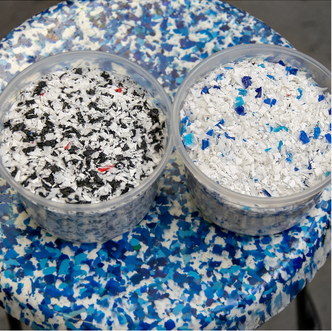
During recycling, plastic products are first ground and then washed to remove labels, product residues, soil, and other contaminants. In PET applications, typical contaminants include paper and plastic label fragments, adhesive residues, and remnants of the original contents. In EPS recycling, water often carries pieces of soil or other particles associated with horticultural and packaging […]
FISH FEED CLASSIFICATION
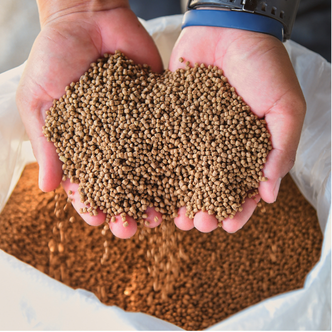
Fish feed is typically produced as granules or pellets through extrusion or other forming processes, followed by drying and cooling. The resulting product contains a natural spread of particle sizes, from fines to oversize pellets, which needs to be brought under control. Without effective classification, feed batches may contain particles that are too large or […]
ANIMAL BY-PRODUCT PROCESSING

Modern rendering transforms animal co-products that are not intended for human consumption into valuable raw materials such as fats, protein meals, and functional fractions used in feed formulations. These streams must be processed and monitored carefully to minimise biological risks and comply with international and local legislation governing animal by-products and feed safety. Vibrating sieving […]
RARE EARTHS CLASSIFICATION
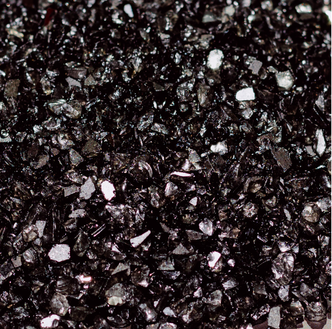
Rare earths such as neodymium and other critical elements are often processed as fine powders, either from primary production routes or from recycling of end-of-life components. These powders can be highly reactive, dense, and sometimes prone to oxidation, making both classification and containment key aspects of plant design. Effective granulometric control is essential to meet […]
PERLITE CLASSIFICATION

Perlite is an expanded mineral characterized by very light, porous particles with a highly flowable behaviour. This property, while beneficial for many applications, can reduce sieving efficiency, as the material tends to move quickly across the mesh surface, limiting the probability of correct particle separation. The classification process is essential to obtain defined particle size […]
CONSTRUCTION SAND CLASSIFICATION

Construction sand is typically sourced from quarries or natural deposits and may undergo crushing or milling before classification. The objective of the screening process is to separate the material into well-defined fractions, each intended for specific uses such as concrete production, mortars, plasters, or specialized building materials. Effective classification is essential to remove oversize fractions […]
ZINC OXIDE SAFETY SIEVING AND CLASSIFICATION

Zinc oxide powders are characterized by a tendency to form agglomerates, which can result from production processes or handling conditions. These granules often fall outside the target particle size range, affecting flowability, dispersion, and the final application performance, especially in high-value sectors such as cosmetics and pharmaceuticals. Safety sieving is typically the first step to […]