
PATIENCE Rhymes with EFFICIENCY
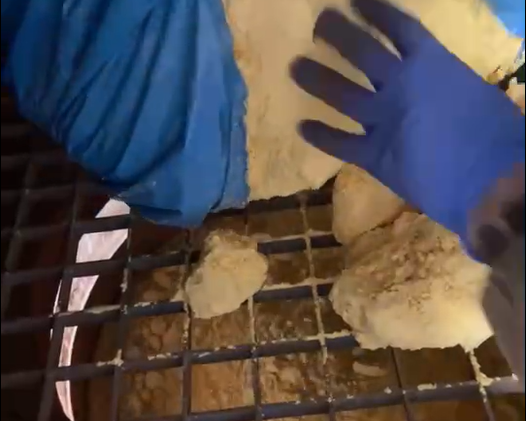
Emptying the Bag Does Not Mean Finishing Sooner In screening applications with powders manually fed from bags, it is natural to think that the fastest way to work is to empty each bag in one go onto the bag-dump station and let the sieve do the rest. This image, which seems to suggest an easy-to-execute […]
When Ultrasound Is Really (Not) Needed in Screening?

In the world of industrial screening, there is a persistent myth: that ultrasound is the universal solution to any separation difficulty. It is true that this technology can be a valuable aid under certain conditions – but it is by no means guaranteed to be the best answer – the most efficient and/or the most […]
GRINDED PLASTIC CLASSIFICATION FROM NON-COMPLIANT MOULDED ITEMS

When moulded parts are rejected due to dimensional, visual, or functional defects, they represent both a cost and an opportunity. By grinding these non-compliant parts, processors obtain a heterogeneous regrind composed of granules, smaller chips, and fine particles. Without proper classification, this mix can compromise feeding behaviour, melt homogeneity, and the performance of glass-filled or […]
FINELY GROUND GLASS RECYCLING

Finely ground recycled glass is obtained after collection and preliminary treatments such as washing, metal removal, and coarse crushing. The subsequent grinding process generates a broad particle size distribution (PSD), ranging from coarse particles to fine powder, and may introduce agglomerates or residual contaminants. Without proper glass classification, the recycled material may not meet the […]
BAKERY MIXTURE SAFETY SIEVING

Bakery mixtures typically contain flour, sugar, fats, leavening agents, and functional ingredients that must remain homogeneously mixed throughout handling and dosing. During production, transport, or storage, agglomerates can form and foreign bodies may be accidentally introduced from packaging, upstream equipment, or the environment. Safety sieving focuses on removing these unwanted elements before the mixture reaches […]
GRASS FERTILIZER CLASSIFICATION
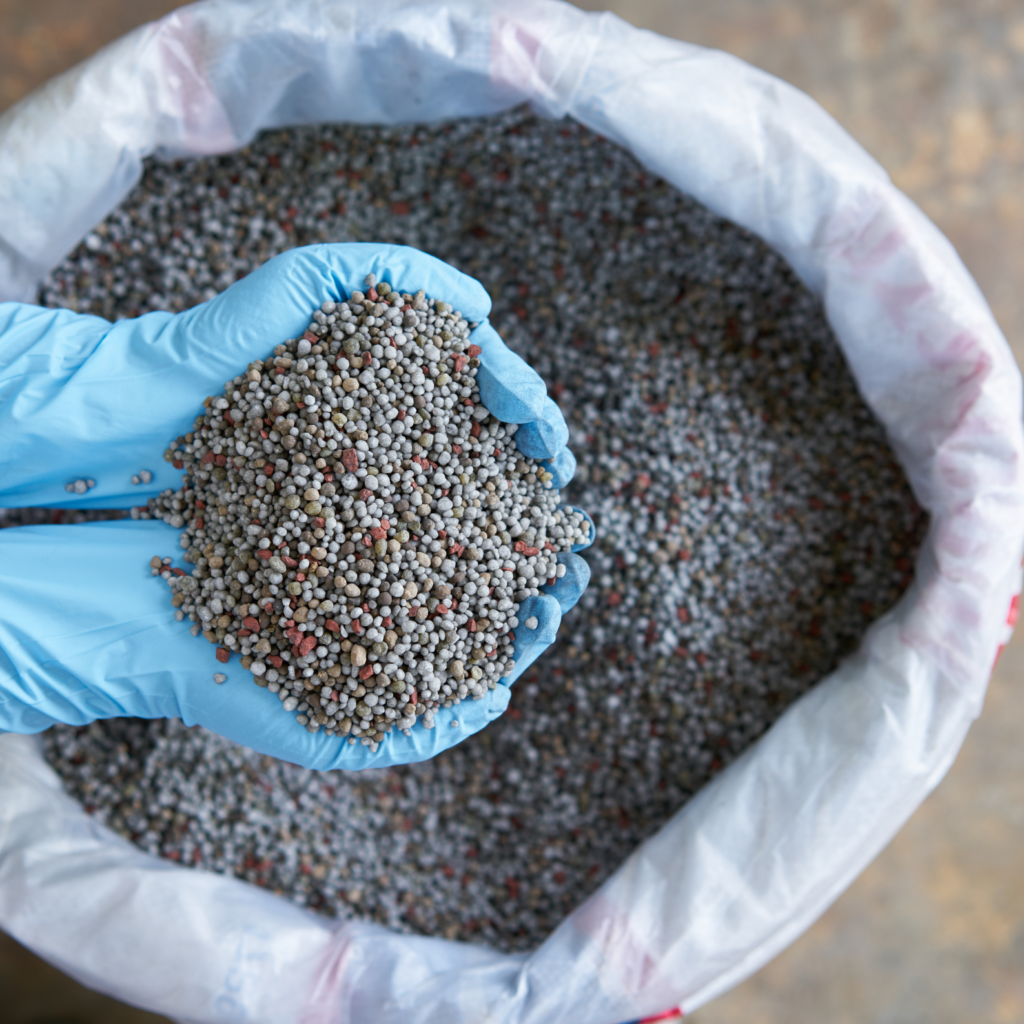
Grass fertilizers are typically produced as fine granules or prills designed to be applied with mechanical spreaders. If the product contains too many oversize particles, dust, or agglomerates, the spread pattern can become uneven, leading to stripes, local overdosing, or under-fertilized areas on the turf. Consistent particle size distribution is therefore a key factor for […]
GRATED CHEESE SAFETY SIEVING

Grated cheese safety sieving removes unwanted contaminants such as hard crust fragments, packaging residues, metal particles from cutting tools, and other foreign particles that may be generated during the grating process. By extracting this oversize fraction before the grated cheese enters downstream equipment, producers reduce the risk of clogged lines, damaged machinery, and non‑conforming finished […]
ROASTED COFFEE GRAINS DEDUSTING

During conveying from the roaster to storage and packaging, roasted coffee beans are subject to impacts and friction that inevitably produce fragments, chaff residues and fine dust. If not removed, these unwanted fractions can impair the appearance of whole‑bean products, affect dosing accuracy and contribute to build‑up in downstream equipment and filters. A dedicated dedusting […]
From Agricultural Sieves to Industrial Vibrating Sieves: Where Vibration Meets Engineering

Every industrial vibrating sieve has a history that began thousands of years ago. A few millennia ago, as humankind was learning the first rudimentary processes to build, farm and cook, we invented one of our oldest separation tools: the sieve. A circular tool—sometimes little more than a woven basket made of plant fibres, animal bristles […]