
GRINDED PLASTIC CLASSIFICATION FROM NON-COMPLIANT MOULDED ITEMS

When moulded parts are rejected due to dimensional, visual, or functional defects, they represent both a cost and an opportunity. By grinding these non-compliant parts, processors obtain a heterogeneous regrind composed of granules, smaller chips, and fine particles. Without proper classification, this mix can compromise feeding behaviour, melt homogeneity, and the performance of glass-filled or […]
FINELY GROUND GLASS RECYCLING

Finely ground recycled glass is obtained after collection and preliminary treatments such as washing, metal removal, and coarse crushing. The subsequent grinding process generates a broad particle size distribution (PSD), ranging from coarse particles to fine powder, and may introduce agglomerates or residual contaminants. Without proper glass classification, the recycled material may not meet the […]
BAKERY MIXTURE SAFETY SIEVING

Bakery mixtures typically contain flour, sugar, fats, leavening agents, and functional ingredients that must remain homogeneously mixed throughout handling and dosing. During production, transport, or storage, agglomerates can form and foreign bodies may be accidentally introduced from packaging, upstream equipment, or the environment. Safety sieving focuses on removing these unwanted elements before the mixture reaches […]
GRASS FERTILIZER CLASSIFICATION
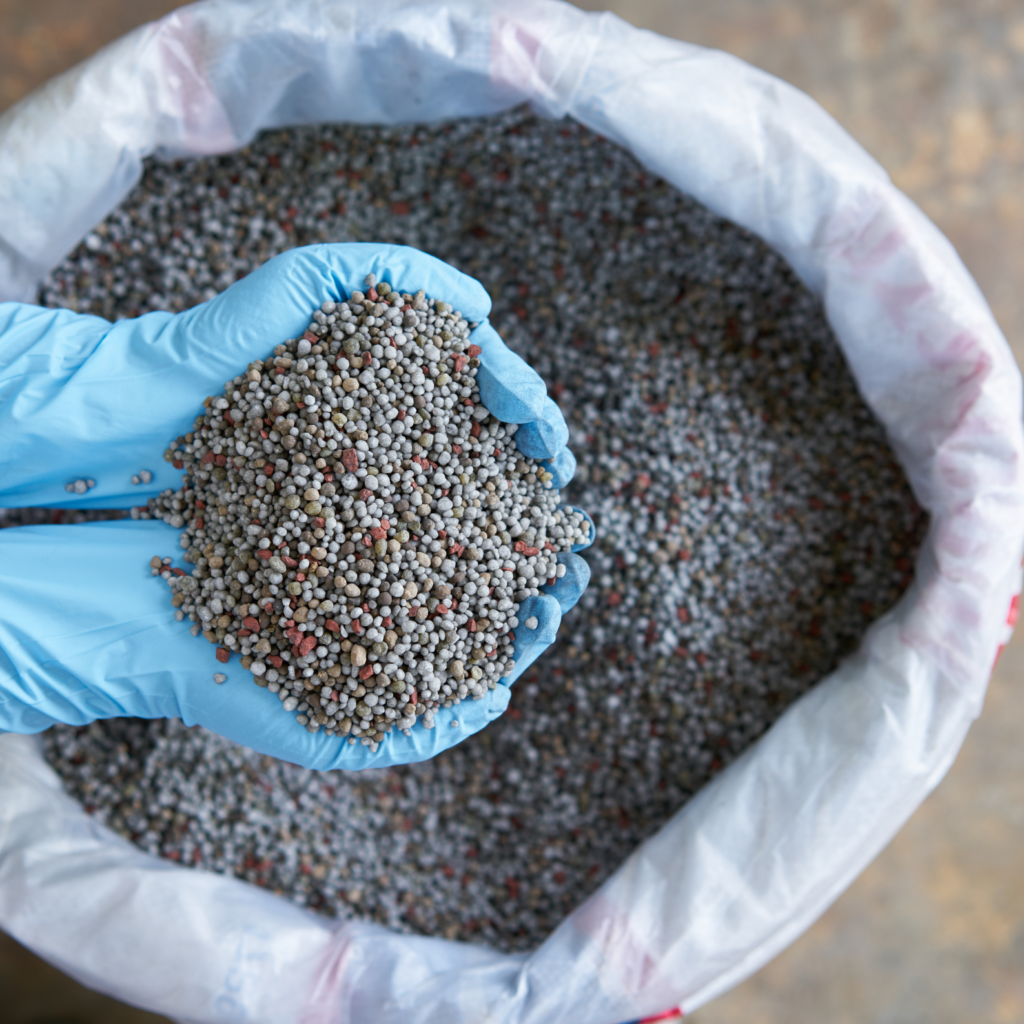
Grass fertilizers are typically produced as fine granules or prills designed to be applied with mechanical spreaders. If the product contains too many oversize particles, dust, or agglomerates, the spread pattern can become uneven, leading to stripes, local overdosing, or under-fertilized areas on the turf. Consistent particle size distribution is therefore a key factor for […]
SPIRULINA BIOMASS SEPARATION FOR NON-FOOD APPLICATIONS

Spirulina biomass for non-food applications is increasingly used in renewable energy production, aquaculture feed, and industrial biotechnology. These applications do not require the same level of cellular integrity, fine particle retention, or hygiene standards as food or pharmaceutical products, allowing for faster, coarser separation processes that prioritize throughput and cost efficiency. Vibrating sieving using 50–80 […]