
SALT SAFETY SIEVING

Bulk salt, whether destined for food applications or for chemical and industrial use, can contain foreign particles and occasional lumps generated during production, storage or handling. Safety sieving removes metal, plastic or wooden fragments, other contaminants and undesired agglomerates so that only clean product reaches the next process step. As with other crystalline products, the […]
NUT CREAMS AND PASTES FILTRATION

Nut‑based creams and pastes are demanding products to handle: they are dense, creamy and often abrasive, and they may contain residual particles from grinding or roasting stages. Filtration is needed to remove these unwanted fragments and other contaminants without altering the product’s rheology or introducing air and turbulence. A suitable vibrating sieve must therefore combine […]
NUT GRANULES CLASSIFICATION

In nut processing, granules classification separates hazelnut, pistachio, almond and other nut granules into precise size fractions, removing oversize and fines while preserving the integrity of the usable product. A stable and well controlled classification step keeps recipes within specification, improves visual appearance and mouthfeel of the final product, and limits the amount of rework […]
BAKERY MIXTURE SAFETY SIEVING

Bakery mixtures typically contain flour, sugar, fats, leavening agents, and functional ingredients that must remain homogeneously mixed throughout handling and dosing. During production, transport, or storage, agglomerates can form and foreign bodies may be accidentally introduced from packaging, upstream equipment, or the environment. Safety sieving focuses on removing these unwanted elements before the mixture reaches […]
GRASS FERTILIZER CLASSIFICATION

Grass fertilizers are typically produced as fine granules or prills designed to be applied with mechanical spreaders. If the product contains too many oversize particles, dust, or agglomerates, the spread pattern can become uneven, leading to stripes, local overdosing, or under-fertilized areas on the turf. Consistent particle size distribution is therefore a key factor for […]
SPIRULINA BIOMASS SEPARATION FOR NON-FOOD APPLICATIONS

Spirulina biomass for non-food applications is increasingly used in renewable energy production, aquaculture feed, and industrial biotechnology. These applications do not require the same level of cellular integrity, fine particle retention, or hygiene standards as food or pharmaceutical products, allowing for faster, coarser separation processes that prioritize throughput and cost efficiency. Vibrating sieving using 50–80 […]
DRY MORTAR SAFETY SIEVING

In dry mortar production, safety sieving corresponds to an early check of the raw materials before mixing; as well as to the final control step that removes foreign bodies, agglomerates and unwanted oversize from the powder before it reaches the filling machines. By intercepting contaminants at this stage, producers can prevent off‑spec batches, reduce customer […]
CALCIUM CARBONATE SAFETY SIEVING AND CLASSIFICATION
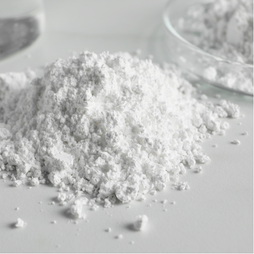
Calcium carbonate can enter the process as coarse aggregates, fine powders, or intermediate grades, each with different apparent density and flow behaviour. The incoming granulometry determines how the product behaves on the mesh: coarse and dense fractions move differently from light and fine grades, and this must be considered when defining the sieving strategy. Safety […]
PROTEIN‑RICH FLOUR CLASSIFICATION

Protein‑rich flours derived from beans, peas and other legumes, as well as from chickpeas, lentils, faba beans and similar vegetable ingredients, often contain residual coarse particles and unwanted fines after grinding. Classification is required to remove these extremes of the particle size distribution, delivering a controlled fraction that behaves predictably in hydration, mixing and texturisation […]
FUNCTIONAL INGREDIENTS SAFETY SIEVING

Functional food ingredients cover a wide range of speciality powders, from potato‑based systems to modified starches, vegetable protein fractions and other tailor‑made ingredients for texture, stability or flavour delivery. Single raw materials can be processed into dozens of versions with different behaviours, such as ingredients designed to replace other ingredients in food preparations, create gelled […]