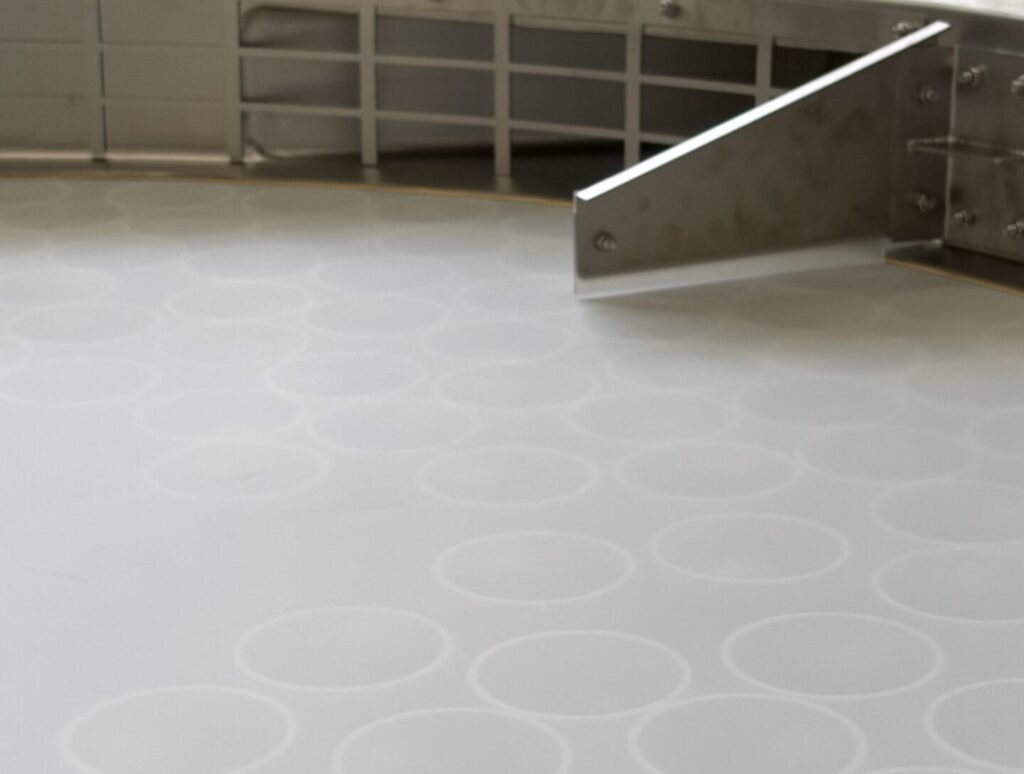
In many recycling plants, the vibrating screen is seen as an almost “taken for granted” component: you choose a large diameter, place it where room is available, and hope it will do its job for years.
Real-life operation often tells a very different story.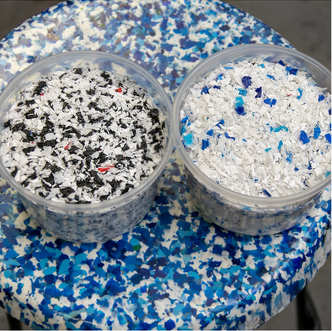
Recently, an Italian plant that recovers urban plastic waste (LDPE, PP, PE) for pellet production reached out to us in a difficult moment. The production cycle is continuous, 24/7, and the margin for error due to plant downtime must be practically zero.
The vibrating screens on their line, supplied by another manufacturer, had created a series of side effects that were anything but secondary.
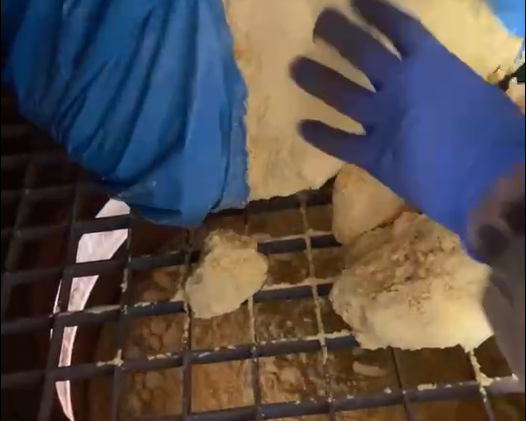
Over time, the existing screens began to show several structural issues: weld failures, counterweight detachment, abnormal vibrations. One of the machines had even been bypassed altogether, as it was now considered unusable. The practical result was twofold: part of the material was no longer processed where it would have been logical to do so, and the downstream purification system was receiving an overload of sand and plastic, with an increasing risk of plant shutdown.
This occurred despite the plant’s required throughput being lower than what a large-size screen could handle. In fact, our experience shows that a small product flow on an oversized vibrating screen generates a series of malfunctions that can have significant consequences. Complicating the picture was a very concrete constraint: on one of the lines there was only a limited available height to install the screen, due to previous plant design choices. In other words, it was not enough to just look for a more robust screen: a solution was needed that could guarantee the required throughputs in a limited space, without repeating the mistakes of the past.
What a 24/7 Industrial Plant Really Needs
Starting from this case, let us try to isolate some general criteria that are often underestimated when choosing a vibrating screen for lines that work around the clock. More than on diameter alone, it is worth focusing on:
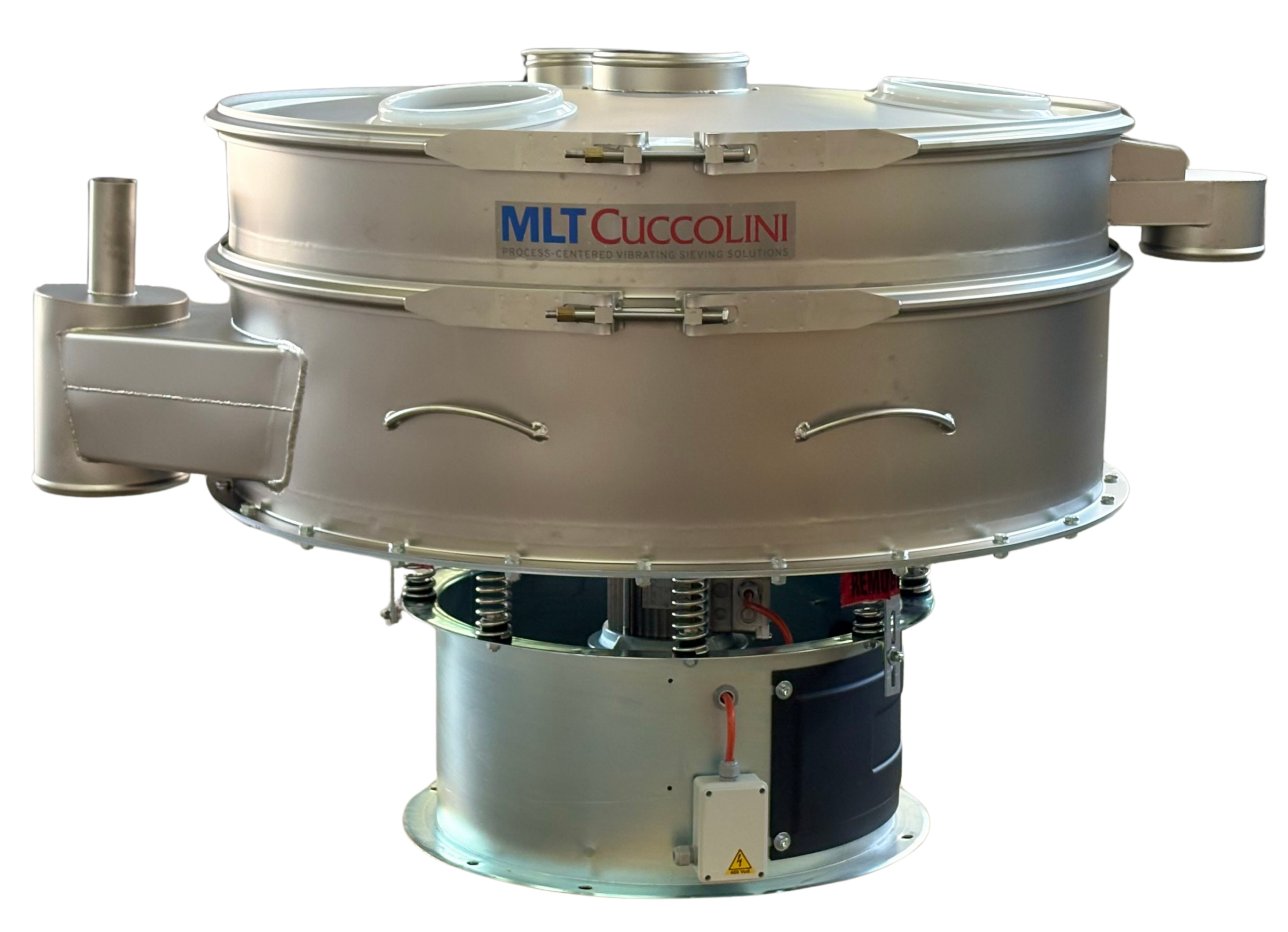
In the case we are describing, the combined analysis of process data and plant constraints led to a decision that may seem counterintuitive at first glance: replacing the competitor’s larger-diameter screen with one of our machines, two sizes smaller. On the most critical line, the one with the strong height constraint, a vibrating screen two sizes smaller than the existing one was proposed, but sized based on required water flow rate, quantity of solids to be treated, target filtration range (with meshes selected around the ideal operating value), and the need for quick access for cleaning and maintenance. In practice, instead of once again forcing a “large” diameter into a space that did not support it properly, the choice was to work with a more compact machine, optimised for the actual process.
The new vibrating screen offers a lighter structure, typical of the original MLT Cuccolini design, specifically engineered to reduce critical stresses; a standard configuration that facilitates accessibility for inspection and mesh change; and more controlled vibration management, designed to work continuously without generating anomalous phenomena, fine-tuned over more than thirty years of continuous optimisation of the MLT Cuccolini C-Line range. The nominal diameter was reduced by two sizes compared to the previous machine. Line performance, however, gained in stability and maintainability.
Why “Smaller” Can Mean “More Efficient”
Reducing the size of a machine becomes a good decision when the effective screening area and dynamics are designed for the plant’s real load, when the machine can be installed at height without improvised compromises, and when maintenance and cleaning become simpler and therefore more likely to be carried out in day-to-day operations. In scenarios like this, the real comparison is not between “diameter X” and “diameter Y,” but between a system that exists only on paper, because in practice it is bypassed or used at minimum load for fear of breakdowns, and a system that truly works, every day, under the conditions for which it was designed.
In this specific case, choosing a smaller size made it possible to bring the screening phase back to the core of the process, removing overload from the purifier; to reduce the risk of plant downtime due to structural failures; and to increase the customer’s confidence in being able to intervene quickly on the machine when necessary.
What We Can Learn for Other Plants
From this type of experience, we can take away some lessons that go well beyond the single case. Do not stop at diameter alone: a “larger” vibrating screen is not automatically more reliable, and you should always start from actual throughputs, solids per hour, separation targets and plant constraints. Calculate the true cost of downtime: in 24/7 cycles, even a few hours of stoppage can be worth much more than the price difference between two machines, so it is better to carefully evaluate the process when designing the plant to avoid hidden costs. Always design with maintenance in mind: the easier it is to open, inspect and change meshes, the less likely it is that the machine will be neglected or excluded from the process. And involve the supplier also on plant constraints: elevations, available spaces and line configuration are decisions to be discussed together, since good sizing always comes from a comparison between process data and real field conditions.