In industrial equipment design, innovation is not always about reinventing the machine. Often, the real progress lies in how we listen, interpret, and integrate the needs of all stakeholders involved in a process.
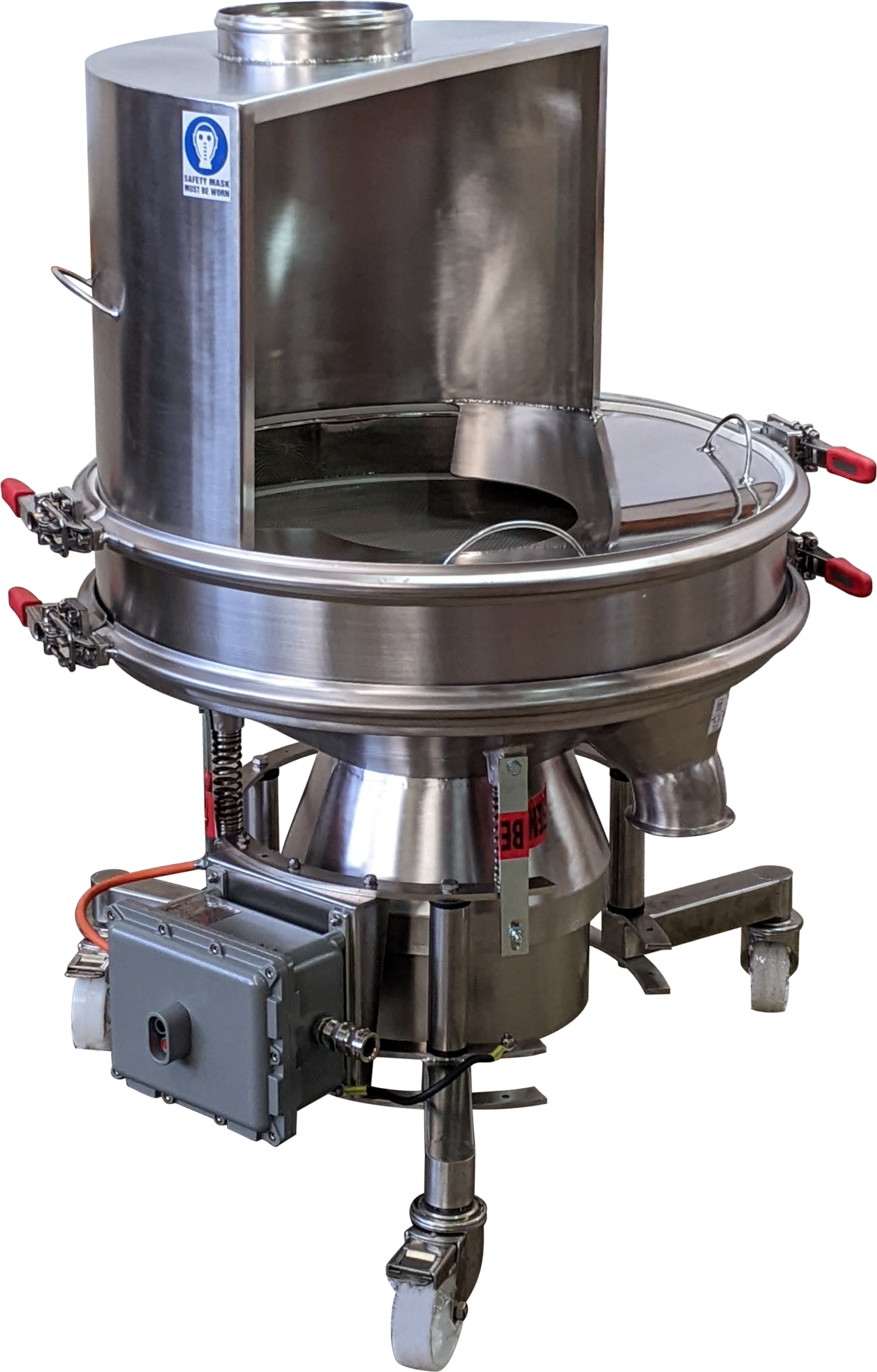
Over the past few years, we have had the opportunity to apply a shared design approach in several pharmaceutical projects, particularly in the development and refinement of sack emptying systems. These experiences have confirmed something important: even when the core technology remains unchanged, the way it is adapted to specific operational contexts can make a substantial difference.
A Shared Table, A Better Outcome
In highly regulated and performance-driven industries such as pharmaceuticals, requirements rarely come from a single direction. Production teams focus on throughput and efficiency. Quality departments prioritize contamination control and compliance. Maintenance teams look for accessibility and reliability. Operators need ergonomics and safety. Each of these perspectives is legitimate — and essential.
The challenge is not to satisfy one requirement at a time, but to balance all of them.
This is where shared design proves its value. Bringing all stakeholders around the same table at an early stage allows critical points to emerge before they become constraints. It creates the conditions for a constructive dialogue, where needs are not only expressed but also understood in relation to one another.
In our experience, this collaborative process has enabled us to progressively refine our sack emptying solutions. Not by introducing disruptive innovations, but by systematically integrating feedback from real-world applications. The result is a more complete response to the market’s expectations:
Each project becomes a step forward, contributing to a more robust and versatile solution portfolio.
The Importance of Early Alignment
Too often, equipment requests are formalized before all internal needs have been fully aligned – or even acknowledged. This can lead to late-stage modifications, extended timelines, and additional costs — both direct and indirect.
Adopting a shared design approach upstream helps mitigate these risks. By identifying potential criticalities early, companies can issue clearer, more comprehensive specifications to the manufacturer. This not only improves the quality of the final solution but also streamlines the entire project lifecycle.
When evaluating an industrial system, focusing solely on the purchase price can be misleading. The true cost of a solution includes a range of additional factors: installation time, integration complexity, cleaning procedures, operator training, maintenance activities, and potential downtime. All these elements are highly context-dependent. A design that works perfectly in one facility may generate inefficiencies in another if these variables are not considered in advance.
Shared design helps bring these hidden costs to light. By analysing the full operational scenario early on, it becomes possible to make more informed decisions — ones that optimize not just the investment, but the overall performance of the process.
A Method Worth Extending
While our experience with shared design has been particularly strong in the pharmaceutical sector, its benefits are not limited to it. Any industry dealing with complex processes and multiple stakeholders can gain value from this approach.
Encouraging cross-functional collaboration before formalizing a request should not be seen as an extra step, but as a strategic investment. It reduces uncertainty, improves outcomes, and fosters solutions that are truly aligned with operational needs.
Behind every effective machine, there is not just engineering expertise, but also a well-structured dialogue. And that, more than anything, is what turns a standard solution into the right solution.