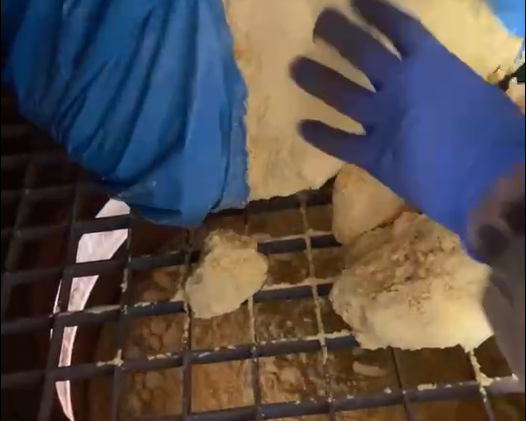
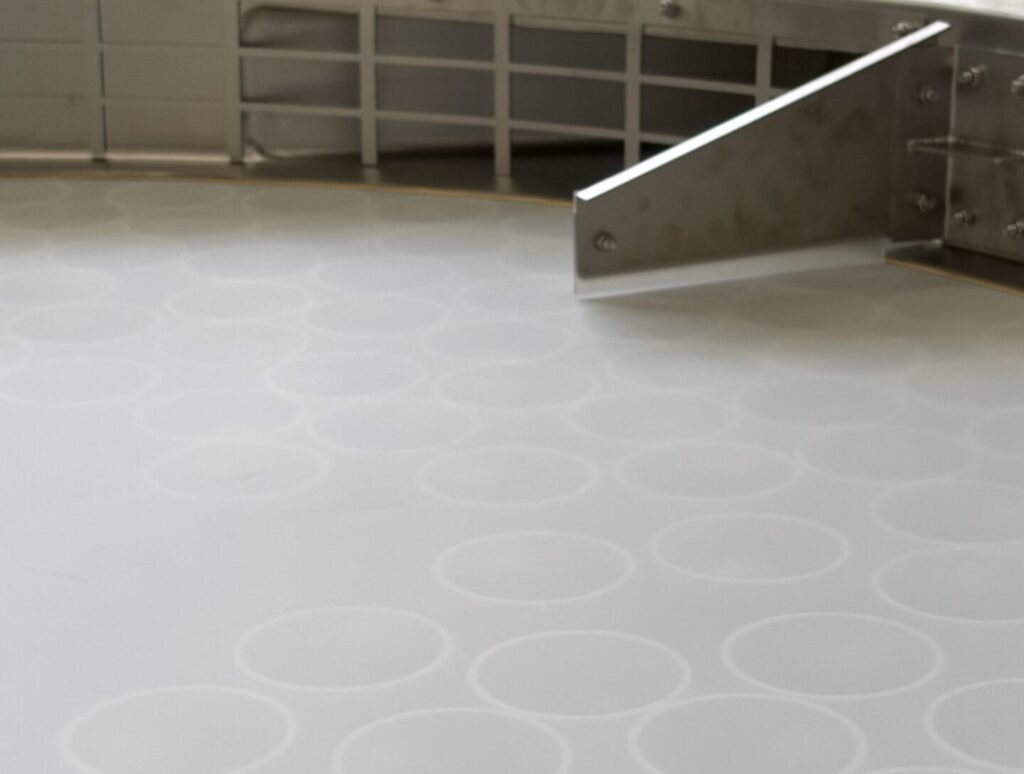
Powders with electrostatic tendencies can create a real challenge during screening. They may cling to the mesh, form agglomerates, reduce material flow and gradually blind the screen openings. As a result, many operators assume that an ultrasonic system is the only possible solution.
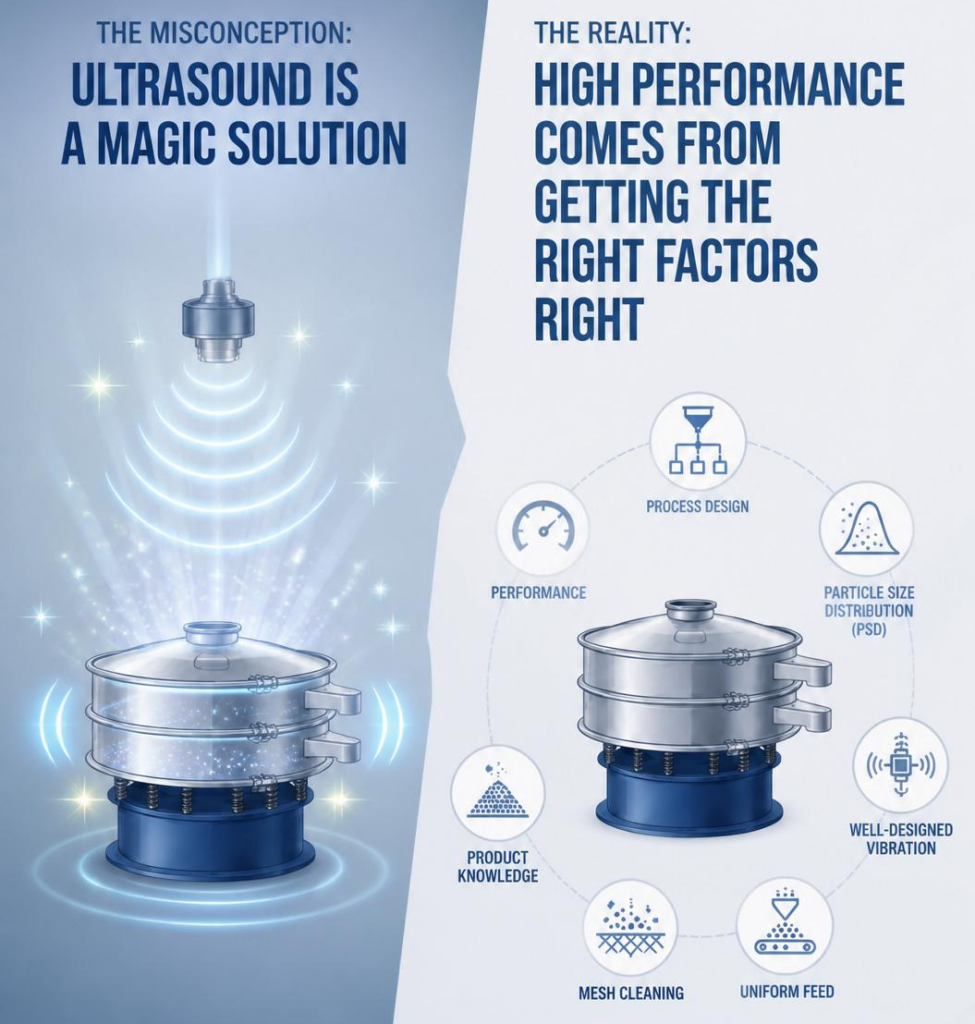
In reality, ultrasounds are not always necessary.
The right approach starts with understanding the behaviour of the material, the required separation and the performance of the vibrating sieve itself. When the screening machine generates an efficient and stable vibration pattern, simpler and more cost-effective anti-blinding solutions can often deliver excellent results.
Why Electrostatic Powders Can Be Difficult to Sieve
Electrostatic charges may develop through friction between particles, contact with equipment surfaces, low humidity or the intrinsic characteristics of the powder. This is particularly common with fine, dry and lightweight materials, including several polymers used in additive manufacturing and advanced industrial processes.
The effects can include:
However, electrostatic behaviour alone should not automatically lead to the adoption of an ultrasonic deblinding system. First, it is important to evaluate how the material reacts under vibration and identify the actual cause of the mesh blockage.
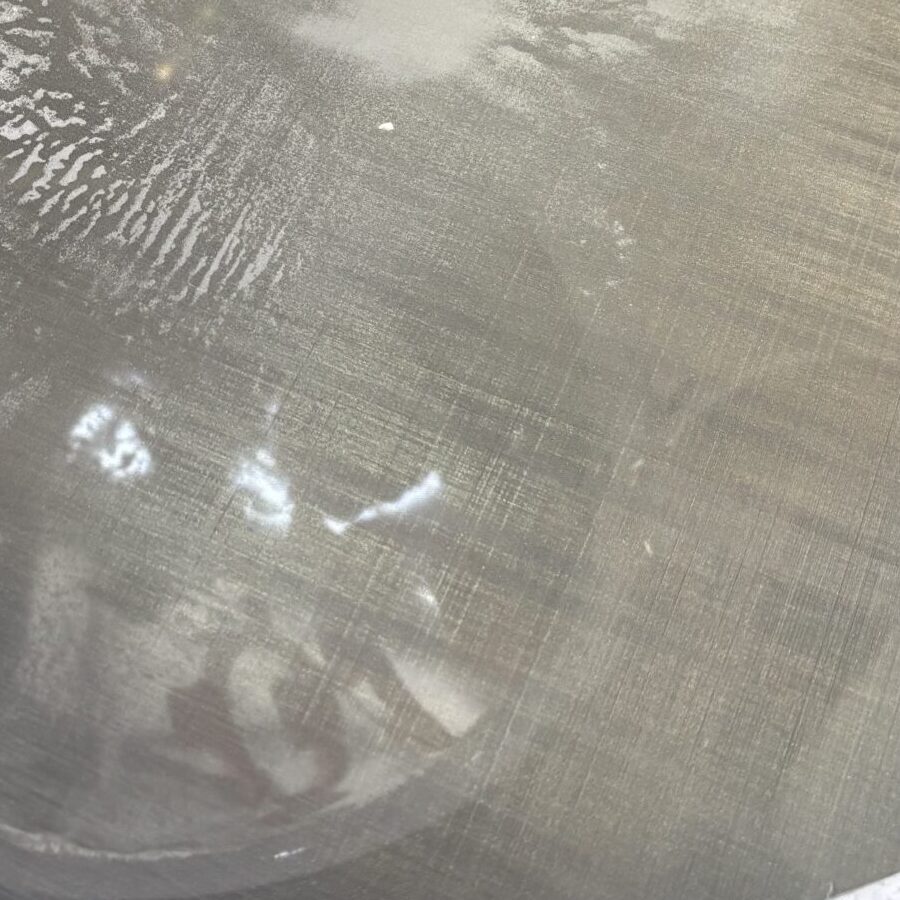
Test 1: PA12 Powder with an Above-Screen Cleaning Element
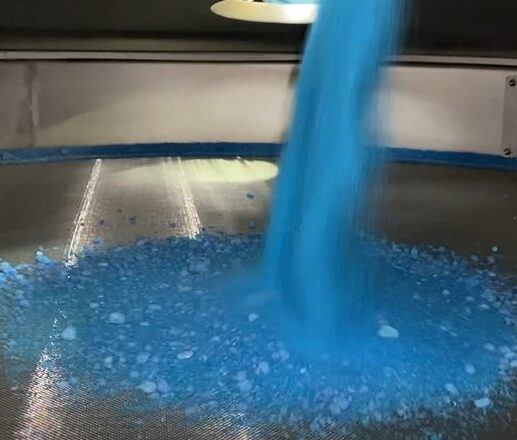
In a recent test, MLT Cuccolini screened PA12 powder, a material known for its tendency to develop electrostatic charges. Instead of using ultrasounds, the test was performed with an above-screen cleaning element. This solution works directly on the upper surface of the mesh, helping to keep the apertures free while supporting the passage of the product.
The result was highly effective:
This test demonstrates that a properly selected mechanical cleaning system, combined with an efficient vibrating sieve, can manage electrostatic powders successfully.
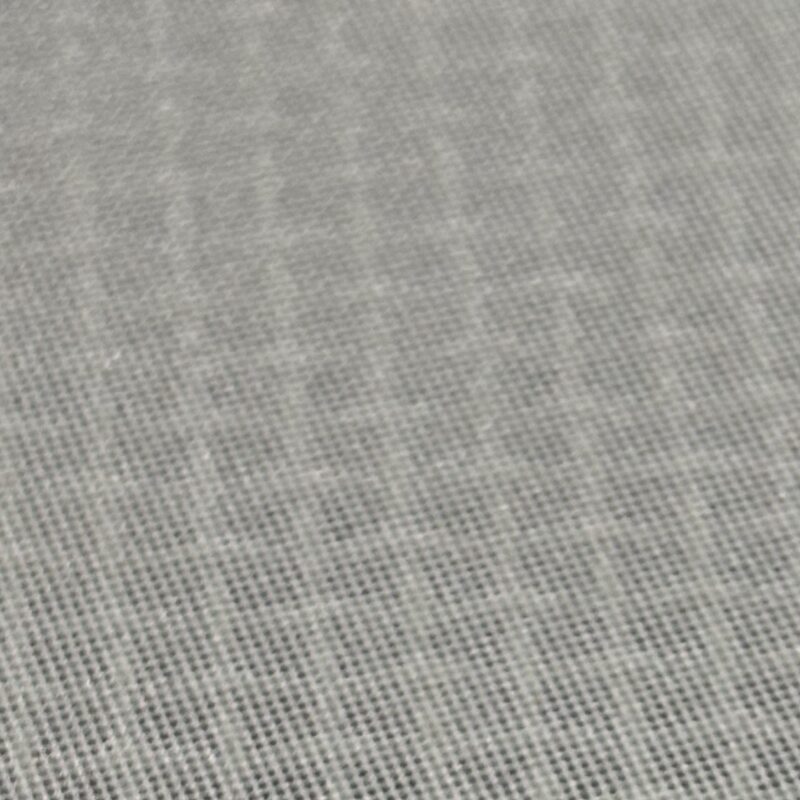 Test 2: Antistatic Mesh and Cleaning Balls
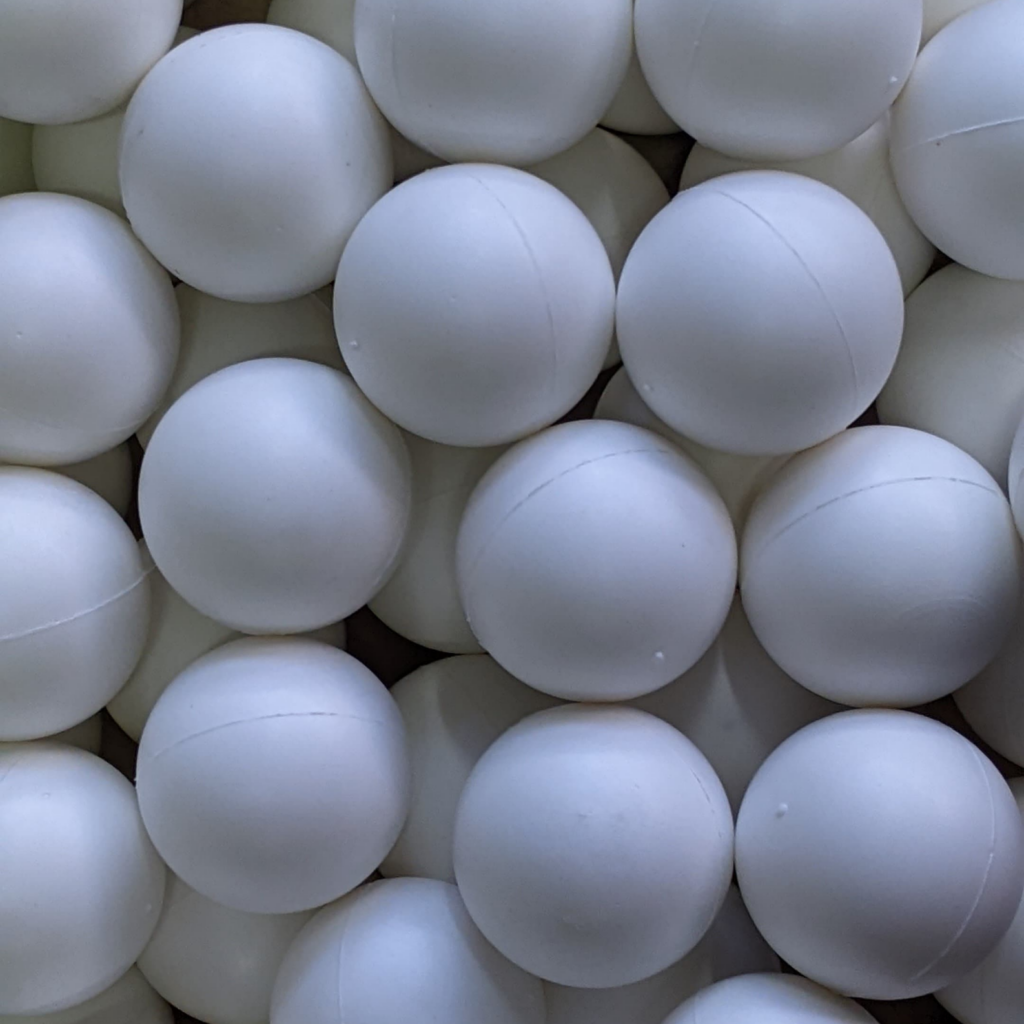
A second test explored another possible configuration: an innovative mesh with antistatic properties. By reducing the electrostatic interaction between the powder and the screen surface, this type of mesh can improve material flow and reduce the tendency of particles to remain attached to the openings. In this case, conventional cleaning balls could be used as the mesh-deblinding device.
Also in this test, the results were excellent. The combination of antistatic mesh and cleaning balls maintained effective mesh cleaning and allowed the product to be screened correctly. This solution can be particularly interesting where the process conditions and material characteristics make it beneficial to act directly on the screen surface.
The Vibrating Sieve Remains the Starting Point
Cleaning devices and specialised meshes can play an important role, but they must be supported by a high-performing vibrating sieve. The efficiency of the vibration determines how the product spreads across the screen, how quickly it stratifies, how effectively particles approach the mesh openings and how well cleaning elements can perform their task. A well-designed screening machine can therefore reduce the need for more complex and expensive auxiliary systems.
For electrostatic powders, the solution should always be selected case by case. The choice may depend on factors such as:
Ultrasonic systems remain a valid option for certain highly critical screening applications. However, they should not be considered an automatic requirement whenever an electrostatic powder is involved. The tests carried out with PA12 and antistatic mesh show that alternative solutions can achieve a clean screen and an accurate separation. An above-screen cleaning element or an antistatic mesh combined with cleaning balls may provide a simpler, effective and more economical answer.
The key is to test the material under real operating conditions and select the configuration that best balances performance, process reliability and investment.
Watch the videos of this article to see both test configurations in operation.