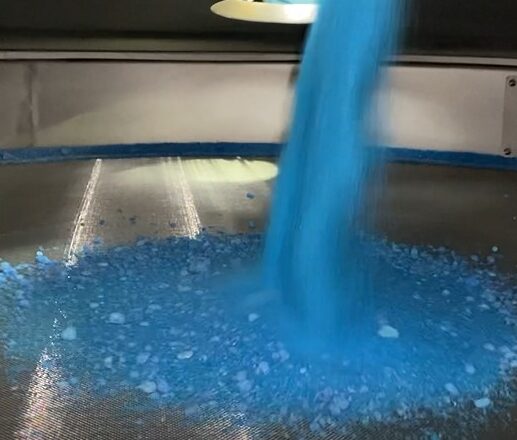
From application assessment to commissioning and maintenance, consistent screening results depend on understanding—and maintaining—the conditions your equipment was selected for.
A screening process can meet its throughput target and still fail to deliver the required separation.
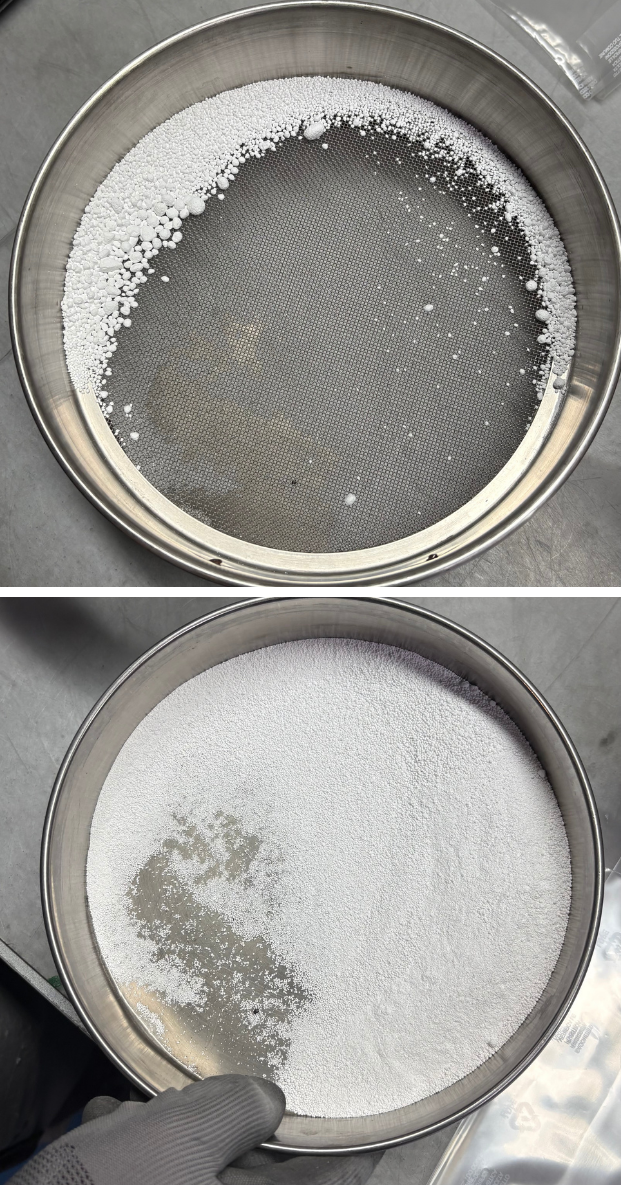
If the output does not meet the required specification, moving more material through the machine does not solve the problem. In classification processes, changes in separation performance can affect product conformity and interrupt production.
The starting point is therefore not simply “How much material can this machine handle?” but “What separation can we realistically achieve, and under which operating conditions?”
Answering that question requires a clear understanding of the application, meaningful screening trials and close cooperation between the customer and the equipment manufacturer throughout the machine’s operating life.
Define the application before selecting the equipment
A target separation size and a required throughput are important starting points. They are not, on their own, a complete application specification.
To recommend a suitable configuration, the manufacturer needs to understand the material, the separation objective and the process in which the machine will operate. This includes the information available about:
Information gaps matter too. If a parameter is unknown or is not monitored, this should be discussed during the assessment rather than left as an assumption.
The manufacturer’s application questionnaire and technical discussions help identify these gaps. They are part of the engineering assessment, not simply an administrative step before a quotation.
AI-generated guidance should not replace this exchange. An apparently complete description may still leave questions unanswered. Work directly with the manufacturer so that uncertainties can be explored before the equipment configuration is agreed.
Establish separation performance before assessing throughput
Screening trials should do more than produce a capacity figure.
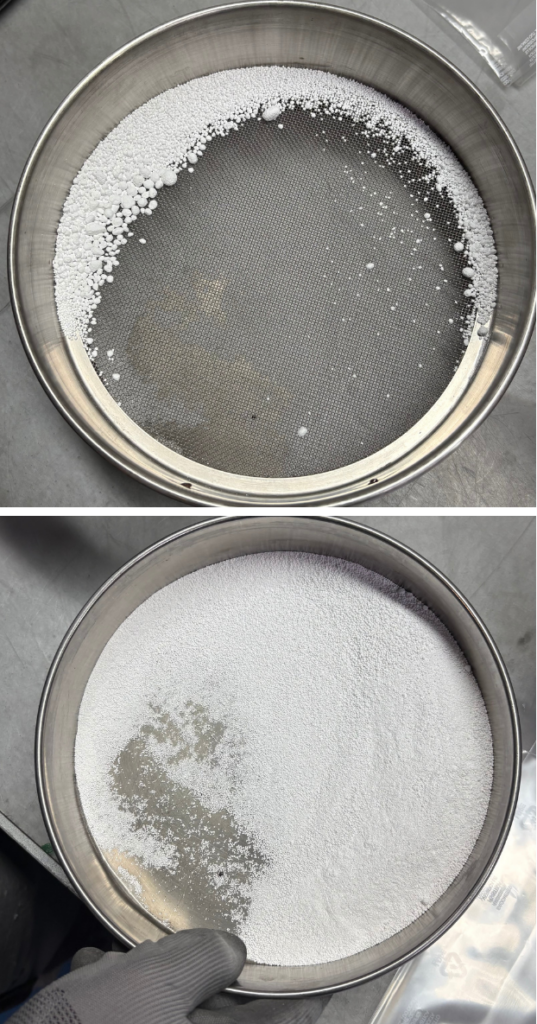
They first provide an opportunity to observe how the material behaves under vibration and assess the separation that can realistically be achieved under the test conditions.
Throughput must then be considered in relation to that result. A higher processing rate is not an advantage if the output no longer meets the required separation criteria.
For anyone comparing equipment proposals, the distinction matters: a throughput figure is meaningful only when linked to a defined separation result and the conditions under which it was obtained.
Trials establish a shared reference point. They help the customer and manufacturer agree on realistic expectations and identify the operating conditions to be checked during commissioning.
Use commissioning to verify the agreed setup
Commissioning connects the trial results with the installed process.
The settings and operating parameters established during testing need to be correctly applied when the machine starts operating in the plant. We recommend involving the manufacturer’s technical team to verify the setup and assess performance under actual production conditions.
This is more than a check that the machine runs. It is an opportunity to confirm that the agreed configuration has been implemented and to investigate differences between the trial conditions and the installation.
Involving the manufacturer at this stage allows those differences to be addressed as part of the initial setup, rather than only after a production problem emerges.
Make changes in feed conditions visible
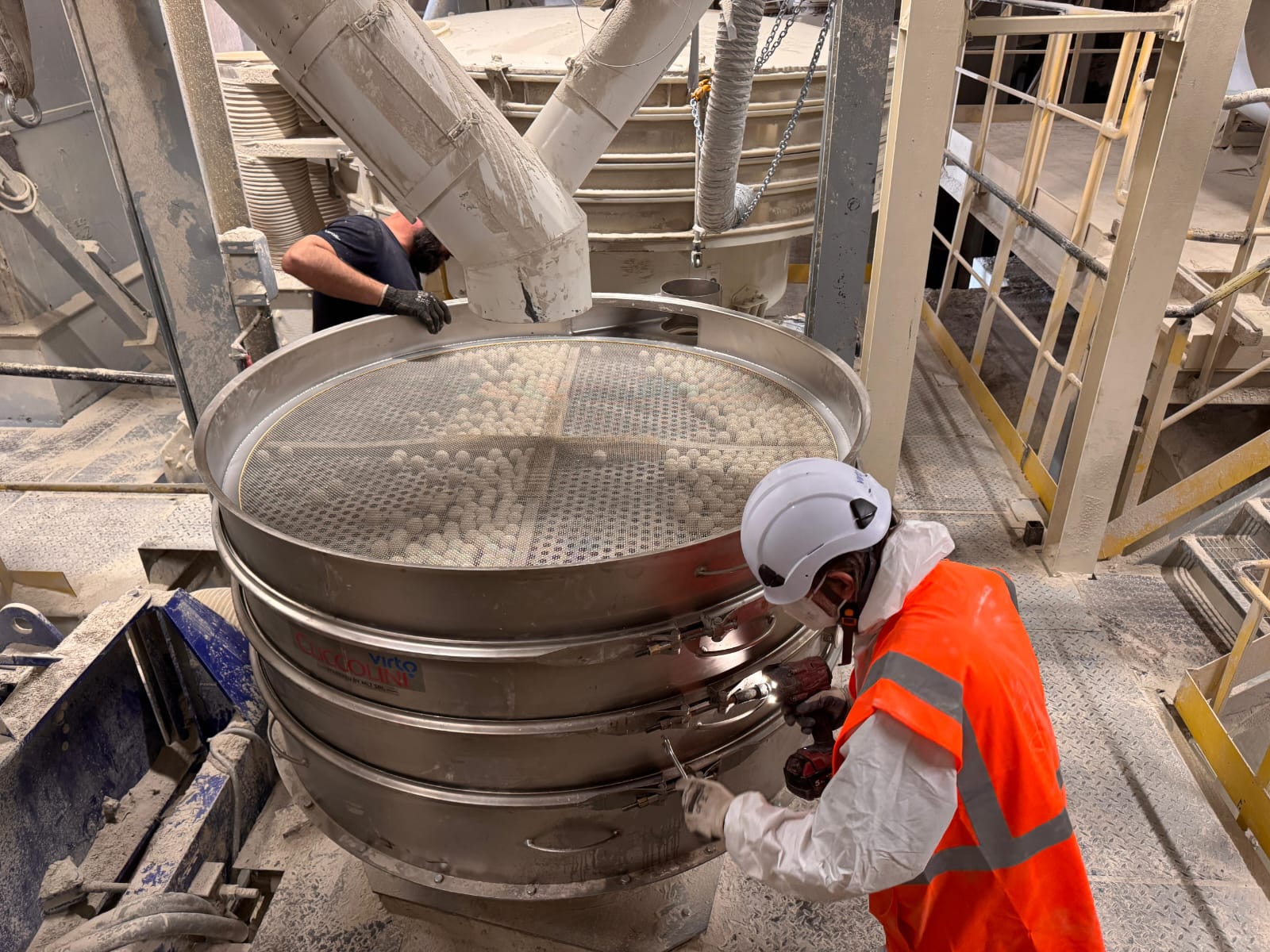
In some plants, feed rate and incoming particle size distribution, or PSD, are not monitored.
When these conditions change without being detected, a change in separation performance may be the first visible sign.
This is particularly important in classification processes, where a shift in the resulting particle size fractions can affect product conformity and disrupt subsequent processing.
If screening results change, the investigation should consider both the machine and its operating conditions:
Reviewing these questions with the manufacturer helps establish what has changed before adjustments are made.
Reassess the configuration when the application changes
A configuration selected for one set of conditions should not automatically be assumed suitable for every subsequent variation.
Changes in the material may be significant enough to require a review of the screen configuration. The appropriate response is to share the changes with the manufacturer and determine whether further checks, new trials or configuration adjustments are needed.
Where a change is known in advance, discuss it before introducing it into production. This allows the application to be reassessed proactively, rather than waiting for off-specification output or an interruption to reveal a problem.
Include maintenance in the performance plan
Maintaining consistent separation also means maintaining the equipment.
The manufacturer’s maintenance guidance should remain part of the operating plan throughout the machine’s service life. Maintenance history, observed anomalies and changes in performance should be considered together when investigating a problem.
Continued technical dialogue helps keep these observations connected to the application and the machine configuration, rather than treating each issue in isolation.
Compare the conditions behind the performance claim
Whether you are responsible for process engineering, quality, production or purchasing, a few questions can help clarify what a proposed solution is expected to deliver:
These questions move the discussion beyond the machine’s nominal capacity to the conditions needed for a reliable production result.
At MLT Cuccolini, we see application assessment, screening trials, commissioning and ongoing technical support as connected parts of the supply. Share your process requirements—and any uncertainties—with our team from the outset, and keep us involved when conditions change.